September 9th, 2015 by Rachel | Tags: Peace Corps | No Comments »
“Don’t tell me the sky’s limit when there are footprints on the moon.”
– Paul Brandt
Shortly before I departed for Cameroon a year ago, a Returned Peace Corps Volunteer said to me, “Let your Peace Corps service surprise you. Don’t set up any expectations.” I spent many hours reading blogs written by Peace Corps Volunteers, especially the ones written by those who were serving in Cameroon so that I could be well prepared for my service and know what to expect. I went to Peace Corps events in my hometown so that I could meet Returned Peace Corps Volunteers, ask them questions and learn more about their experiences. I asked many questions in the group on Facebook for those who were departing to Cameroon at the same time as I was. While one could spend so many hours trying to digest so many information to be well prepared for integrating into a culture that is so different from our own culture and living in a new environment, cultural shocks and unexpected events are still bound to happen.
When I applied to join the Peace Corps, I was aware that becoming ill, facing security risks and harassments, and killing unwanted pests, were all going to be part of my service, little did I know that I would land in the hospital for six nights due to typhoid fever and salmonella, become a victim of an assault, and be busy picking up turds in my home. Being medevaced to the United States was never in my planning book. I knew that I would face harassments due to being a foreigner and receive many proposals, but I underestimated how exhausted and worn out I would become from facing these moments repeatedly. When I was interviewed during my application process, I was asked “You will experience boredom and loneliness. How will you handle them?” My response was that I do not mind having downtime as it gives me time to enjoy reading, doing art and relax. However, little did I know that I would experience more down time than I could handle due to work progress moving slowly. The boredom killed me to the point where I experienced feeling depressed and having meltdowns. While I expected to experience teary moments, I believe I also underestimated the how low the down moments could go.
In spite of falling down the mountain a number of times, my service has also brought in so many great joys that has helped me keep on running the long marathon to reach the finish line. When I submitted my application for Peace Corps I knew that the service would provide me with invaluable experiences that would put me on my desired career path which is to be working abroad and solving issues. I have been building up invaluable knowledge in public health, international development, and disability advocacy. I built great partnerships with Cameroonians who are so motivated to see positive changes in their community. I completed the Community Needs Assessment which greatly helped me identify which issues to solve. I successfully organized and hosted four malaria workshops. I have been talking on the radio weekly with a recipient of the Mandela Washington Fellowship for Young African Leaders on health and disability issues. I collaborated with two of my work partners to put on a photo exhibit displaying women with disability to educate the public about their lives and challenges.
In the next year, I will have many exciting projects to which I can look forward. One of my work partners received a grant from USAID and Mobility International USA. Thanks to this grant, we are in process of organizing and planning a three-day workshop that will happen in October for women with disability to teach them about legal rights, education and health. I’m in process of collaborating with a local organization to set up a support group for persons with disability living with HIV/AIDS as they’re often denied access to healthcare due to stigma and lack of financial means. I will organize workshops on nutrition and HIV/AIDS and hopefully do an HIV testing drive. I will also hopefully be able to collaborate with Alex to set up a disability support group in his area as most of them lack access to healthcare.
At last, I did not join the service expecting to spontaneously fall in love. Okay. Alright. Sure, I did join with a tiny hope that I would find the perfect match, but I’m still pinching myself! Alex and I both have been discovering many charms of the country together including Twin Crater Lakes, Ekom Waterfall, and Ranch De Ngaoundaba. While one could say that relationships can be distracting to our jobs, but having him in my life has been helping me continue to push myself through the challenges and do better at my job. Alex and I talk on the phone every night sharing our highs and lows, advice on how we can overcome the down moments and how we can do better on our ongoing projects, and of course, big ideas on how we can work with our communities. We look up to the couples who change the world together such as Bill and Melinda Gates, Bill and Hillary Clinton, Paul and Didi Farmer, and Carrie Radelet-Hesler and Steve Radelet.
As we await to see what the next year will bring to me in Cameroon, in the meantime, watch this video above the post that I created and see all the treasures I have discovered in Cameroon in the past year.
September 2nd, 2015 by Rachel | Tags: Peace Corps, Second Goal | No Comments »
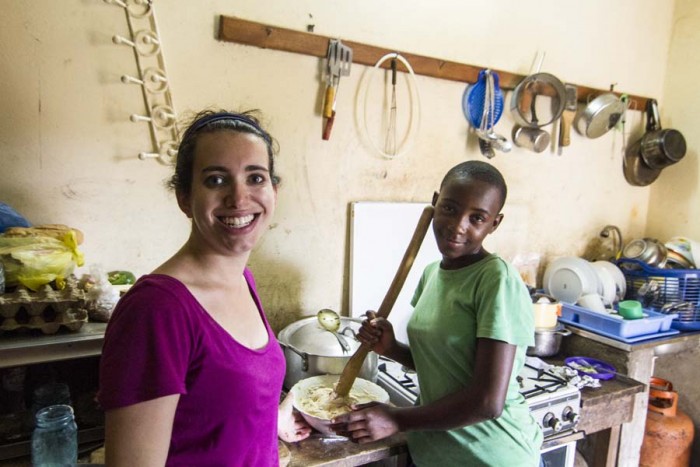
I teach the host family in Mengong how to make chocolate chip cookies.
Peace Corps has three goals that volunteers are require to complete. The first goal is to promote peace and friendship. The second goal is to teach the host country nationals about the American culture. The third goal is to teach the Americans about the host country. There is an ample amount of opportunities to complete Peace Corps’ second goal in Cameroon:
- Introduce American food by teaching them how to cook some recipes from the US. I brought a few recipes from the US with me and also a measuring cup because the US is one of the very few countries that does not use the metric system. I taught my host family during training how to make brownies, chocolate chip cookies and grilled cheese. I taught my work partners how to make pizza and also chocolate chip cookies. Believe or not, many Cameroonians have never heard of brownies or grilled cheese but they did enjoy them!
- Bring pictures of life in the US. I brought pictures of my life in the US. Many Cameroonians were able to see what I looked like growing up and get to know my family. They were also able to learn about holidays I celebrate as they saw images of me in Halloween costumes. They were also able to see the landscape of the US just by looking at the background of the images.
- Tell stories about life in the US. Just by simply sitting with Cameroonians anywhere, whether it’s in a living room or in a shop, and conversing with them, you can still teach them about the US. For example, I had interesting conversations with one of my work partners’ customers in her shop about how Americans practice their religion.
- Connect with them on Social Media. Cameroonians learn more about what is happening in my home country when I share news articles about the US on Facebook and converse with my family and friends from the US. They also learn more about Americans’ opinions about various current events when they read my posts and converse with me and my family and friends from the US.
- Watch movies with Cameroonians. There are many American movies that Cameroonians have not yet seen and would most likely enjoy. Many Peace Corps Volunteers often invite neighbor children to watch movies with them in their home in the evenings.
- Host US holiday parties. I hosted a 4th of July party in my home on 4th of July so that Cameroonians could learn more about the US’ Independence Day. I created a poster sharing facts about the US. I also introduced hamburgers, Americans’ favorite dish, to them.
- Inform them about scholarship opportunities in the US. Cameroonians are always looking for opportunities to get the best quality of education. Two of my work partners recently had the opportunities to go to the US for workshops on a scholarship. They both came back to Cameroon with a much greater understanding of the American culture. They are both utilizing the knowledge that they have acquired in the US to do their projects in Cameroon.
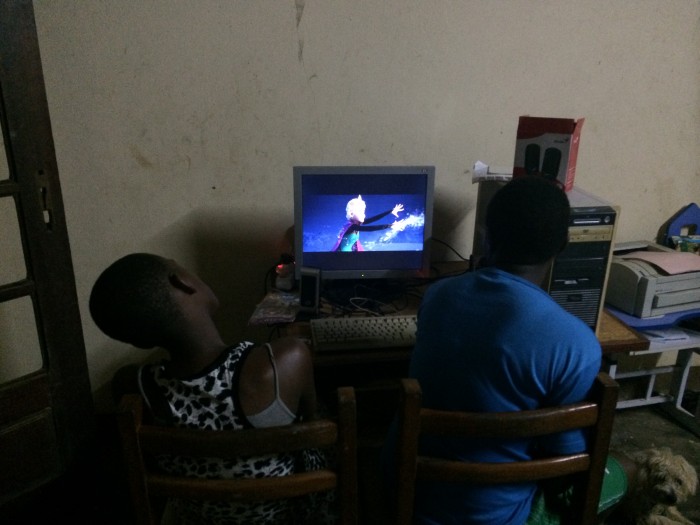
My host family in Mengong enjoy watching Frozen which is not yet available in Cameroon.
August 31st, 2015 by Rachel | Tags: Disability, Malaria, Peace Corps | No Comments »
Today, Alfred, a member of Special Needs Entrepreneur Group (SNEG), graciously met me and Veronica, one of my work partners, at his work place in town center and accompanied us to his home which is located on the outskirts of Bamenda. When we arrived at his home, he first showed his father’s living quarter.

Alfred’s father in his compound by his bed
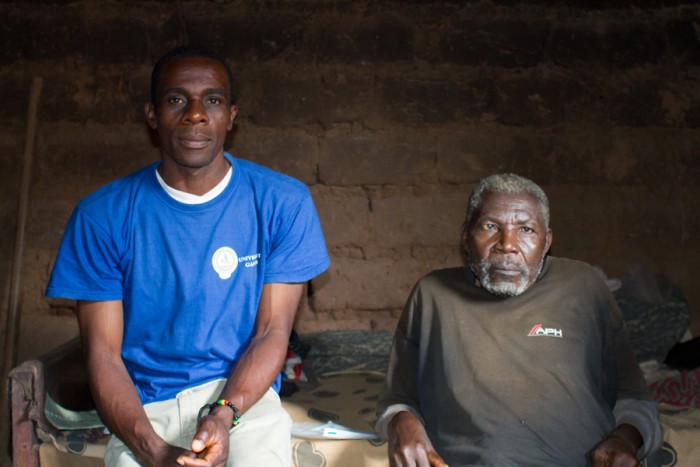
Alfred and his father
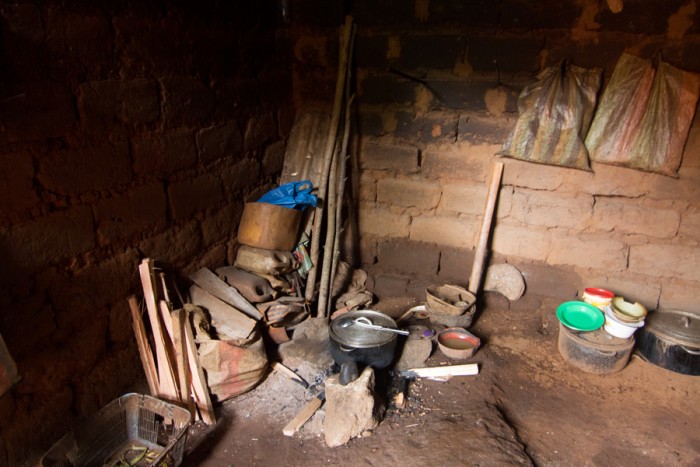
While Alfred has a mobility disability in his left leg caused by Quinnimax injection, his father also has a disability. His father was a police officer for 27 years. Then about five years ago, he fell and injured his right hip. He was not able to visit a health center to treat his hip. He was forced to retire from his job. He is always in pain and can’t move well, especially on the right side of his leg. He stays in his home all day everyday. When he was working, he lived in the town center, but when he injured his hip, he had to move into his son’s compound so that he could be looked after. In his living quarter, the floors were not finished, and so, it was just mud. While he does have a bed, he has no mosquito net. However, officials from a health center did stop by his home about three months ago and did note that he needed a mosquito net. They told him that they will be back with a mosquito net for him.
Alfred then showed me his living quarter which is right next to his father’s. His living quarter was very different. The floors were finished and his home was fully furnished. His and his wife’s bedroom had a mosquito net but the sides of the net were folded into the top of the net. It was not knotted at all. This is a sign that they may sometimes sleep with the net down. He then showed me his children’s bedroom and the net was completely down which meant that the children do regularly sleep with the net. Yes, all three of his children sleep on one big bed. This is actually very common in Cameroon – children traditionally sleep on one bed rather than having their own individual bed.
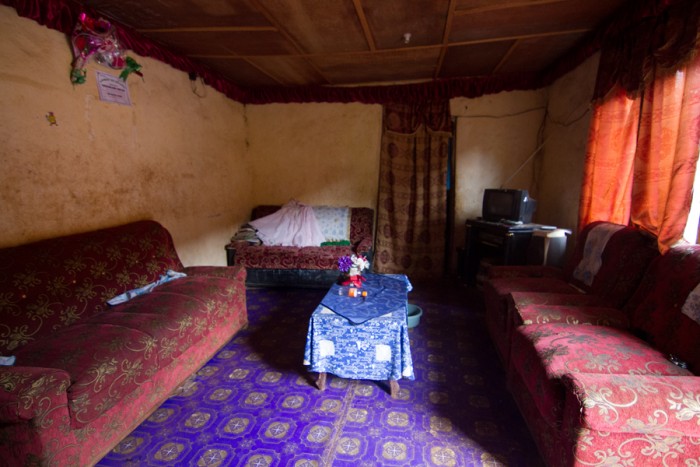

Alfred and his wife’s bedroom
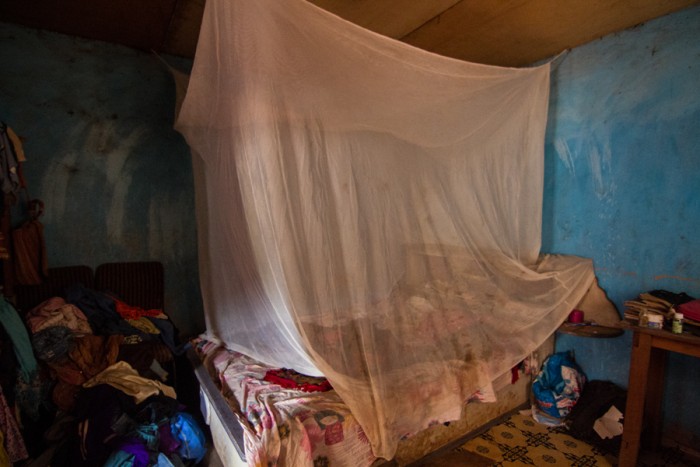
Alfred’s children’s bedroom
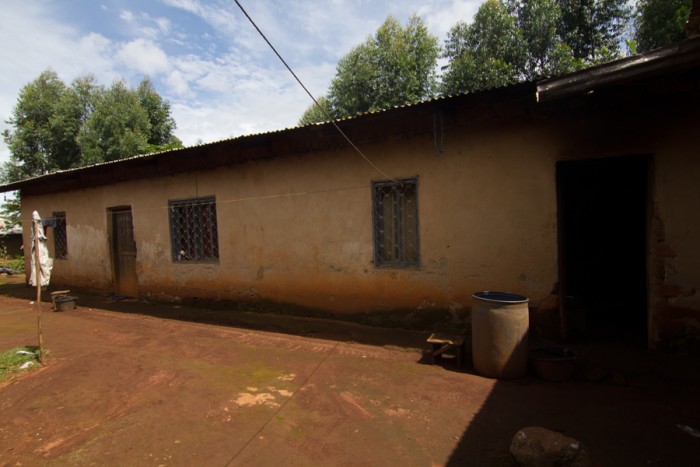
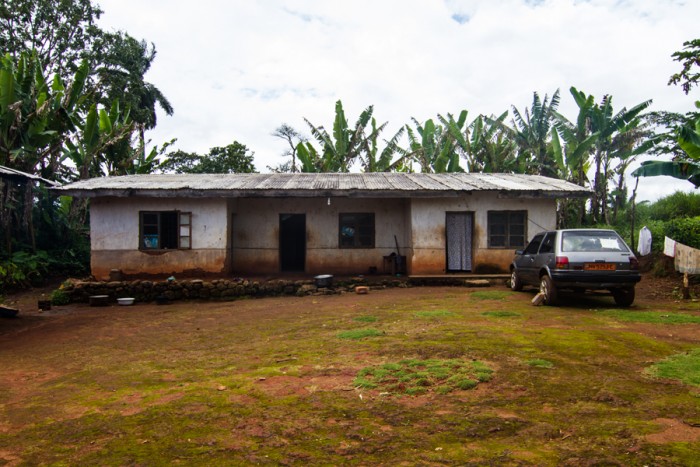
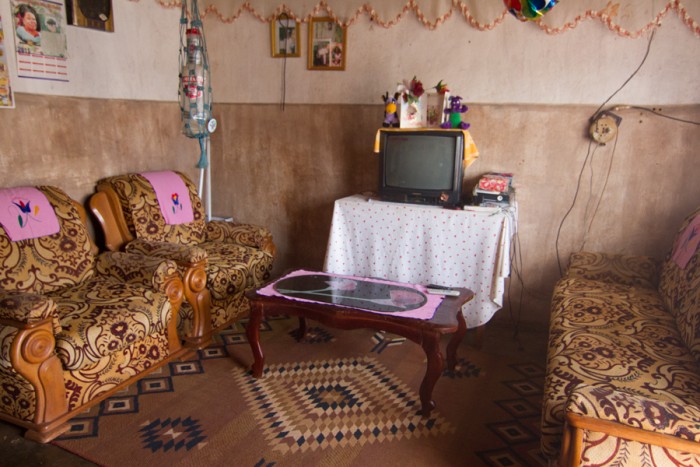
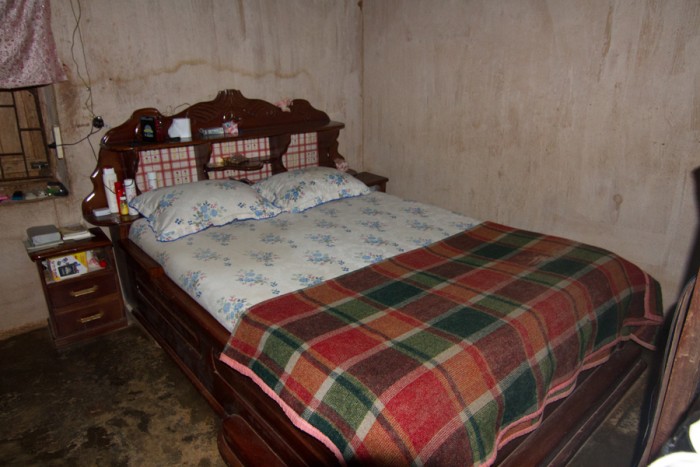
After visiting Alfred’s home, I visited a home of another member of SNEG, Che, who lived nearby. Veronica and I met him at a business place and then, he took me to his home on a bike. Che has arthritis which was diagnosed when he was 17 years old. He has no job, which is why he joined SNEG so that he could get help in finding a job. He lives in a very rural area where roads are not paved. While his home was generally clean and well maintained, he did not have a mosquito net. He told me that officials from a health center visited his home about three weeks ago and even showed me the official paper signed by the health center stating that he does need a mosquito net.
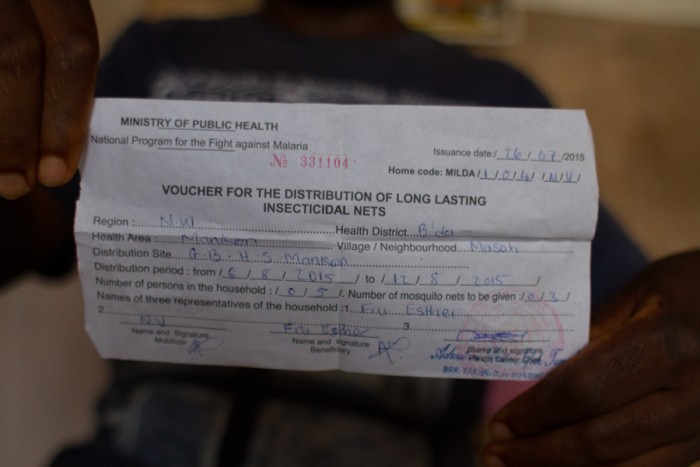
Che shows his official document from the health center stating that he will receive a mosquito net.
He told me that even when they do bring him a mosquito net, he doesn’t think he will sleep with it because he feels too hot under the mosquito net. I tried to encourage him to at least sleep under it during the rainy season because the weather is so much cooler. I told him that it’s still important regardless to sleep under the net everyday year round because it takes a collaborative work for us to end malaria. I explained that if every single person slept under the net, we could eradicate malaria because mosquitos get malaria just simply by biting people who are sick with malaria.
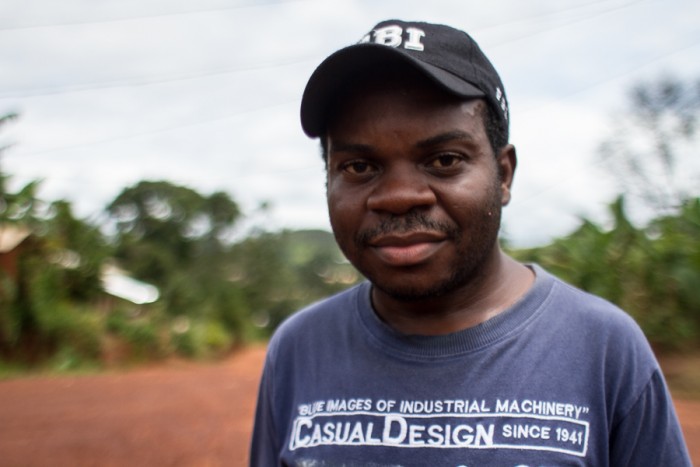
Che
August 30th, 2015 by Rachel | Tags: Disability, Malaria, Peace Corps | No Comments »
I just completed giving the 4th malaria workshop a couple weeks ago. This workshop did not result in the best outcome because it took place outside during a very rainy weather. Even though we were under a cover, the rain was pouring down so hard that the water was flooding everywhere. As a result, only about nine people were present at the workshop due to the difficulties of getting transportation during the rainy weather. Then, I believe many people had difficulties paying attention during the workshop due to the distraction of the rain because the post-test results were not so great. Only two out of nine scored 100% on the post-test. It’s important to note that one of them was actually a participant at the third malaria workshop. She actually scored 100% on the pre-test also. This means that she did retain the information well in her head, which was great. For everyone else, while they were able to correctly identify some symptoms and steps to prevent malaria, they did not identify all symptoms of malaria and all steps to prevent malaria. At the end of the day, all we can say is that we all tried our best.
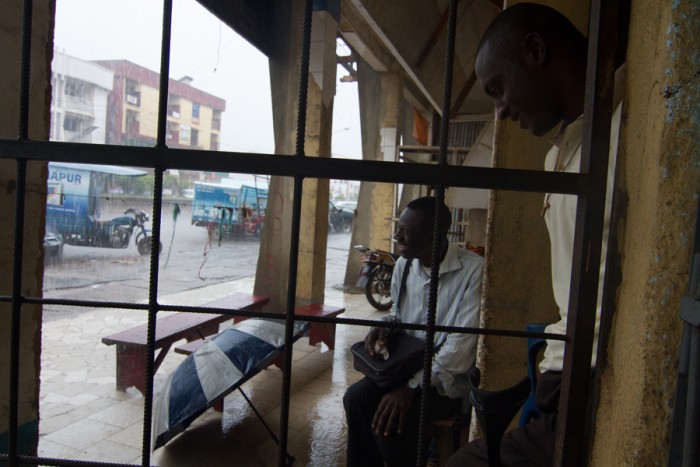
Participants stand under a cover to stay dry from the rain prior to the 4th malaria workshop.
In order to see if the workshops translate to behavior change, I am visiting homes of select workshop participantss and hope to follow up with this group of participants every three to four months. I have so far visited three homes, and I plan on trying to visit at least seven to nine more homes in the next couple weeks.
When some participants told me at the workshops that they do indeed have mosquito nets and sleep under them, I honestly didn’t believe them. A week ago, when I visited two homes of two different women with disabilities who are members of Northwest Association of Women with Disabilities, I saw mosquito nets hanging down from the ceiling. I was very impressed. They were not tied up in a knot, which is not commonly found in many homes.
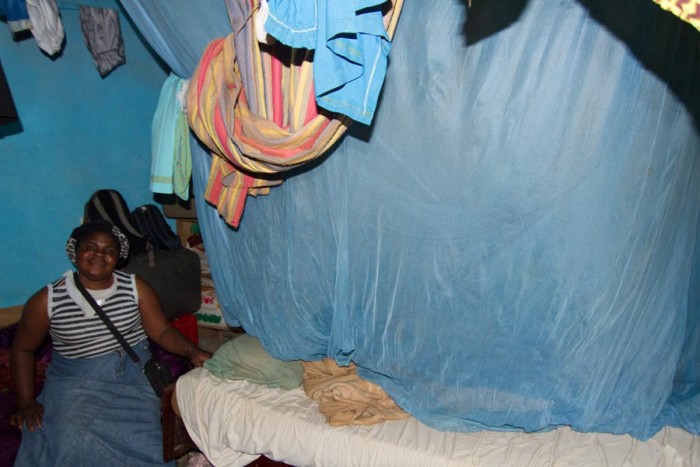
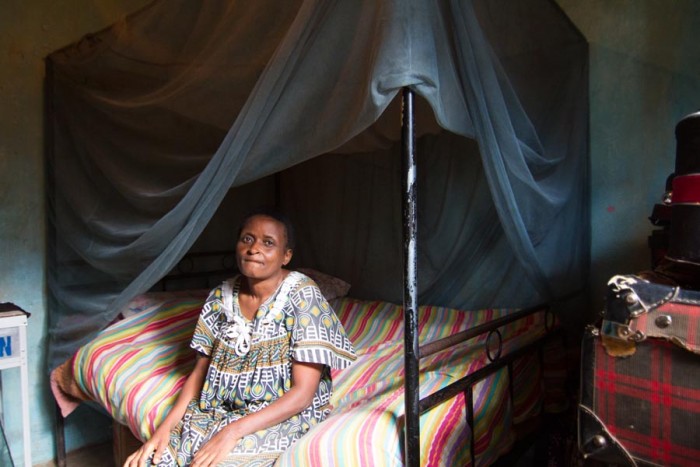
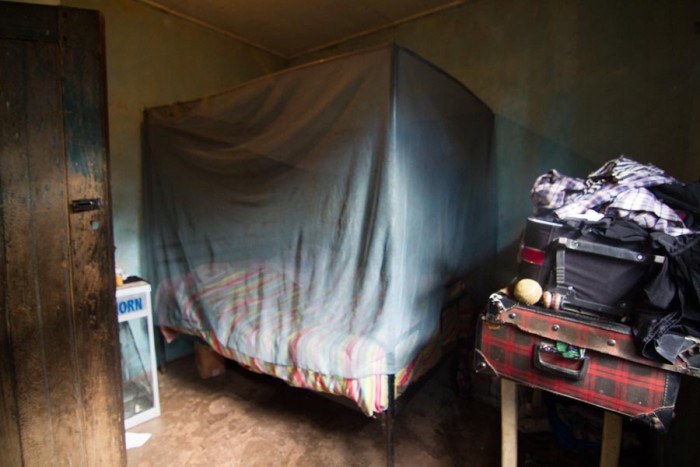
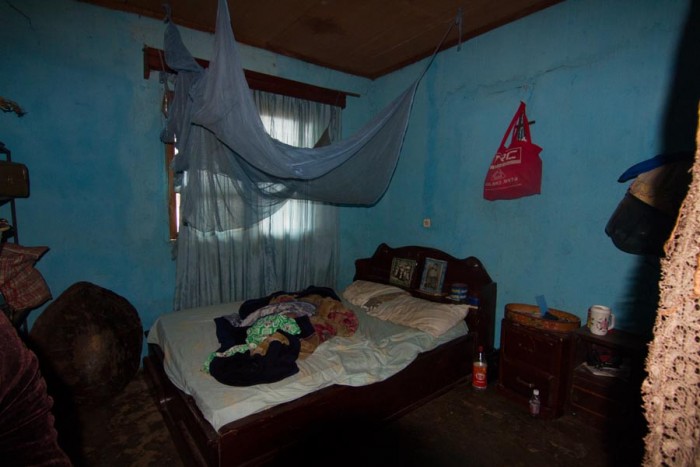
Their homes were also very clean and their yards were reasonably well maintained. It’s important to note that landscaping and gardening is not hugely part of Cameroonian’s culture likely due to financial reasons.
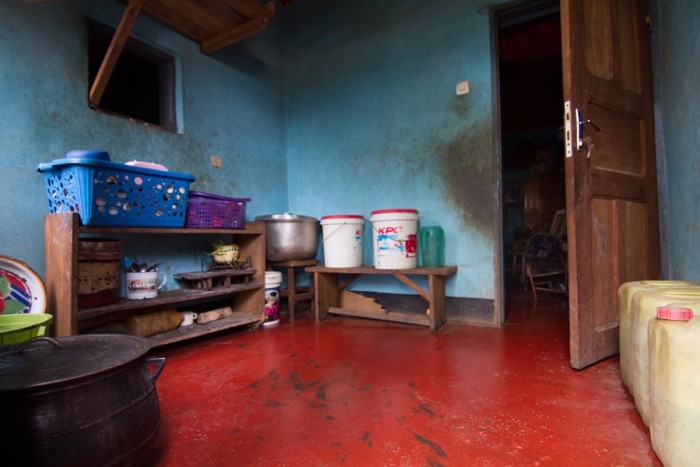
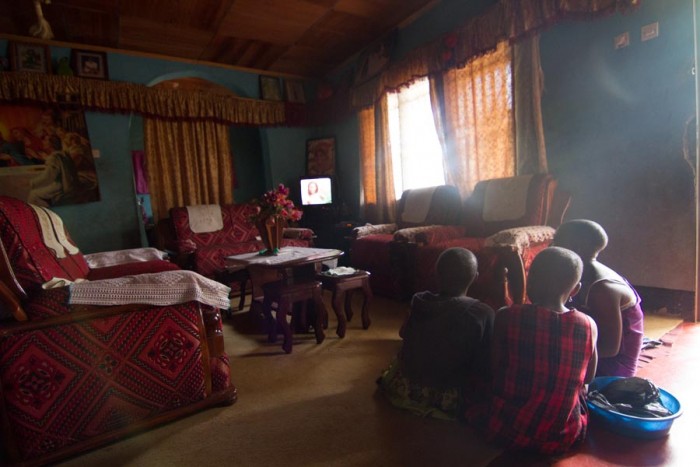
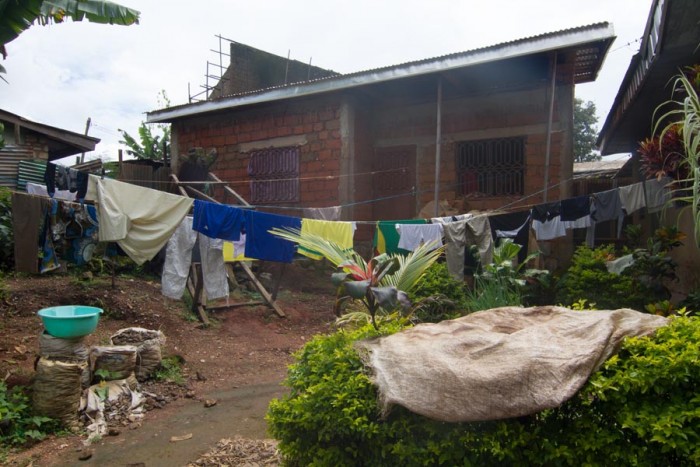
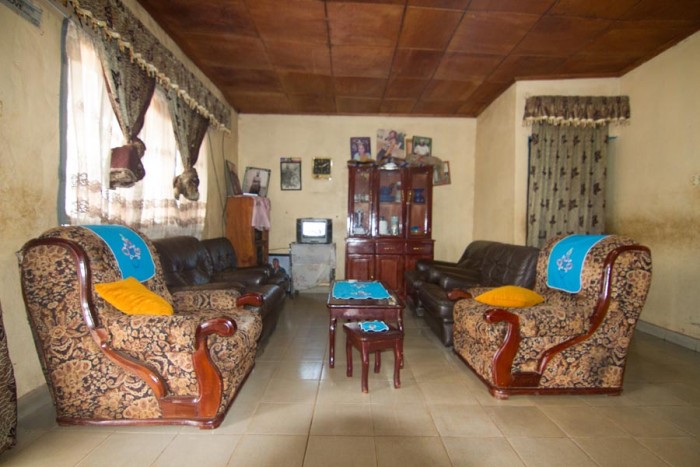
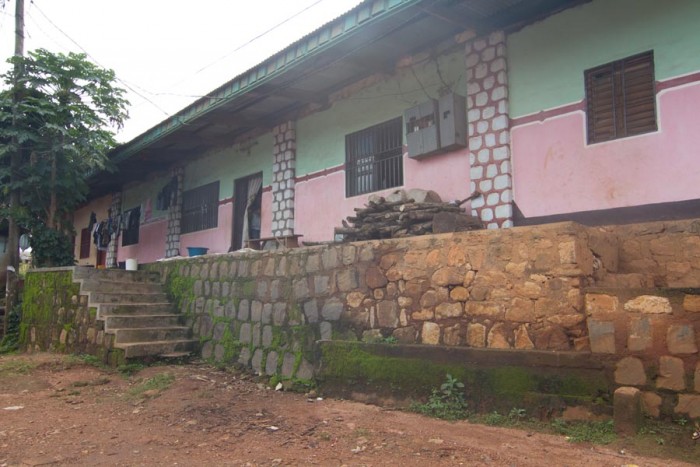
Then, yesterday, I visited a home of a woman, Helen, who is a member of Special Needs Entrepreneur Group (SNEG), and has a physical disability. Her hands and arms were injured when her stepson attacked her with machetes. She was one of the few members of SNEG who offered me to come visit her home for monitoring and evaluation of the malaria workshop.
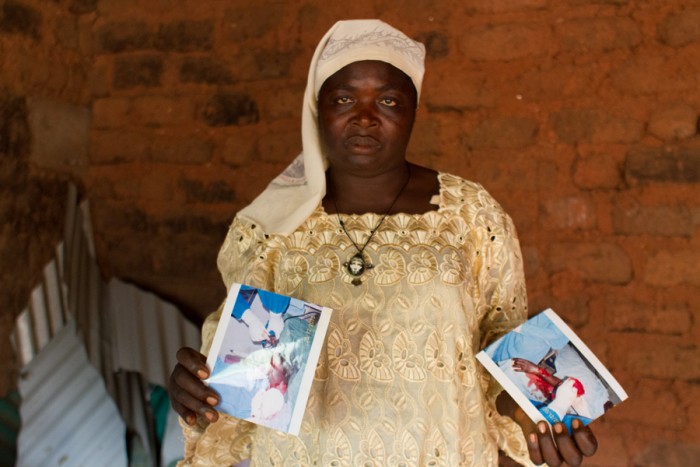
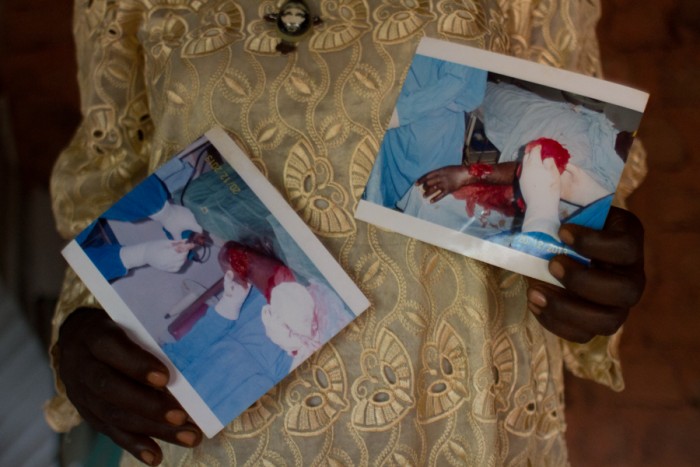
While the purpose of visiting the home was to see if the home was clean and there were mosquito nets, I discovered far more devastating issues. When she showed me her bedroom, I immediately noticed that there was no mosquito net. I asked her if she ever had a mosquito net. She told me “no” and then mentioned that four children and another young woman who live with her sleep on the wooden board on the floor. So, not only there is no mosquito net, but also there is no bed for these five people. As officials from the minister of health are visiting homes throughout the Northwest region to collect information on which homes need a mosquito net and which ones do not, she told me that officials did stop by her home and she did request a few mosquito nets.
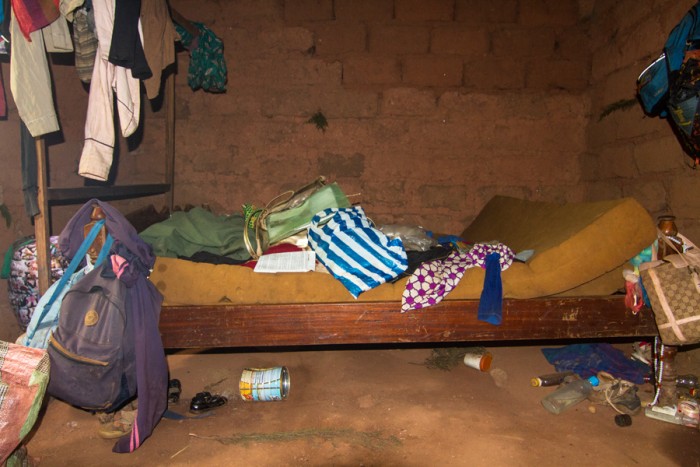
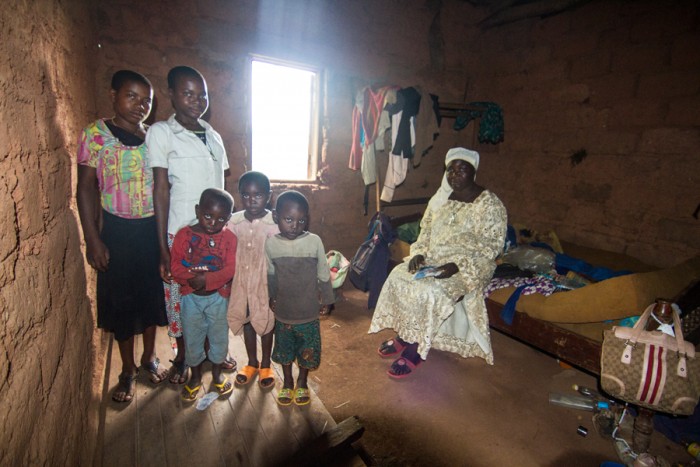
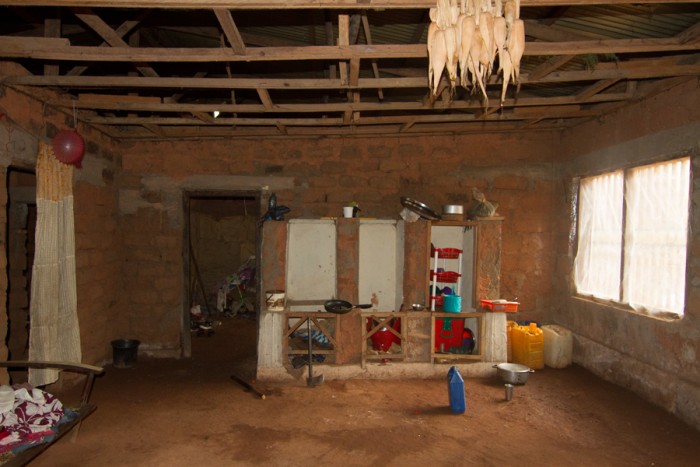
Her home presented typical traits of a poor family living there. The floors were not finished. They were made of dirt and mud. While there was a roof, there was no ceiling. The walls were also not finished. All windows didn’t have glass but they all did have plastic sheets cover although one window had a cover that was ripped. Thus, while the home was clearly not in a good condition to prevent malaria, we can’t blame her for creating the environment in which she lives. This situation taught me that while I could do everything I can to educate people about how to prevent malaria, some people may still not have the option at all to change their behavior due to financial reasons. As I have said over and over, money dictates how one can live their life. She said she wants mosquito nets but has no money even though she should hopefully get some from the officials for free soon.
August 22nd, 2015 by Rachel | Tags: Culture Exchange, Disability, Peace Corps | 1 Comment »
Timing couldn’t have been more perfect. I recently finished reading Sheryl Sandberg’s book, “Lean In.” This book speaks about gender inequality that still exists in the United States. While women in the United States today have more choices than ever when it comes to deciding how to live their live, they are still facing barriers in receiving support to fulfill their career goals and a tremendous amount of responsibilities in caring for their families and home. Sheryl explained how men need to share more responsibilities with their spouse in caring for the family and the home and how workplaces need to provide family benefits for both women and men because it is both economically smart and the right thing to do. She shared in a great detail about how men can be the best partners for women and help change the gender inequality which includes splitting the household and childcare responsibilities, creating policies at workplaces that help women advance their careers and earn an equal pay, and encouraging more women to be interested in fields that are dominated by men such as technology and engineering.
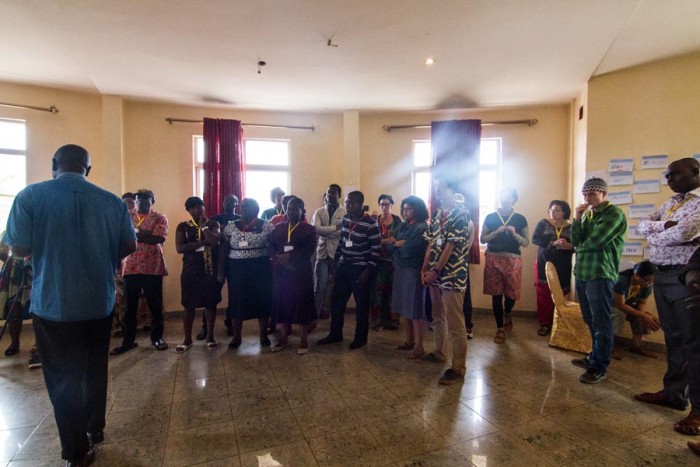
Peace Corps Volunteers and Cameroonians participated in a variety of activities to learn how to improve gender equality.
Like the United States, Cameroon faces gender inequality but women face far more issues due to both lack of policies supporting women and understanding how to treat women with respect. To help improve the gender equality in Cameroon, Peace Corps recently hosted a three-day Men as Partners workshop. The goal of the workshop was to educate women how to advocate for their rights in protecting their sexual reproductive health and asking men to share household responsibilities and educate men how to respect women, share responsibilities with them and support them in their advocacy for gender equality. All Peace Corps Volunteers who attended the workshop brought one or two Cameroonian work partners with them. I brought Ruth, my official Peace Corps counterpart, and a deaf man who works in disability advocacy, Tabod.

Tabod, a deaf man who advocates for disability rights, attended the Men as Partners workshop.
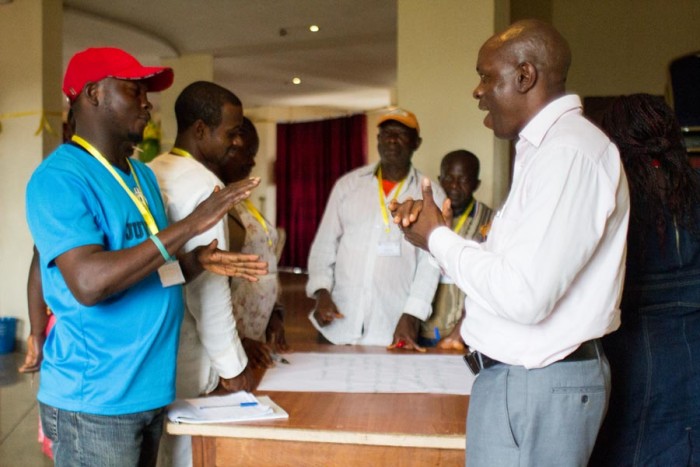
Peace Corps provided an interpreter for Tabod so that he could have the opportunity to attend the workshop and participate in all activities.
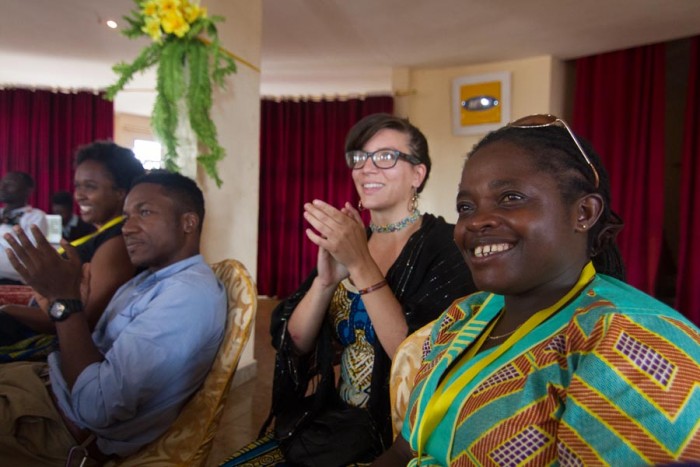
Ruth, official Peace Corps counterpart, participates in the workshop.
While we covered a wide variety of topics including how women feel about men and how men feel about women and sexual reproductive health, how improving gender inequality can reduce the transmission of HIV/AIDS, Peace Corps Volunteers and Cameroonians exchanged their own different cultural viewpoints. For example, during an activity called “Looking at our Attitudes,” there were five different signs on the wall: Strongly Agree, Agree, Neutral, Disagree, and Strongly Disagree. We were asked various questions relating to our attitudes towards women. When we were asked, “Women who wear revealing clothing are asking to be raped,” all Americans went to the sign, “Strongly Disagree” and all Cameroonians except for two went to the sign “Strongly Agree” or “Agree.” The two Cameroonians went to the sign, “Neutral.” One has to keep in mind the viewpoints of these young Americans’ at the workshop do not represent the viewpoints of all people in the United States but I do believe that our viewpoints do give a good representation of the majority of young people in the United States. There is a definitely a growing trend of young Americans speaking out against rape, especially on college campuses. In any case, seeing our viewpoints on whether or not revealing clothing do ask for rape did lead to a fiery debate. We, Americans, explained to the Cameroonians that regardless of any circumstances, there are no excuses to why people are permitted to rape. We also had a discussion on what sexual consent means and a number of Peace Corps Volunteers explained that when one says “No” to sex, it means “No” and people have no right to force sex on people. Many of us, Americans, felt that there is a long way to go in educating Cameroonians about sexual assaults.
In spite of some cultural differences, we also did find some common viewpoints. For example, when we were asked, “A woman who carries a condom in her purse is ‘easy,'” majority of the participants stood by the sign “Strongly Disagree.” Only two stood by the sign, “Neutral.” When we were asked, “When a woman is pregnant, preventing HIV to her child is her responsibility since she carries the child,” and “A man is more of a “man” if he has many sexual partners,” all Americans and most Cameroonians stood by the sign, “Strongly disagree.” When we were asked, “It is okay for a man to have sex outside of relationship, if his partner does not know about it,” all Americans except for one and all Cameroonians except for one went to the sign, “Strongly Disagree.” The two went to the sign, “Neutral.”
We then did an activity where we had to identify which household responsibilities men and women were responsible for. Cameroonians showed that women are responsible for most household responsibilities and hold more responsibilities than men. Peace Corps Volunteers then shared that men and women are responsible for all household chores and not one chore should be exclusive to one gender.
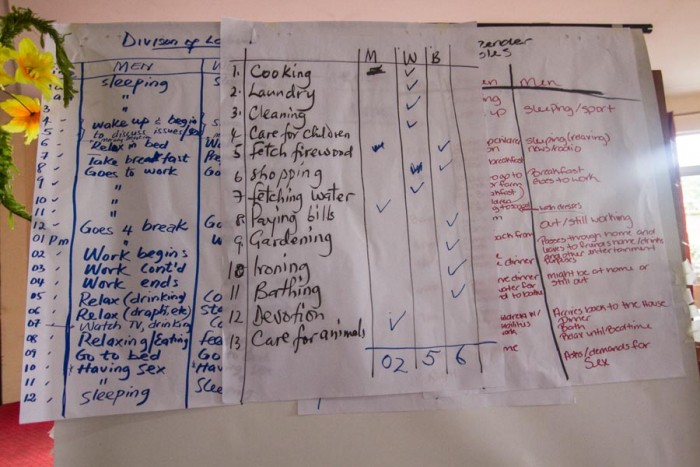
This chart shows Cameroonians’ perspective of which gender is responsible for household chores.
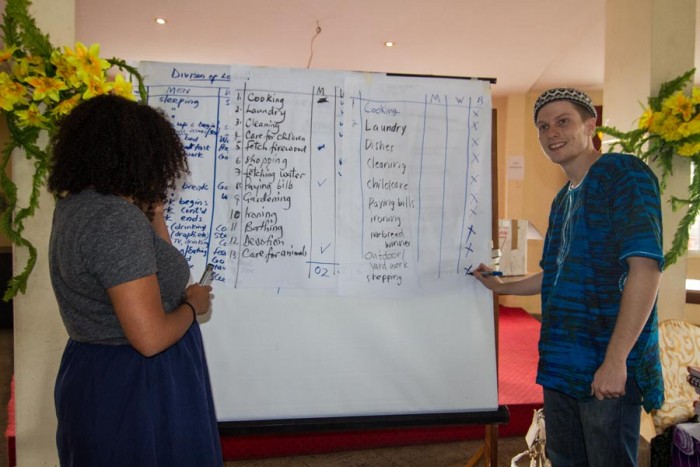
Peace Corps Volunteers shared their American perspective of which gender is responsible for household chores.
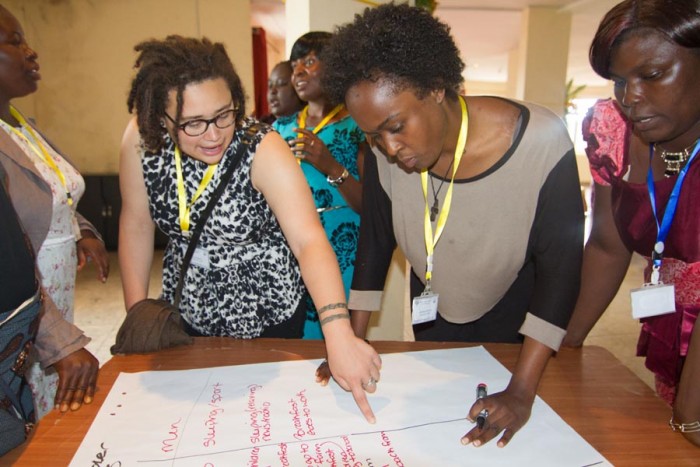
Female participates discuss what is the typical daily schedule for women and also men.
We also did an activity called “Gender Fishbowl” where women had to sit in a circle and men had to sit outside of the circle. Women shared their feelings about how men interact with them, their struggles in being a women and how men could be better partners. We then reversed by having men sit in middle of the circle and women sitting on the outside of the circle. Men shared their struggles of being men, what was difficult to understand about women and how they can be better partners for women.

Participants engage in activity called Gender Fishbowl which gives females the opportunity to share their viewpoints on men and vice versa.
Men as Partners has been far my most favorite workshop Peace Corps has offered. This workshop really gave us, the Americans, the opportunity to educate the Cameroonians about how we can advance gender equality and also learn Cameroonians’ perspective on gender roles. If Peace Corps offers this workshop again before I leave Cameroon, I will most certainly attend again but bring different Cameroonian work partners so that I can provide more Cameroonians the opportunity to learn about gender equality.