October 29th, 2015 by Rachel | Tags: Disability, Peace Corps | No Comments »
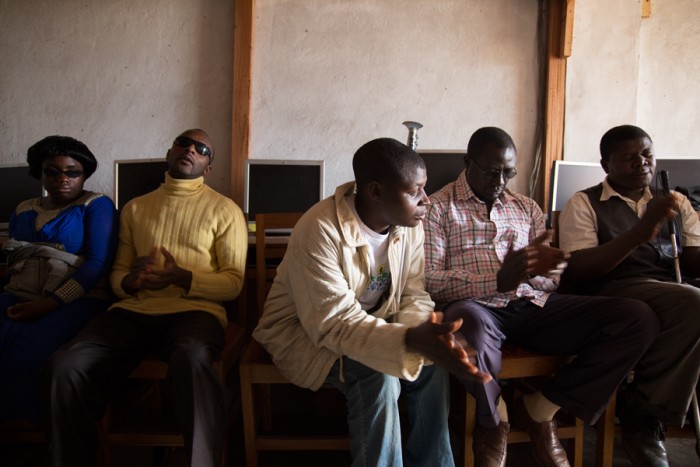
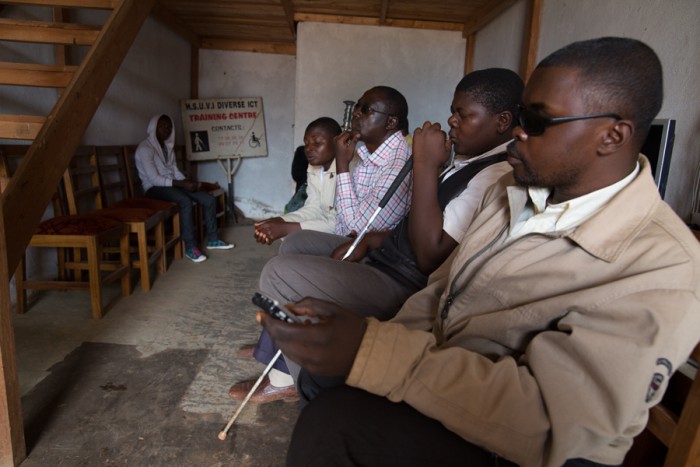
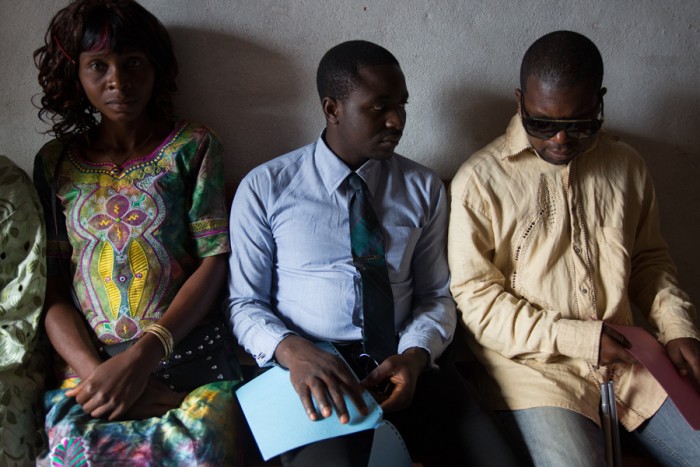
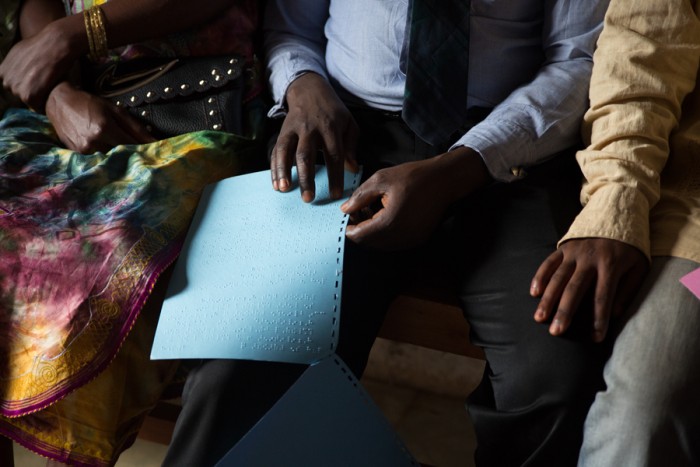
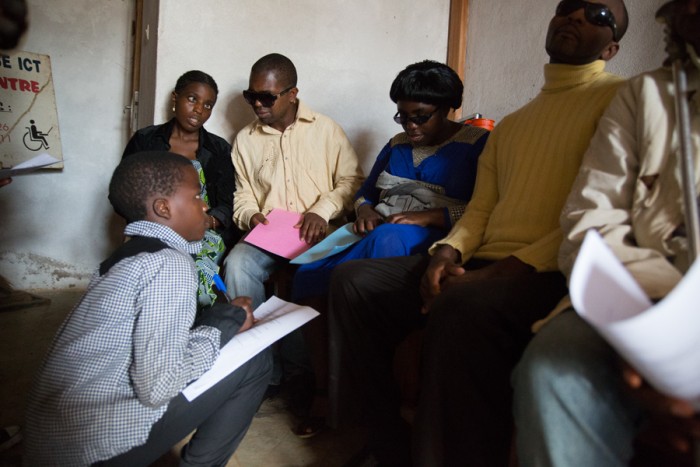
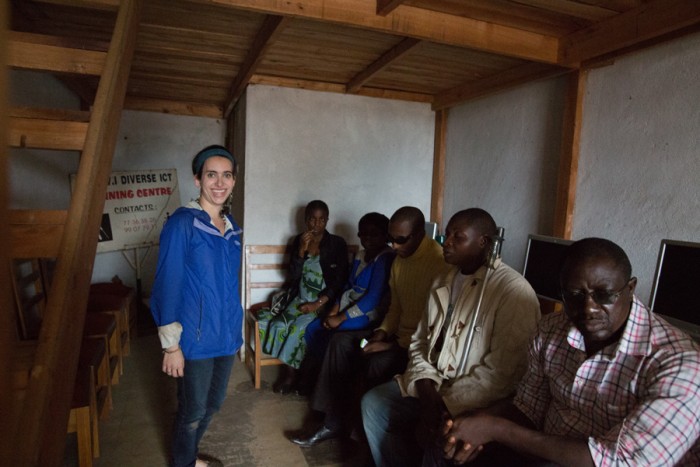
Last Sunday, I did another malaria workshop but this time, it was with a large group of blind people. All of these people were totally blind and using white cane. Before meeting with the group, I did know that I would have to make some adjustments to how I would teach them because they cannot see at all. For example, I had to make arrangements to have the pre- and post-tests translated to braille so that they could take the pre- and post-tests.
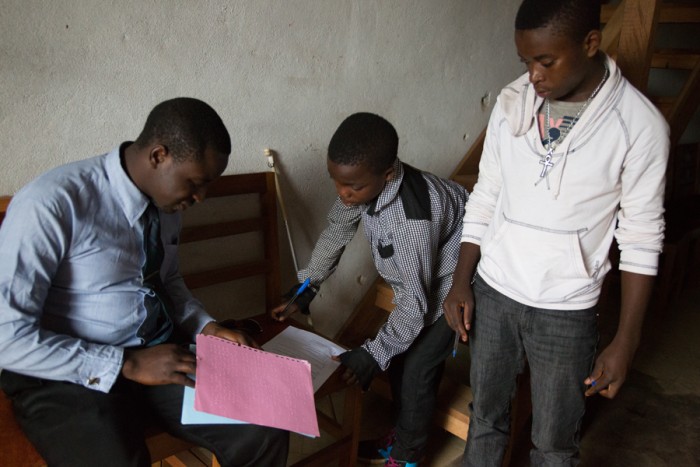
When I began the workshop, I quickly realized that even though the tests were translated to braille, I still needed to assist them in administering the test as they could not write the answers down. For a moment, I thought, “Ohmigosh am I the only person who is not blind and could help them write the answers down?” I then actually said, “Do we have anyone who is not visually impaired besides me in this room who could help with the tests?” Fortunately, we found three children of two of the blind members who happened to be there, and they helped in recording the answers. By having the four of us assist in writing down the answers for 11 blind people, we were able to have the tests administered within about 10 minutes each, for both pre- and post-test.
Then when I did my teaching on malaria, I had to avoid using visual aids. In the previous workshops, I always had posters with written information and diagrams. Because I could not use visual aids, I made sure the workshop was still interactive by asking them questions and having them answer the questions. All the members were very engaged and active in answering my questions.
All the blind people in the group were all quite intelligent. They were all literate as they had the ability to read braille and already had a good understanding of what is malaria. Most of them already had a good understanding of how to prevent malaria prior to the workshop according to the pre-test results. However, they did not have a good knowledge of symptoms of malaria. They were not able to identify all possible symptoms of malaria. But after the workshop, six of them scored 100% on the post-test and three of them almost scored 100%. Those three just still didn’t master the knowledge of symptoms of malaria.
While it was great that I had the opportunity to meet a group of very intelligent blind people, I wish there was a way I could really reach out to those visually impaired who are not literate as they are the ones who need the education the most. Those who are not literate most likely stay in the home and never leave as they probably do not have a family support who can assist them in navigating the world.
October 27th, 2015 by Rachel | Tags: Peace Corps | No Comments »
A few weeks ago, I posted a status on Facebook asking for ideas on how to wash vegetables well due to getting stomach pains and diarrhea in spite of having regularly disinfected the vegetables. I was appalled when people tried to give me unauthorized medical diagnosis such as IBS, food sensitivity, and sensitivity to bleach, gave me incorrect information and showed lack of knowledge in health issues that foreigners face when living in developing countries long-term. I had to realize that it’s not their fault for being uneducated about health issues in developing countries and that I do need to provide some education as many have not experienced in living in a developing country and received training in maintaining their health in developing countries.
Last year, when I was in training for ten weeks, Peace Corps Medical Officers provided us an hour and half session each week on how to care for ourselves and seek treatments and what kind of diseases we can acquire during our service. In Cameroon, Peace Corps has two doctors and a nurse who only care for Peace Corps Volunteers. There is a reason that Peace Corps have medical professionals on staff. Becoming ill frequently in developing countries is the norm for Peace Corps Volunteers. We do get sick much more frequently than we do at home in the US. At my physical exam in 2013, my primary care physician said, “You’re so healthy that I don’t need to see you for two years.” I was very healthy before coming to Peace Corps. I was rarely sick except for getting occasional colds and maybe one virus. Since I arriving in Cameroon, I have had Typhoid Fever, Salmonella, too many diarrheas and stomach pains to count, two sore throats, a cold, and a bladder infection. Most volunteers who I know have been ill just as many times as I have. Some have also contracted malaria, giardia, filariasis and chiggers. We get so many diarrheas and stomach pains that Pepto becomes our best friend (Click here to see the fact that Pepto is often seen as the “god” in the Peace Corps world.)
Why do we get sick frequently? Cameroon and many other developing countries have many diseases that are almost unheard of in the US and other developed countries and does not have a proper system in place to remove all the bad bacterias. Water is contaminated with bad bacteria. Cameroon does not have a fully developed system to clean the water that goes directly into the homes that have indoor plumbing. Access to toilets is lacking. Many homes do not have toilets or latrines at all. So, all the feces waste go into the grounds outside. When rain comes, water becomes infected as it comes in contact with the feces and water gets spread throughout the area. Many farmers often go to the bathroom on the fields. As a result, the vegetables get contaminated with bad bacteria. Therefore, between the contaminated water and vegetables, cleaning the vegetables can be challenging. We have to first clean the water which by filtering it, boiling it, or bleaching it. I normally just use the filter that Peace Corps provided us. Then the vegetables must be disinfected. There are different ways to do it. The most common method which I have been using is soaking them in clean bleached water for a couple of minutes. If the vegetables can be pealed such as carrots, onions, and cucumbers, then I just peal them. Then I stir fry the vegetables to ensure that all bacteria has been killed as heat can kill the bacteria. The other method for disinfecting the vegetables is boiling them in a pot of water. No matter how careful I am, sometimes I still do get diarrhea and stomach aches from eating vegetables. I should note that I also do take probiotics on daily basis. At the end of the day, bacterias can still creep into our bodies.
Then of course getting sick from meat and fish is very possible. The rule of thumb is usually that if the meat is not hot and not well cooked, then it’s not safe to eat. If they are not cooked fully, then we are definitely in a risk of getting sick. Even if they were cooked fully but they have been sitting in room temperature place for a few hours instead of a refrigerator, they can still become contaminated again with bacteria as bacteria in the surrounding area can get onto the meat or fish.
Cameroonians do get sick too although when they are adults, they do not become ill as frequently as foreigners because their immune system has been built up over the years from getting sick as children. In order for foreigners to become immune to exotic diseases, they have to live in the country for several years and experience the illnesses. However, Cameroonians, both children and adults, do still face serious high risks and become seriously ill too. In fact, many Health Peace Corps Volunteers will do many demonstrations in their communities on how to properly wash hands and food for this reason.
While getting sick has been no fun, I still wouldn’t allow it to stop me from doing the work I love doing. At least I have only one more year of facing numerous maladies!
October 8th, 2015 by Rachel | Tags: Interview, Peace Corps, Peace Corps Volunteer Stories, South Africa | No Comments »
About a year ago, shortly after I started my Peace Corps service, I learned through Facebook that two of my high school classmates, Jane and Chenoa, were about to take off to Africa to serve in the Peace Corps too. They both applied to join the Peace Corps without knowing that they both had applied until they were accepted and learned that they were coincidentally placed in the same country in the same sector with the same leave date. Since they both started their service this past January in South Africa as health volunteers, we have been comparing our experiences by posting statuses on Facebook and commenting under our statuses. We have learned that while some of our experiences are different, we share many common experiences and can so relate to many of the challenges and triumphs that we face on regular basis.
I decided to take our conversations from Facebook to my blog by interviewing both of them so that the readers of my blog can see the similarities of our experiences while living in different countries in Africa. I would also like for the readers to see the value of being in touch with other Peace Corps Volunteers. We can learn from each other about how to overcome challenges and provide each other with social and emotional support.
Moreover, who would have thought that three North Springs High School Alumni would be serving in the Peace Corps in Africa at the same time nine to ten years after they graduated from high school. Check out my interview below with Jane and Chenoa, my two high school classmates.
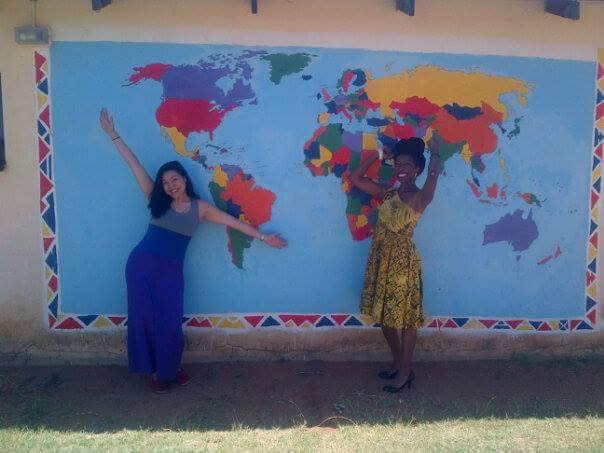
Jane and Chenoa, two high school classmates, serving in Peace Corps in South Africa
In Cameroon, I’m a Community Health Educator focusing on working with persons with disability. I help improve their life through educating them about nutrition, malaria, HIV/AIDS and sexual reproductive health. I host workshops on various health topics. Tell me what you’re doing in South Africa as Peace Corps Volunteers.
Jane: In South Africa, I’m a Community HIV/AIDS Outreach Program (CHOP) Health Volunteer where I focus on grass-roots efforts to address HIV/AIDS prevention, education, and care especially with women, youth, and orphans and vulnerable children (OVC) as well as reduce stigma, discrimination, and gender-based violence. The emphasis of my work can be categorized within the realms of care, prevention and community outreach, income generation, and poverty alleviation.
Chenoa: I work as an HIV/AIDS Health Educator in the lovely “Rainbow Nation” of South Africa. As time goes on, I will utilize various art forms to better illustrate and inform people about this serious health issue and other social ills. My goals here are to 1) Help lower the transmission rate of HIV, 2) Assist People Living With HIV/AIDS (PLWHA), Orphans & Vulnerable Children (OVCs), and their care givers and 3) Reduce HIV stigma and discrimination among infected and affected people. I just began implementation of a Grassroots Soccer/SKILLZ HIV Program that utilizes soccer skills to highlight HIV prevention strategies and lessen stigma/discrimination in the community.
I’m posted in the third largest city in Cameroon, Bamenda. Could you tell me where you’re posted and what is the size of the place?
Jane: I am posted in Kwa-Zulu Natal (KZN) which is one of the 9 South African provinces that borders countries of Mozambique, Swaziland, and Lesotho. The geography is diverse with coastal, hilly, plateau, and mountainous regions. My homestay and organization are part of the eThekweni District, also known as Durban, a coastal southeastern city with Indian Ocean beaches and one of the busiest ports in South Africa and Africa. I live in the Valley of 1,000 Hills which is named after all the hills, cliffs and valleys and is home to many of the Zulu people & their traditional lifestyles. Hillcrest is a suburban city where I work and do most of my shopping. My work site Hillcrest AIDS Centre Trust (HACT) is conveniently located at the center of the city and along the taxi routes for surrounding villages to access services. KwaNyuswa is the name of my stunning village which is in The Valley of 1,000 Hills and right outside of Hillcrest. The community is considered very large (To give you an idea, we have 5 high schools throughout my village and when I did some community mapping to visit the schools it took more than 3 hours on foot!)
Chenoa: My village post is about 1.5 hours east of a town called Emnambithi/Ladysmith. It is a “blackspot” created in 1968 by the Apartheid Government when black South Africans were forced from their homelands and evicted to far away sites for the convenience of white farmers. There are about 5,200 people living in 1,200 houses with the average household of 4-6 family members. My village is about 3 km wide in radius.
In Cameroon, as a female volunteer, I get proposals frequently. Have you received them too? If yes, could you share some examples?
Jane: In South Africa, as a female volunteer, it is also very common for me to receive wedding proposals. On a daily basis, I get proposals from local men wanting to pay for my “labola” (translated as bride price) which is a traditional Southern African custom where the man pays the family of his fiancé for her hand in marriage. Customarily the labola includes the price of several cows or the monetary value of the livestock. The custom is aimed at bringing the two families together and showing the man is capable of supporting his wife financially and emotionally. The ironic part is that the majority of the time, I have never seen the man before yet he is proclaiming his profound love for me. Usually I thank the man and go on my way, but sometimes he can be persistent so I have to be firm with my response and state I am not available/interested. Many of my fellow female PCVs also experience similar events, and many of us think a big factor playing into this is simply our foreigner status/appearance. In my community, it is admirable and “in” for a black man to date a white woman.
Chenoa: Sexual harassment is my number one complaint here. I am constantly dismissing marriage proposals, sexual advances, and crude remarks. Once while walking through my taxi rank, I was grabbed. I screamed, shouted a barrage of obscenities, and made a big scene but people, including women, just laughed it off and left me to fend for myself.
Many Cameroonians ask me if I could help them move to the United States. I always have to explain to them the immigration process and help them understand that finding a job in the US is not easy and that there are many Americans who are unemployed and only 1% are truly wealthy. Do you face South Africans asking you to help them immigrate to the US?
Jane: Thus far, I have not had any South Africans ask me to help them immigrate to the US however I have had many share that they would love to go visit America one day. Some of the questions they ask are:
How much does it cost to travel to America? Do they have black people there (which funny enough is followed by…do you know Beyoncé, Chris Rock, Jay Z…etc? haha) Is it hard to find a job? Is it like our country? Is there racism there?
Sometimes I wonder if the proposals or men who are interested in me are mainly due to wanting a ticket to America in the long run. Who knows, could be one reason…
Chenoa: I often face statements like, “Let’s marry so I can be an American” or “Everyone in America is rich so you must take me there.” One person was even convinced that “there is gold on the ground in America so you can just pick it up and become rich!” I had a hard time persuading the person of the countless issues facing most, if not all people who call the U.S. home. I usually find a common ground by explaining that America mirrors South Africa with a majority of its problems and that South Africa truly is a wonderful place to live. By complimenting their country, it instills a pride in them they too often do not seem to carry about their place of birth. I don’t like that they do not revere South Africa as much as other places so I try to highlight the wonderful things about living here as much as I can and that usually makes the conversation steer into a direction I can handle.
I often find myself missing American food, especially cheese and ice cream. I will sometimes splurge on cheddar cheese that are very hard to find and cost $10 for a small block. When I go to the capital of the country, I will spend a good amount of money without feeling guilty on good western food that I cannot enjoy at my post. Do you find yourself missing American food and how do you find them?
Jane: I LOVE FOOD. For those who know me well, they know I find ways to eat and go through any means to satisfy my cravings (within reason…most of the time) I’m very fortunate to live a 20-minute taxi ride away from my shopping town, which is a suburb filled with franchise businesses. Luckily I can get fresh produce and foods that meet a balanced and healthy diet, but I have to budget carefully because of our meagre PCV stipend. I also find myself spending a good amount of money on items without feeling too guilty about it because it reminds me of home and gives me a little bit of comfort when I’m feeling homesick. Here is a very small list of things I miss from home (it would be a novel if I included everything):
First and foremost, my mom’s Taiwanese beef noodle soup, all-you-can-eat buffets (where you want to die at the end, but it’s so worth it), Doritos (they have them here, but the flavors are completely different), Brookside dark chocolate covered pomegranates/acai berries, American brand ice cream, Ghirardelli brownies, chex mix, an all-American breakfast, Thanksgiving food.
Chenoa: In many ways, South Africa is a westernized country to be honest. I can find almost every food I enjoyed back home here in country. When I travel outside of my village to various cities, I can dine at Dominoes, Burger King, KFC, Subway and even McDonalds. I have no problem finding ice cream, pizza, cheese, and sweets of any kind (which is probably why I have this lovely additional 15 pounds around my waist right now lol). The only foods that I haven’t been able to find are Mexican food (I would KILL for a chimichanga right now) and turkey. Other than that, I’m very satisfied with the food choices here.
Cameroonians eat a lot of beef and chicken with fried plantains and vegetables and various sauces. They also eat a lot of grilled fish and corn. Peanuts are also very common here and they will make peanut sauces to include in meat or fish dishes. Beignets and spaghetti omelets are also common here too. Could you tell me briefly what the cuisine is like in South Africa?
Jane: South Africans love meat! You will find “inyama” (meat) in almost every meal of the day and at any community event. The meat is usually grilled and that is referred to as a braai. They also eat a lot of maize meal or commonly known here as “pap” and it’s often accompanied by traditional steam bread, beetroot, carrots, cabbage, potatoes, amadumbe (type of sweet potato) mashed butternut squash and spinach. In my community there is a lot of influence from Indian cuisine, so locals cook with curry spices. Chakalaka is a popular spicy side dish with grated carrots, green peppers, onion, vinegar, and chilli. The boerewors roll is a common South African treat, as well as biltong (something similar to beef jerky). In rural communities, chicken feet and cow tripe are popular as well.
Chenoa: The cuisine, just like the people, is extremely varied. There are so many different peoples and ethnicities represented here and it shows in the cuisine. Traditional foods include LOTS of meat, such as goat, chicken, pig, and beef with pap. Pap is made with ground maize and is served on the plates of most traditional dinners. If there is no pap around, you can guarantee that there is rice instead. Beetroot, pumpkin, cabbage, and grated tomatoes are also common traditional foods. South Africans also love drinking tea and make it a point to offer it to guests.
There is an impressive Indian population here in South Africa and their foods are just as impressive. Samoosas, curry, rice, chicken, roti, and the infamous bunny chow are staple Indian foods. The Afrikaaner population, another large ethnic group found here, has an amazing array of “braai” (barbecue) foods. There are French, Scottish, English, and host of other nationalities represented here so the list of foods is truly endless.
I experience power outages frequently here. What about you?
Jane: I have electricity the majority of the time; however South Africa is plagued by what is referred to as “loadshedding”. With loadshedding electricity comes and goes and affects the whole country and more often so in rural communities.
Chenoa: The power grid in South Africa is unstable so many places experience load shedding. Load shedding is when there is a temporary power outage. These usually happen in 2-hour increments. I experience them almost daily where I live.
Acquiring internet access has been challenging in Cameroon. 3G network was just built shortly after I arrived in country. My internet options are somewhat limited. I can get a plan with 3G network but has limited data which is very expensive or or I can get a plan with the slower speed that is charged by the number of hours and is less expensive. At the moment, I switch between the 3G network plan and the slower speed plan. Internet access has been very important for me as staying in touch with family and friends and connected to the world through social media is my way of helping me know what is going on in the world and informing everyone about my life in Cameroon. How has your internet access been? Is having internet access important?
Jane: Internet access has also been a challenge for me here in South Africa, but fortunately I was able to purchase a local blackberry phone that allows me to get a monthly unlimited data plan at a reasonable price. Although very slow at times, I am able to use whatsapp, email, and facebook which are the main ways I stay connected to family and friends abroad and in-country. At my work site, we are lucky to have internet for business purposes. In my shopping town, I can go to cafes and restaurants where they usually offer 30-60 minutes of free wifi. I can also use a cable modem and add data onto it if I need internet in remote places and in my community. Again, the connection is usually extremely slow and fickle but it is better than nothing and having the ability to communicate with loved ones is most important to me and worth any kind of wait, price, and headaches.
Chenoa: Having internet access is of the utmost importance to me. When I am not connected via social media to family and friends, I find myself in a terrible Peace Corps slump and I feel very isolated. I can access Internet through my phone as long as I am not experiencing load shedding. It is affordable. Usually I spend about $15 USD per month to purchase airtime (phone call credit) and data for Internet use.
I have been finding that privacy and personal space is absent in Cameroon. For example, when riding a sedan taxi, I can be squashed with nine other people in the car. I find Cameroonians to be blunt. They will give very honest thoughts without realizing one person’s feelings could be hurt and often ask questions that are too personal. It’s important to note that Cameroonians may perceive these conversations differently by thinking that they are not sensitive and they are just simply very open people while the Americans may perceive them to be sensitive. They will sometimes knock on my door early in the morning on Saturday when I prefer to be resting. Do you experience lack of privacy and personal space?
Jane: In my community and many other places I’ve travelled in South Africa, lack of privacy and personal space is also the case. People often do not knock before entering rooms, will be eager and quick to touch your hair and skin, tell you how you’ve gained weight, and so forth. In taxis it is common to find extra people crammed in so you have children, chickens, potato sacks, buckets all piled up on your lap or in your face. Initially it was very challenging to adjust to this culture of physical proximity and the normalcy of it, but as time went on through educational conversations many of my local family and friends have met me in the middle to respect my personal space and feelings.
Chenoa: Privacy and personal space? What is that??? South Africans do not prescribe to the notion of “private space” as we do in the States. I think I have developed slight claustrophobic tendencies since the beginning of my service in South Africa. I find myself hyperventilating and having mini panic attacks when I take khombis (taxis) here because, inevitably, someone is either sitting on my lap, handing me a baby to hold, and/or hitting me in the back of my head with a bag of potatoes. People often refuse to open windows as we ride too because they don’t want to mess up their hair which makes me even more paranoid as there is typically that one person who doesn’t cover their mouth while coughing. Also, when walking through village, people often want to know what’s in the bag I’m carrying, where did I just come from, and why. These are cultural norms I don’t think I’ll ever get used to. Usually people are not perceived as nosy or rude when asking these questions but it is just not comfortable for me.
Time. Cameroonians are often late to meetings. Buses often do not leave on time. Do you experience time not always being followed on schedule?
Jane: Yeeeeeees!!! There is a real thing called “South African time” here and I struggle with it day in and day out because I am a very punctual person and value being on time like it’s no one’s business. Since moving to South Africa, I’ve had to force myself not to get overly frustrated when people say they’ll meet me and I’ll be lucky if they even show up 4 hours late. There are words that are commonly used like “I’m coming now now/just now” so interchangeable meanings that could be at the moment/tomorrow/perhaps never. Yes, there are many times I want to rip out my hair but the reality is I can’t get too worked up over this part of “culture” and to make magic happen, I must lead by example and not completely lose my own expectations/values.
Chenoa: I have had to let go of my U.S. concept of time in order to stay sane ?. Nothing ever starts or ends on time here. If I am told that an event will only take an hour (yeah right), I pack a heavy lunch, bring my phone charger and my Sudoku book because I already know what that REALLY means.
In spite of the challenges, I still find my work to be very rewarding. I love being able to help people with disability become more empowered to advocate for their rights and become better educated about their health. What has been the most rewarding experience so far?
Jane: There are too many rewarding experiences to list, but some of my top favorites are:
- When local community members trust me with their personal information so I can provide them with support, maintain confidentiality, and connect them with appropriate resources.
- Build strong relationships with my host sisters.
- Help my niece learn how to read and write in English.
- Taking in all the good, the bad, and the ugly in order to integrate into a community and become part of many people’s lives.
Chenoa: There are endless challenges in any Peace Corps country of service, but I would not trade this experience for the world! I get to live in another country FOR FREE doing work that I LOVE—what can be better than that? Although the HIV/AIDS work is important, the best times I have had have been spent just connecting with people as people. You can find me dancing outside to South African music with my neighbors, watching WWE with my host brothers, or singing with a church member. Those unquantifiable, quality times with loved ones are the moments I’ll never forget.
If someone told you ten years ago when you were in high school that ten years from now you would be living in Africa and serving in the Peace Corps, would you have believed that person?
Jane: Since high school, I’ve had dreams of going off to Peace Corps so I would have believed that person. Timing is everything and for me, I originally thought I’d go sooner in life rather than later, but now looking at the big picture in retrospect, now is the perfect time for me to be living my dream here in South Africa and I wouldn’t have it any other way!
Chenoa: I have wanted to serve in the Peace Corps ever since I was 15 years old. I’m almost 30 now so I am grateful to have had the chance to live out my dream. However, after studying Spanish for almost a decade, studying abroad in Costa Rica and Mexico, being a Latin American Association volunteer, becoming a Zumba Instructor, and buying Selena and Shakira CDs, I JUST KNEW that Peace Corps was going to send me to Latin America. Well, clearly, the joke is on me!
Now, if you had of told me that I would be serving at the same exact time as you and Jane, THEN I would have said you were crazy!
October 1st, 2015 by Rachel | Tags: Peace Corps, Third Goal | No Comments »
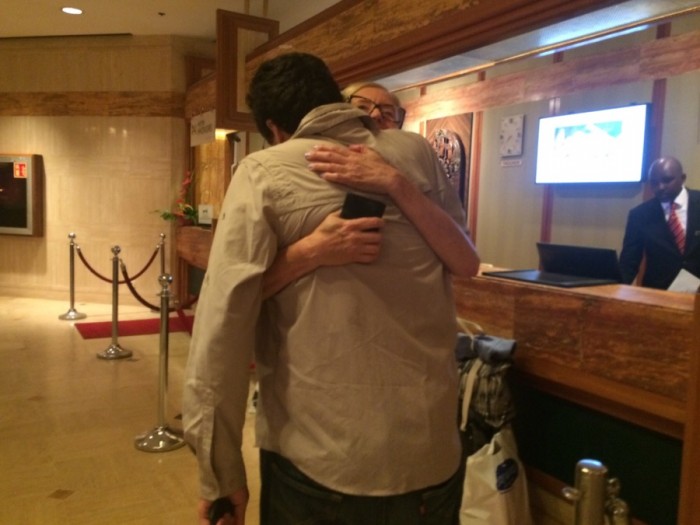
Alex and his mom reunite for the first time in a year.
This past week, I was in Yaounde not to only see my love, Alex, who I had not seen in two months, but also his mom, Judy, who traveled from the US to Cameroon to get a taste of our life in Cameroon. Seeing Alex and his mom reunite for the first time in a year was a very emotional experience. We showed her Musee d’Art Camerounais, Mont Febe Monastery, Peace Corps Office, and a French bakery. Giving Judy a small tour of Yaounde was just a small part of educating her about Cameroon. Majority of our time were spent conversing with her about the life of Cameroonians, social issues in particular health and our work at our posts while eating and introducing her to Cameroonian food. She tasted fried plantains, ndole (bitter leaves with shrimp), and a couple different grilled fish.
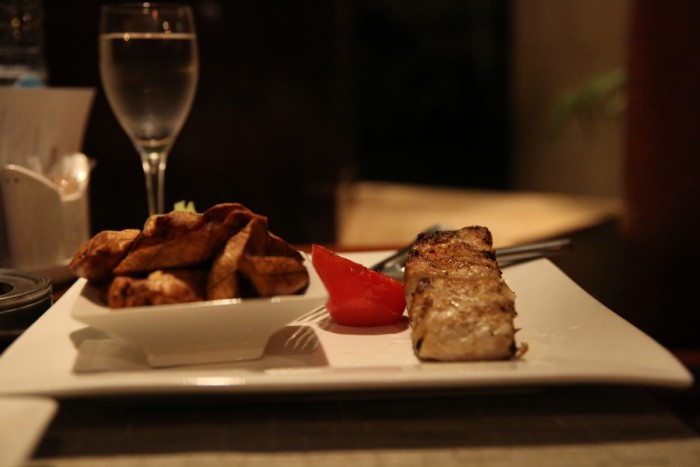
Fish with Fried Plaintains
When Alex and I both shared with her our struggles in seeing each other as we live so far away from each other in spite of living in the same country, she said, “Isn’t there an airport in Bamenda? Can’t you fly to Ngaoundere from there?”
“Yes, there is an airport but it’s not in operation. Actually, here’s the story. When I was telling my counterpart several months ago about how much I miss Alex, she told me that I can just go to the airport that was right there and fly to Ngaoundere. A woman happened to be walking by us and overheard our conversation. She said, ‘That airport has been closed for two months.’ We eventually learned that the airport has been closed to fix the communication infrastructure system. Moreover, Peace Corps Volunteers are actually not permitted to fly in country because the flights are often unreliable and frequently cancelled.”
In this conversation, she was given an insight of the reality of infrastructure in Cameroon. Alex and I both shared our experiences of traveling in country. “I’ve been in a sedan taxi…sedan taxi…with as many as 10 people in one car,” said Alex.
“I’ve been in one with as many as 11 people,” I said.
“Children will sit on people,” Alex said.
“People can really be on top of each other,” I said.
When Alex and I shared with her that we’re planning a trip to Kribi Beach, one of the popular beach destinations in Cameroon, for holidays in December, Judy advises us to go ahead and book a hotel before they get filled. When Alex pulls out his computer and looks up hotels, Judy asks, “Is there a Hilton or Marriott there?”
“No,” I said. She was given an insight as to how there is very little presence of American companies in Cameroon. I should add that McDonald’s do not exist in this country.
Then we discussed our work. “What projects do you have coming up?” Judy asked us.
Alex explains that he is working on educating his community about malaria prevention by not only giving presentations at schools but also visiting homes to see if families are sleeping with nets and converse with them about the importance of sleeping under the nets. He also shared that he’s hoping to start a support group for people living with HIV/AIDS and also a support group for persons with disabilities. He also mentioned that he would like to do presentations on family planning at the schools now that schools are back in session.
I shared that I am starting a series of nutrition workshops and continuing to conduct malaria workshops. I also shared that I applied for a grant to conduct a one day HIV workshop and HIV testing for about 250 persons with disabilities. Once if I get the results of HIV testing which will tell who is HIV positive, I hope to start a support group for persons with disabilities living with HIV. I’m also organizing a women’s empowerment workshop for women with disabilities.
Our conversation led us to discuss about sustainability. We discussed whether or not building wells or water pumps or toilets for the community creates a sustainable impact or if providing education and training to the community members is far more invaluable than handing out an item to them.
Alex also informed her that homosexuality is prohibited in Cameroon and even discussing it is a very sensitive topic.
We shared some of our proposal stories. While Alex has not received proposals, he has had a few women come up to him asking him if he will propose to them.
We also shared a few maladies related stories, which she as expected did not enjoy hearing.
While Judy was able to get a good taste of Cameroon, I have come to realization that Cameroon has a lot of room for improvement in tourism infrastructure. She did not visit Alex’s post because the idea of taking a 15 hour train ride from Yaounde to Ngaoundere and then taking an eight to ten hour bus ride on an unpaved road while being squished with other people and on top of all, using a latrine in his home did not sound appealing to her. Cameroon has so many beautiful spots that are worth seeing but until the roads are fixed and Cameroon bring in good quality hotels and tourism services, not too many tourists will be visiting here.
September 19th, 2015 by Rachel | Tags: Disability, Malaria, Peace Corps | No Comments »
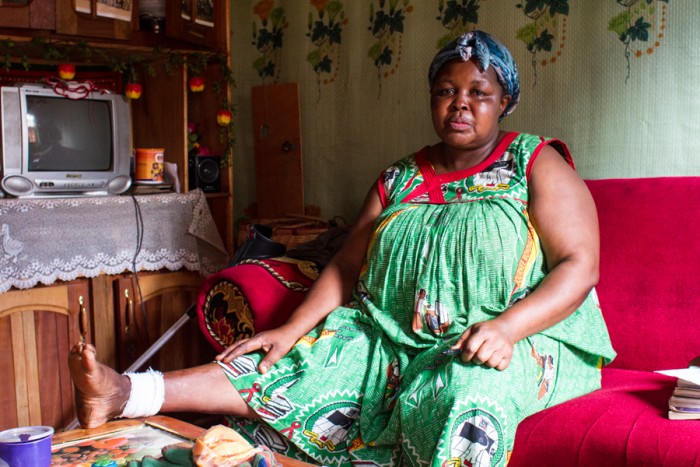
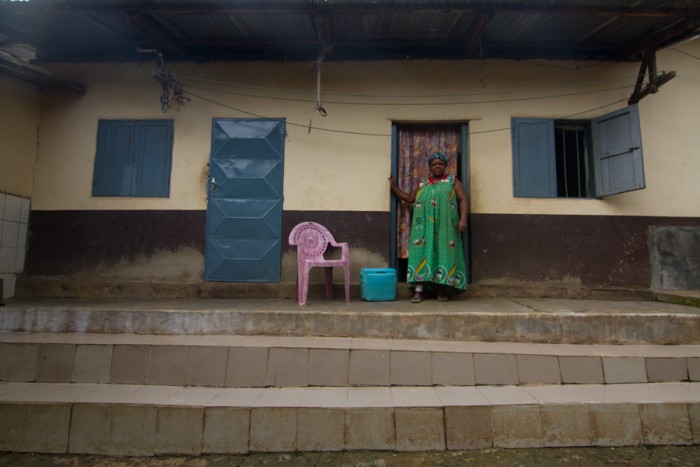
Last week, I visited four more homes for malaria evaluation. I visited a home of a woman who became disabled from crashing into a plank which cut her leg severely. Chantel, a member of Northwest Association of Women with Disabilities, never had it fixed properly and so, she struggles to walk and is often in pain. While she had a mosquito yet, it was tied in a knot. When we see it tied in a knot, it often means that they do not untie the knot and bring the net down to sleep under. So, this can mean that they don’t really sleep under the net and therefore, they are not protected from mosquito bites. I asked if she unties the knot, she claimed “yes” but I will never know the truth.
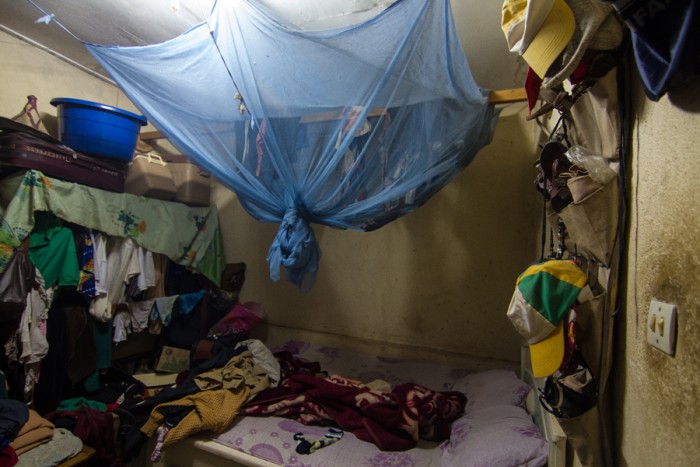
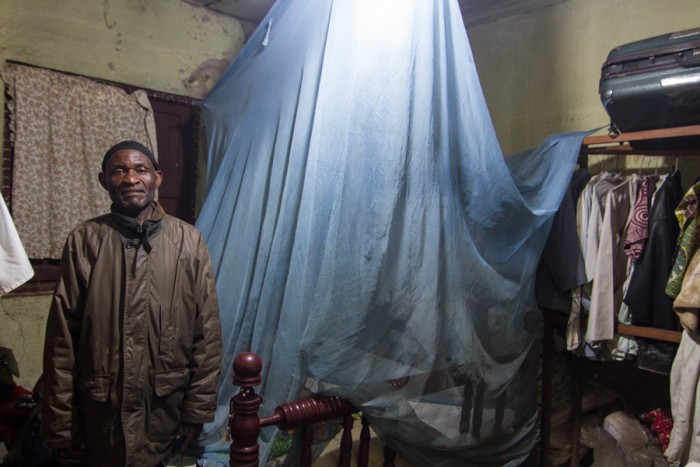
If I had to name one participant from all the workshops who would most likely sleep under a mosquito net, I would say it’s the President of Helping Each Other, Richard, who allowed me to host the very first malaria workshop last April. At the workshop, he showed genuine interest in preventing malaria as he listened carefully and engaged in discussions and said that he sleeps under a mosquito net. When I came to his home, as expected, he did have a mosquito net hanging down which means that he does sleep under a mosquito net. His home was also clean.
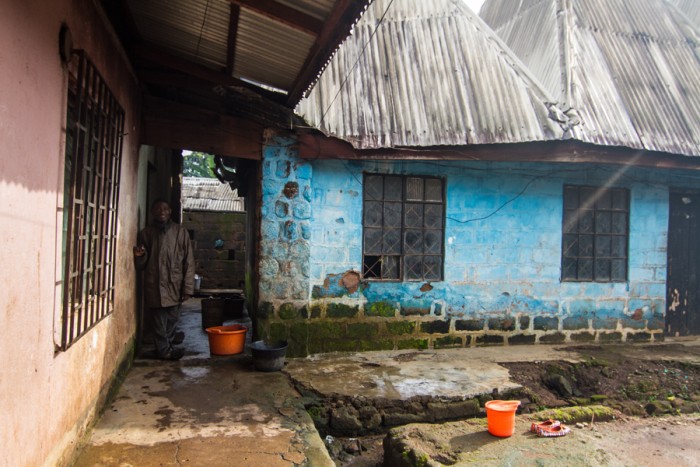
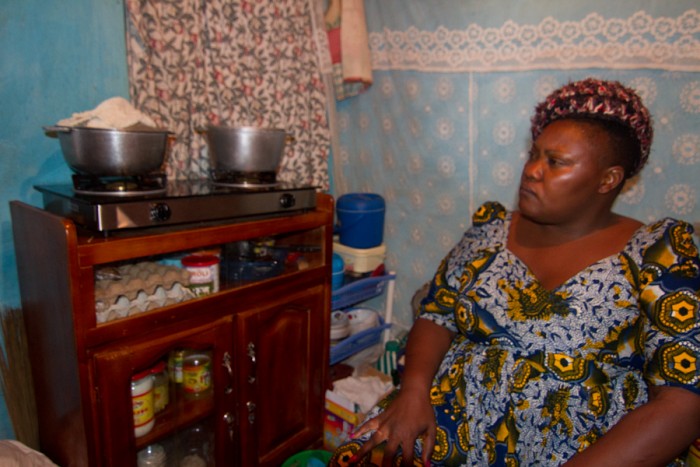
After visiting Richard, I met Fanny, a woman with mobility disability who is a member of Northwest Association of Women with Disabilities. She lives in a very tiny studio where she does cooking and sleeping in one room. She is trying to find a job. She had a mosquito net that was hung up and the sides were tucked in at the top but it was not knotted. This means that she may sometimes sleep with the net down.
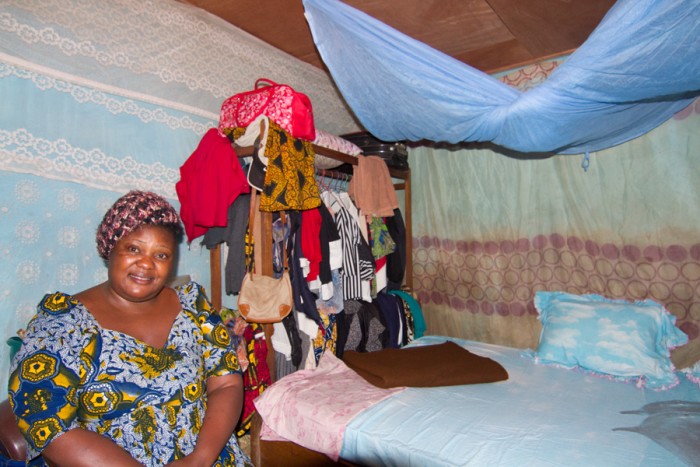
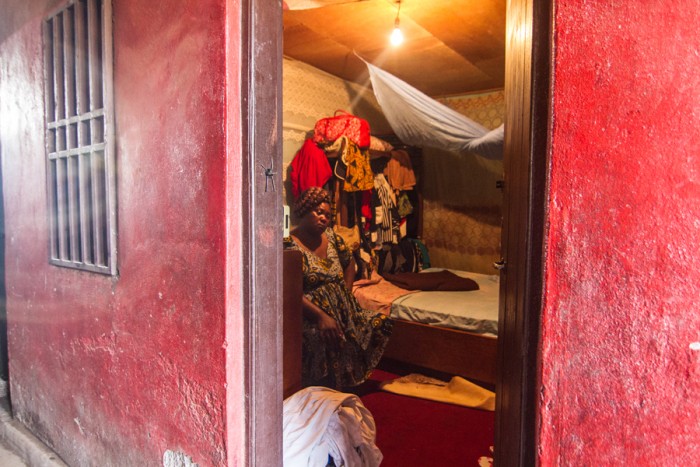
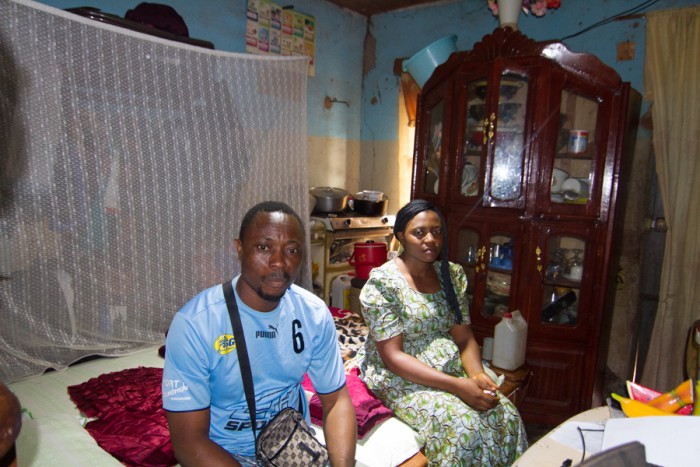
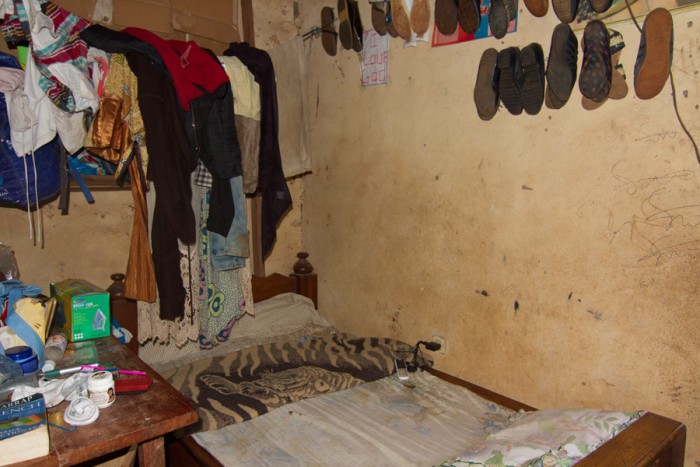
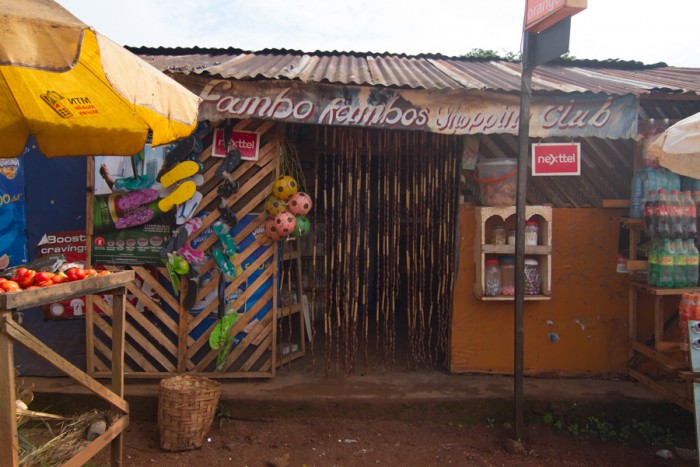
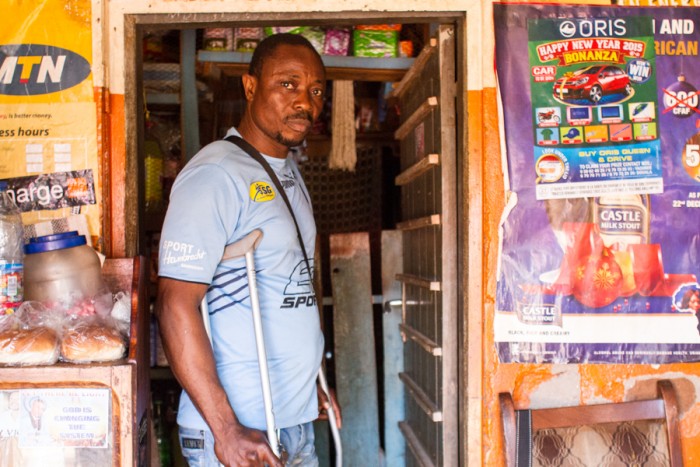
I then visited a home of a gentleman named Gregory who is a member of Community Resource Centre for the Disabled and the Disadvantaged. He became disabled from an illness and uses crutches to help him walk. He did not have a mosquito net but officials from a health center did visit his home recently and say that they will bring mosquito nets for him, his wife and children. I noticed that his windows did not have screens but he had shutters. I asked him if he closes the shutters at night and he said yes.
I hope to visit at least two more homes next week and then, I will revisit all homes in December to see if those who didn’t have mosquito nets have received them from health centers and made any new behavior changes.