January 8th, 2015 by Rachel | Tags: Peace Corps, Photo Essay | 1 Comment »
Cameroon is a country that has rich and unique culture and traditions. Dancing and music is a huge part of Cameroonians’ lives, be it when they are at the clubs or gathering with their neighbors. As a Peace Corps Volunteer, my goal is to not only work collaboratively on projects with my community host partners, but also learn about their culture so that I can be well integrated into their community and educate my family and friends in the United States and other countries about how people in Cameroon truly live. Thus, I asked my work supervisor if there were any special events happening during New Year’s Day in which I could participate. He told me that his home village was going to be hosting cultural festivals and that his wife who also grew up in the same village could accompany me there. I excitedly accepted the offer to go and was so grateful for them giving me the opportunity to participate in cultural events.
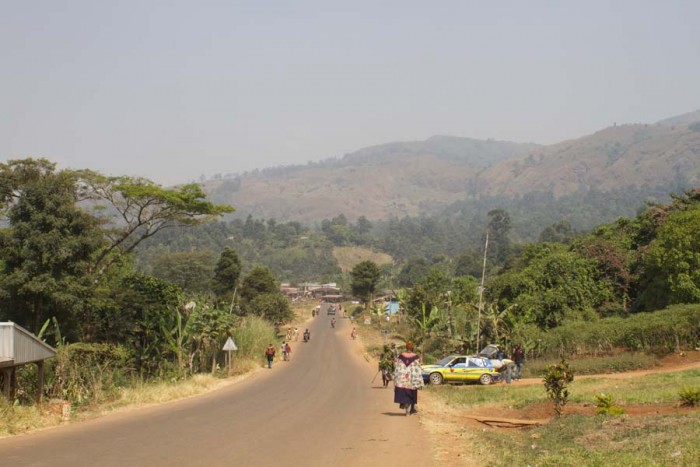
Last week, two days before New Year’s Day, with my work supervisor’s wife, Nicoline, and my counterpart, Ruth, I took an almost hour ride from Bamenda in two separate taxis to Kedjom Keku, a village nestled in the mountains where my work supervisor and his wife grew up and still have family members living there. The first taxi, which was packed with seven people total including the driver, took us to a village named Bambui where people go to transfer taxis to other villages. Thus, we caught another taxi that was headed to Kedjom Keju. The second taxi ride, which was in a sedan car, was very packed as it had 10 people total including three children and the driver. A mother who was bringing three children had to put two of her children on strangers’ laps, which is a very common practice in Cameroon. I missed the opportunity to hold a child in my lap because I had my motorcycle helmet on my lap. Cameroonians are very touchy and communal people, meaning that they often give strangers a lot of trust and like to be friendly with everyone. When traveling to villages, it’s not uncommon to encounter very packed taxi rides because there are not too many taxis heading to villages.
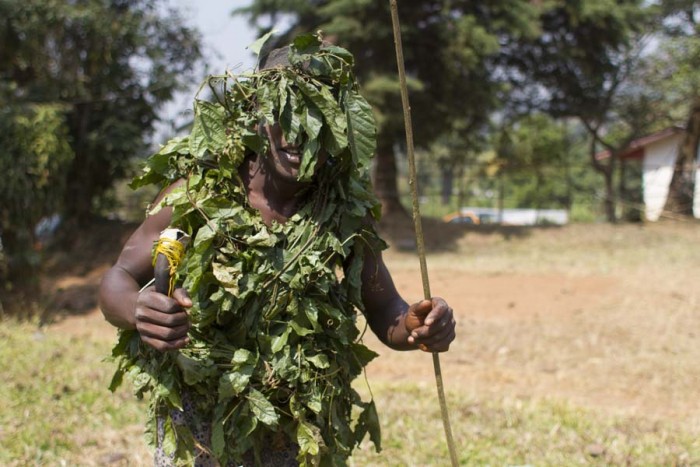
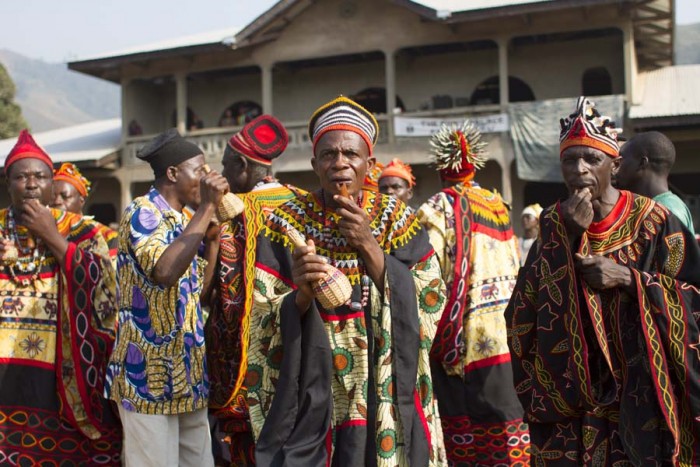
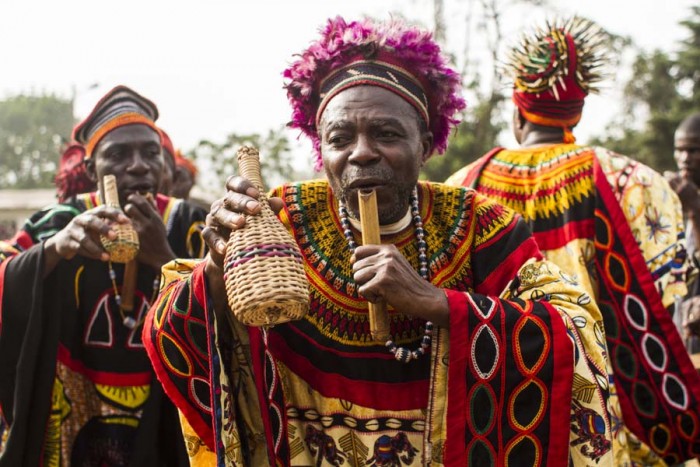
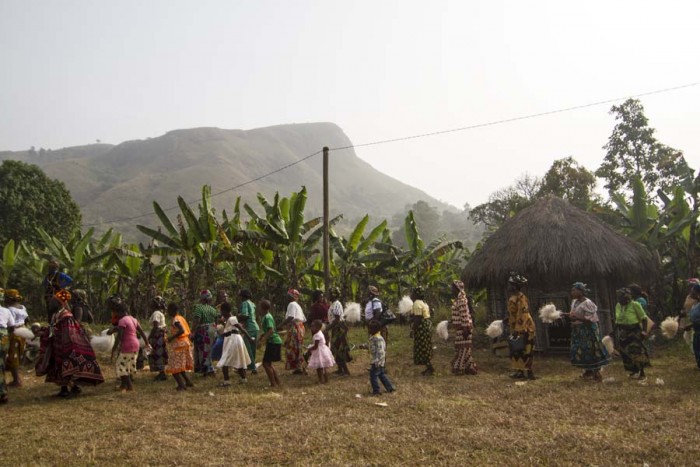
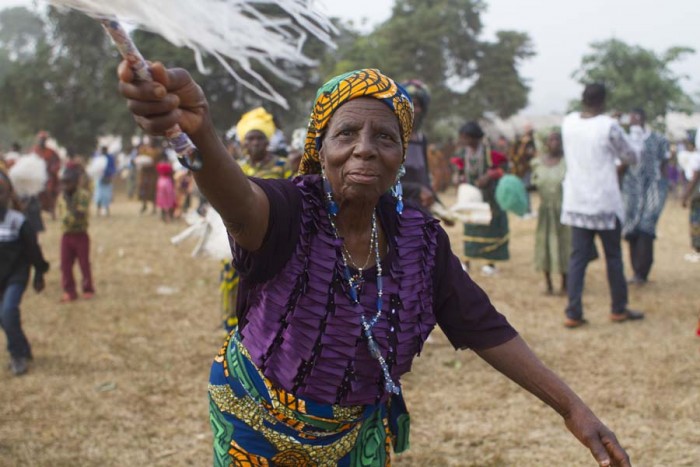
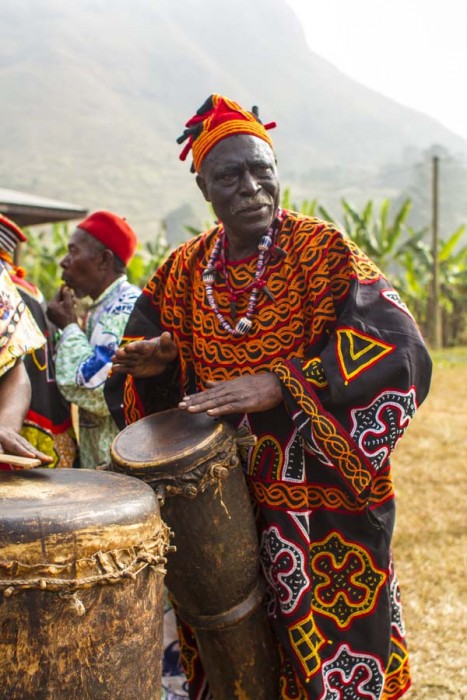
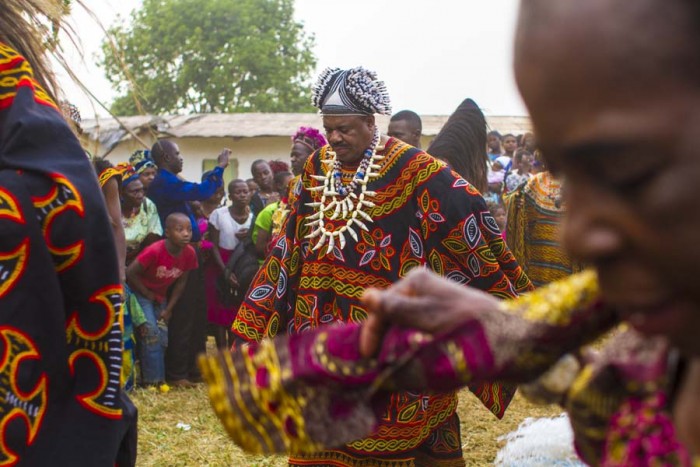
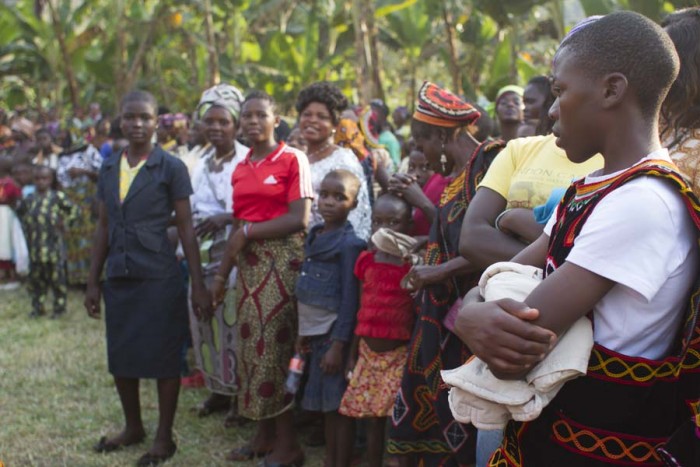
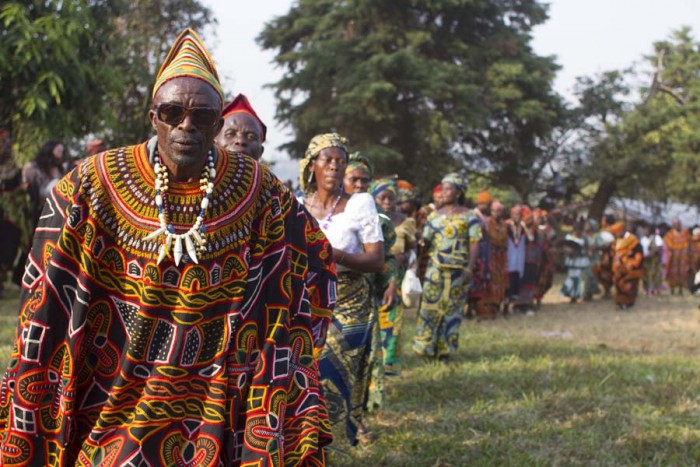
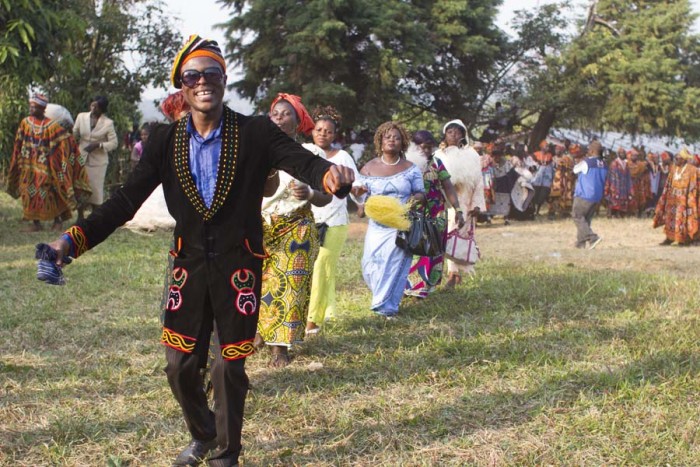
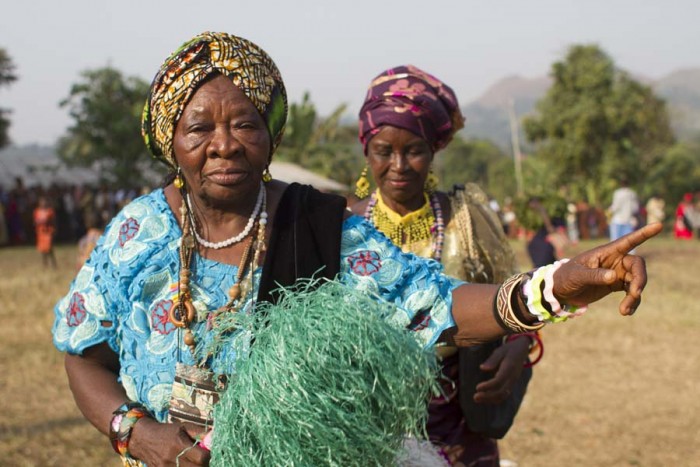
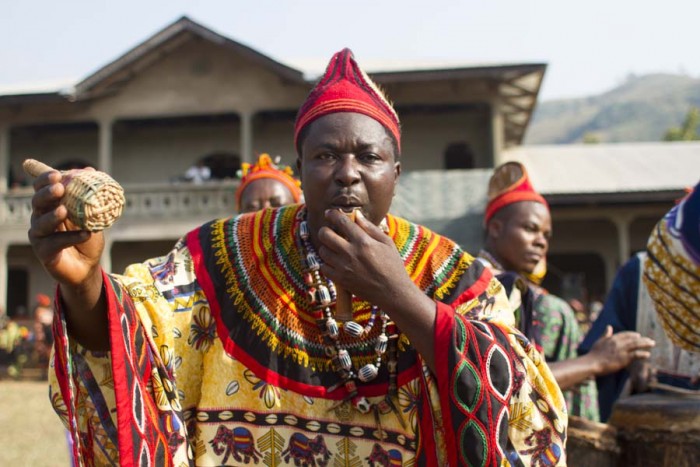
Once I arrived in Kedjom Keku, we immediately went to the village chief’s palace where the cultural festival was taking place. The primary purpose of the cultural festivals which normally occur at the end of the year and beginning of the year is to bring all the residents of the village together and showcase their dances, music and costumes on the lawn of the village chief’s palace. They also hold these cultural festivals to teach the younger generations about the cultural rituals so that they can continue to follow the traditions as the years go by. While a number of people stood and watched people danced on the beautiful sunny day, a significant number of people also danced. They danced in a huge circle around a handful of people who played drums, recorders, and other musical instruments. Many people wore beautiful traditional costumes, which were made of black fabric with bright colorful embroideries. They are all custom-made by local artists. People choose their own designs. The event lasted for several hours.
I attended the cultural festival again yesterday with my work supervisor’s wife because I wanted to take every opportunity to soak in moments that I would not get to enjoy back home in the United States.
Republished on Peace Corps Passport
January 6th, 2015 by Rachel | Tags: Disability, Peace Corps | 1 Comment »
Last week, as I was sitting in the main entrance area of the Coordination Unit of Association for Persons with Disability office, a woman crawled in through the doors. I wanted to drop my jaws. I immediately blurted out loud to my work supervisor, “This woman is crawling in!” As the woman continued to crawl in, I noticed that she was wearing knee pads and wearing slip-on shoes on her hands. As soon as she sat down by pushing herself up onto a chair, we introduced each other. She was the most vibrant, bubbly and friendly woman. She was always smiling and seemed to have so much energy. She came from a town about four hours outside of Northwest for a meeting with a handful of other person with disability from other parts of Northwest. I asked her why she doesn’t have a wheelchair. She said that she does have a wheelchair and also a tricycle but prefers to crawl most of the time because taxi drivers will not offer her a ride or charge a much higher fare for wheelchair users because the drivers have to take the time to help the person get in the car and put the wheelchair in the trunk. So, she find that crawling gives her the freedom to be able to take taxis as often as persons without disability and at the same price as them. This situation highlights an example of how empowered and hardworking people with disabilities can be as they are willing to be flexible and not allow obstacles stop them from reaching their destinations. However, this is a serious injustice. The most ideal solution would certainly be replacing all taxis with the same design taxis that are used in the United Kingdom. The taxis in the United Kingdom are designed in a way that wheelchair users can easily roll into the car without having the driver spend a lot of time helping them. Obviously, this solution sadly would not work in Cameroon for the time being due to financial reasons.
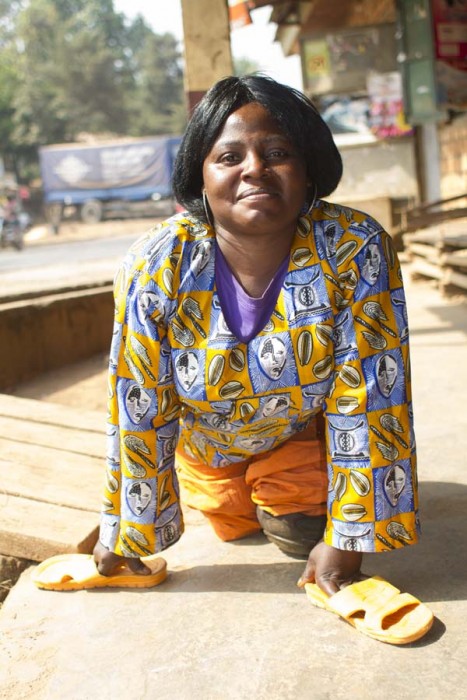
A woman with disability often moves on her knees.
She did at one point have braces when she was a child and used crutches but she outgrew braces and was never able to acquire a new set of braces.
As I talked more with this woman, she told me that she believes that she became paralyzed from malaria which she had when she was five years old. This was the first story I have heard in person from someone who became disabled from malaria.
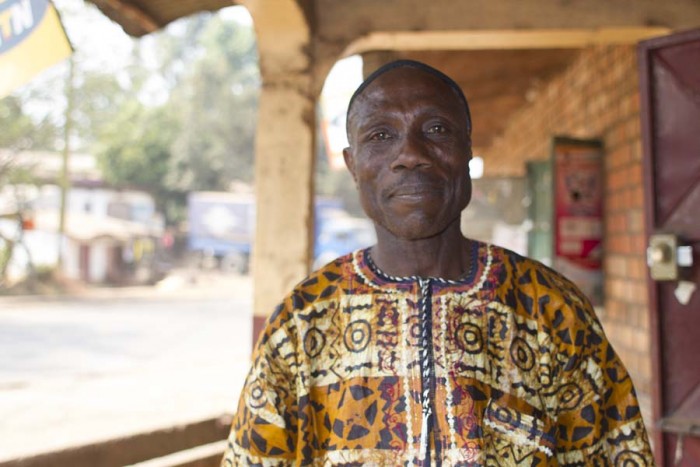
This gentleman is able to walk without any assistance after having numerous operations.
Then a gentleman from another town outside of Bamenda walked in. I asked him what kind of disability he has. He told me that he has a mobility disability. He was in an accident many years ago. He was unable to use one of his legs for four years and had to walk with crutches. He couldn’t get water from the pump by himself and had let his wives do it for him. Today, he gets water by himself with no assistant as he can walk well without crutches. The only issue he has with his leg is that it doesn’t bend as well as it used to. I asked him why he is able to walk again. He told me that it was because he had numerous operations and didn’t give up until his leg was fixed. He was able to have the operations because he had the financial means. This is an example where money unfortunately plays an injustice role in how well people are able to access good quality of healthcare.
I spent some time talking with a few other people with disability who came from outside of Bamenda for the meeting. The issues they face are almost no different from people with disability who I have met in Bamenda. For all of them, their disability was acquired later in life. One acquired mobility disability from quinniamax injection. Three others became disabled from accidents. One became blind from bacteria in a river. All except for one don’t have direct water access and require their children or family members to get water from the pump, well or stream.
January 4th, 2015 by Rachel | Tags: Disability, Peace Corps | 4 Comments »
Peace Corps recently sent out a newsletter to all volunteers explaining the importance of diversifying the volunteers and being inclusive of different ethnicities, races, sexual orientation, religions and ages. I would like to take an opportunity to share why people with disability should be part of Peace Corps. People with disability offer unique strengths that many volunteers without disability do not have and would be a huge advantage to Peace Corps.
Peace Corps has ten core expectations for being a volunteer. One of the core expectations is: “Serve where the Peace Corps asks you to go, under the conditions of hardship, if necessary, and with the flexibility needed for effective service.” People with disability have a lifetime experience of facing the challenges and being flexible. Because the society does not always accommodate the needs of people with disability, people with disability find ways to adapt and adjust to the environment that does not fit them. As a result, they are the most flexible people and are willing to adapt to different environments. For example, people using wheelchairs often have to take longer or alternative routes to be able to reach to destinations such as going inside a building as ramps are sometimes not in the same place where the stairs are located. Wheelchair users are also willing to switch to different wheelchairs that best fit the environment in which they are navigating. As blind people cannot drive, they are willing to spend more time commuting to places via public transportations. Many people with hearing loss need closed captioning when viewing movies. In the US, many movie theaters will offer closed captions during only certain times on certain days. Therefore, people with hearing loss are willing to revolve around the movie theaters’ limited time offerings to be able to see movies with closed captions. For deaf people who communicate primarily through sign language, they are willing to find alternative means of communication to communicate with people who do not communicate in sign language. For example, they would use mobile devices such as iPads so that waiters and cashiers can communicate with them.
Most Peace Corps Volunteers face communication barriers as they learn a new language and communicate in a second language. People with hearing loss are more experienced than people who hear normally in handling the challenges of communications. Even though I have hearing loss, communication has been the least stressful part of my experience in Peace Corps because the challenges have already been part of my daily experiences. I already know the strategies for asking people to repeat or clarify if I didn’t understand what they said. I just say, “I’m sorry, I didn’t understand what you said in the last sentence. Can you please repeat the last sentence you just said?” I’ve dealt with moments where people snickered at me for saying something completely off topic because I misunderstood what people said. Instead of feeling embarrassed, I say, “Oh, I’m sorry! I thought you said this…” When people with hearing loss sit with a large group of people speaking in a second language, they likely don’t get too frustrated because they have faced many situations where they go to a noisy place such as a bar with a group of people and not understand what’s being said. One solution I use is to try to focus on speaking to just one person or two people in the group.
Many people with disability know how to be very patient, a very important trait to possess during service as volunteers often have to await to see the results of their projects or wait for meetings to start or buses to depart when they don’t run on schedule. When I work on my projects in Cameroon, I am often reminded that my listening and spoken language skills were not mastered overnight and it took years of hard work to reach to where I am today. This case is the same for people who have learning disability such as dyslexia who may take longer to learn to read or actually to finish reading a book. Many blind people who prefer to read in braille often have to wait longer to read newly released books as braille versions often come out later.
People with disability are great problem solvers and creative thinkers. They are determined and resilient because they face so many failures and mistakes due to their inability to do certain things and being told what they cannot do. As a result, they know how to learn from mistakes, find solutions and keep on trying. They are willing to go an extra mile to reach goals. For example, in college, I did a drawing assignment completely incorrectly because I misheard the instructions that was spoken by a professor in a class. Instead of being willing to take a failing grade, I spoke to the professor and asked for a clarification. I redid the assignment within 24 hours. In the end, the professor liked the new drawing so much that she hung it up on a wall outside of the classroom. After facing the incident, I always went to the professors after classes if they gave the instructions verbally to verify that I heard the correct information. In fact, there was an international student in my drawing class who was still in process of learning English and misheard the instructions and did the drawing incorrectly too.
At last, people with disability can help accomplish one of the goals in the Peace Corps Act which is to “give particular attention to programs, projects, and activities which tend to integrate disabled people into the national economies of developing countries.” Volunteers with disability obviously have first hand experience in living with disability and therefore, they have a better understanding of how to truly help people with disability. When people with disability in developing countries are able to form unique connections with volunteers with disability, they are able to share things that volunteers with disability would be able to relate to and sympathize well and learn so much from them about how to improve their quality of life. Also, volunteers with disability can help the locals change their perspective of people with disability by showing them how hardworking they are and helping them fully realize that people with disability can truly be productive members of the society.
I would encourage more people with disability to apply to join in the Peace Corps and also encourage Peace Corps to reach out to more people with disability and recruit them. I strongly believe that volunteers with disability do not face greater frustrations or challenges than volunteers without disability. Instead, they offer a lifetime unique experience that many people without disability do not have that allow them to perform their toughest jobs very effectively.
January 1st, 2015 by Rachel | Tags: Celebrations, New Year, Peace Corps | No Comments »
We, Americans and Cameroons, may live so far away and in a very different landscape. We may be living in a very different lifestyle and eat different food. But we all still share many commonalities. We are all humans who see the same sun and moon everyday.
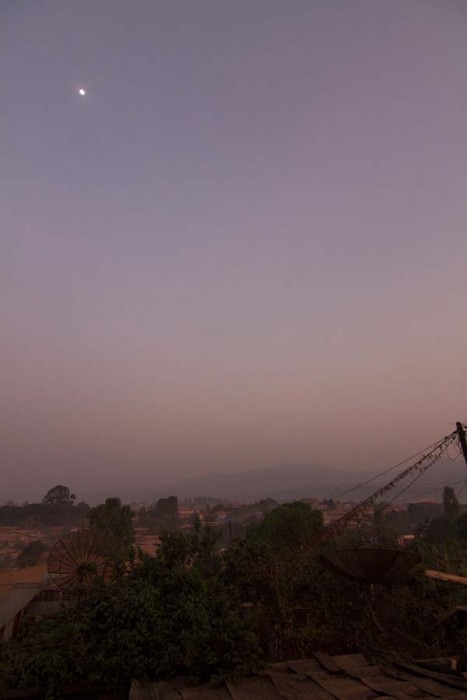
As I watched the fireworks explode in the sky when 12 o’clock at midnight hit, I became fully more aware of how much the Cameroonians have in common with the Americans. Not only both cultures watch fireworks to celebrate the New Year, but many also go to bars or restaurants to enjoy some drinks and food. Many also spend time at home with their families and friends and have a big feast.

When I was at a bar with my counterpart, Ruth, waiting for the calendar to turn to 2015, I found myself having difficulties hearing Ruth speaking to me because the music was insanely loud. It was so loud that the program that could turn off the background noise on my hearing device could not work well. The volume was very likely at the point where it could destroy the hearing of people who hear normally. The experience of attending a bar, however, was no different from having attended many bars in the United States. Both Americans and Cameroonians love to listen to very loud music.
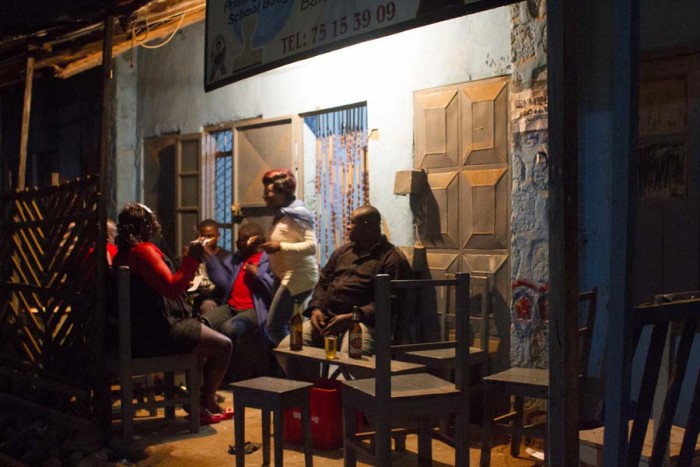
Cameroonians hanging out at a bar on New Year’s Eve.
While speaking about music, Cameroonians love Michael Jackson just as much as many Americans. My host family in Mengong spent some time on a weekend watching Michael Jackson music videos. They also love watching Disney movies. When I played “Let It Go” from my iPhone, my host brother immediately recognized the song even though it was in English and sang along the song in French. I’m not going to deny that it was the most precious moment to watch. Many Cameroonians also enjoy watching Disney Channel, Nickelodeon, National Geographic and CNN as they are all accessible via satellite. My host siblings watch Disney Channel and Nickelodeon every night.
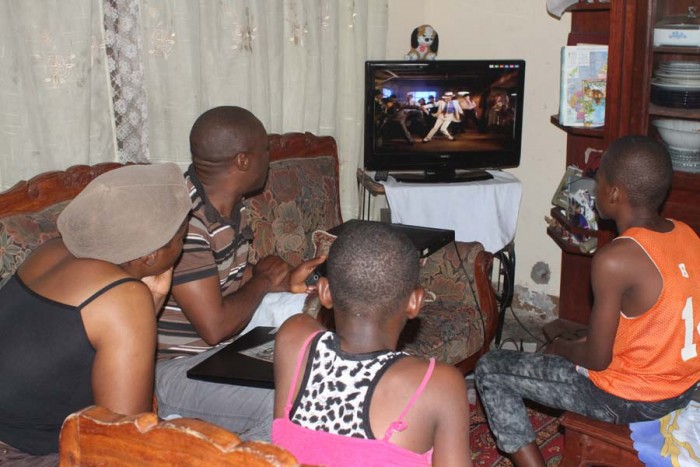
My host family in Mengong watching Michael Jackson music videos.
Facebook is wildly popular in Cameroon. When I visited Internet cafes a few times in Bamenda, I encountered many people surfing on Facebook. I’m also friends with a few Cameroonians on Facebook, and they are just as active users as many of us in America. Encarta, an encyclopedia software that many Americans and I used for school when we were children, exists in the country. I encountered my host brother in Mengong using it frequently with his friends to research.
Like the New Year celebration, Cameroonians celebrate Christmas very similarly to the Americans – Family and friends get together for a big feast and exchange gifts. They also have a Christmas tree adorned with ornaments and lights in their home. This is the same case with birthdays too. When my host family in Mengong showed me pictures of their life, I saw images of children celebrating birthdays. They had cakes. I asked them if they get presents like we do in the US, and they said, “Yes.” They sing happy birthday just like us, Americans.
I am sure that I will continue to uncover many more similarities between the two cultures as time goes by.
December 29th, 2014 by Rachel | Tags: Culture Exchange, Holiday, Peace Corps | 1 Comment »
December is a time of the year when many people in the United States get into holiday festive mode. Christmas decorations go up everywhere, both outside, on the buildings and streets and inside the buildings. Towns and cities are lit up with beautiful lights at night as most homes adorn Christmas lights and many trees on streets are wrapped in lights. When my brother and I were little, we would make guesses which homes were Jewish because the ones that didn’t have lights like my own home were likely Jewish. Hannukkah, a Jewish holiday that lasts eight days, occurs in December or sometimes in November depending on the Jewish calendar.
As days got closer to Christmas, I asked the Cameroonians in Bamenda, “Where are the Christmas decorations? I don’t see too many.” They told me that there would be more as days approached closer to Christmas. Even when Christmas Day arrived, I still noticed that there weren’t too many decorations. The only places that really had decorations were at roundabouts, which had mostly lights. Even when I was in Yaounde for a week, a couple weeks before Christmas, I saw that there were still not too many decorations. I saw lights only on one street in a very posh neighborhood. I have not seen one home with Christmas decorations on the outside of a house or apartment. One should keep in mind that only about 30% of Cameroonians are Christians. However, the majority of the population in the Northwest region is Christian and even the animist which compromises 50% of the Cameroonians still celebrate Christmas.
Even though I am Jewish and traditionally do not celebrate Christmas, I still celebrated Christmas in Cameroon on Christmas Day. One of my responsibility as a Peace Corps Volunteer is to integrate myself into the Cameroonian community and culture so that I can perform my job well and learn about the culture. Participating in cultural events whether it’s religious or not, is a great opportunity to help me gain a greater understanding of how humans in their homeland interact with the society. I received two invitations to spend the Christmas day with their families. One was from my work supervisor, Samuel, and the other was from Hilda.
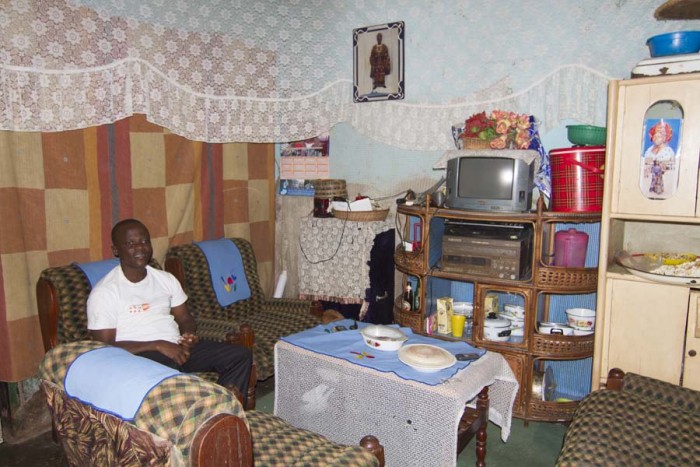
Samuel’s home which was very modest for Christmas.
I first went to my work supervisor’s home where I had the opportunity to meet his family for the first time including all five of his children. One of the first things I noticed when I entered his home is that there were no Christmas decorations. I commented to Samuel about what I noticed. He said, “We’re very modest. It’s better for me to save money for more important things such as education for my children.” I was really delighted to hear that he set good priorities and hold such a high value in education. Samuel and I spent some time talking about various cultural differences between the Americans and Cameroonians. His family also offered food which included rice and chicken.
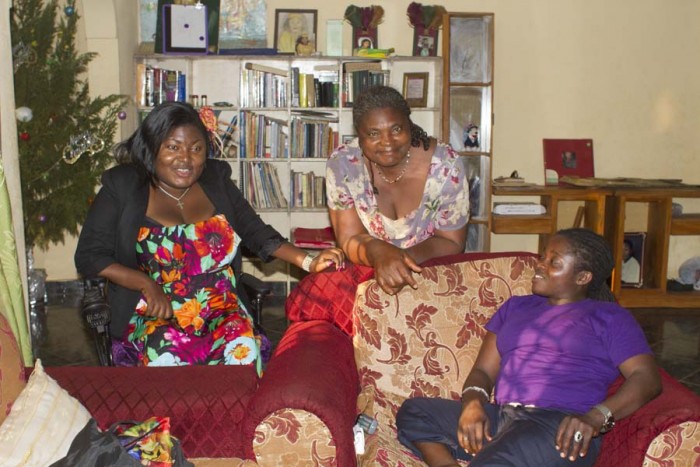
Hilda (left), Ruth (right) and a friend
Then I went to Hilda’s home where her home had a Christmas tree. Because evergreen trees do not exist in Cameroon, her tree was made of plastic. Just like any Christmas trees we see in the United States, it had ornaments and lights. I met many of Hilda’s family members who live with her. In Cameroon, it’s not uncommon for brothers and sisters and their families to live together in one home. Her table filled with a wide variety of traditional Cameroonian food which included yams, rice, beef, chicken, and couscous. We spent some time talking and like at Samuel’s home, we discussed cultural differences.
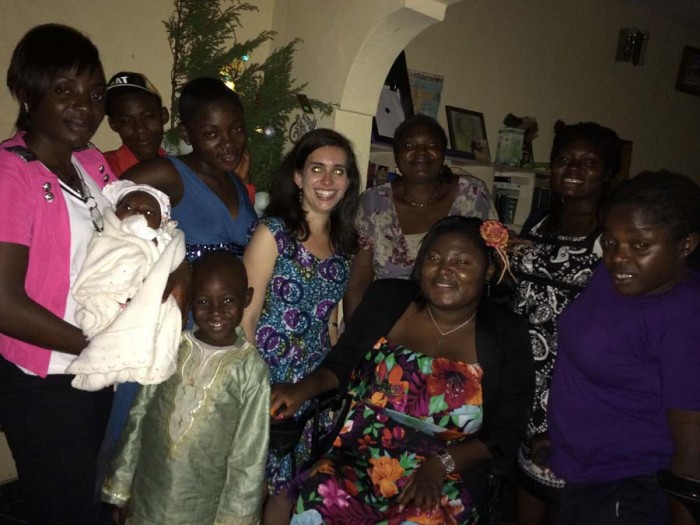
Me with Hilda and her family and friends
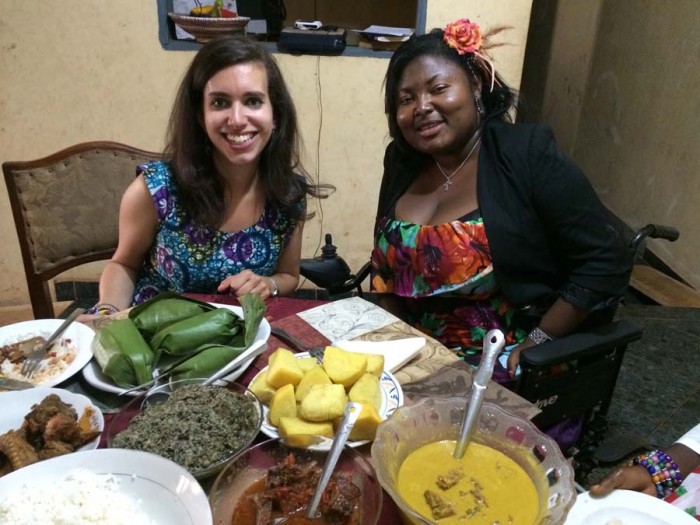
Me and Hilda
So, while Cameroon may lack in Christmas decorations which is not a bad thing at all as they are saving their money for far more important needs, they still share many similarities with the Americans when it comes to celebrating Christmas. Some families have Christmas trees. Many families enjoy a big feast with friends and relatives. Children are off from school and receive presents. Some go to church too. On top of all, during the last few days prior to Christmas, being at the shopping areas in Cameroon is just as bad as it is in the United States. Both places have too much traffic and people.
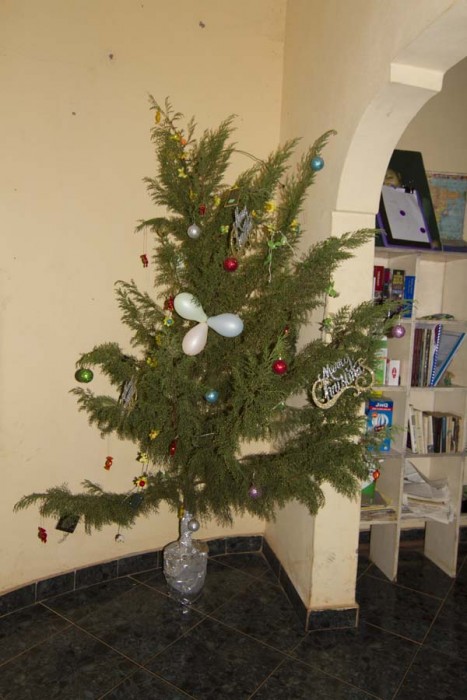
Hilda’s Christmas Tree