December 24th, 2014 by Rachel | Tags: Disability, Healthcare, Peace Corps | 1 Comment »
Almost two months ago, when I was in Adamawa for a site visit, a few Peace Corps Volunteers and I were at a health center in a remote village about an hour and half outside of the capital. We were standing on the side of the road trying to catch a bus or taxi. A Peace Corps Volunteer tried to stop a bus that was passing by but it just continued to drive by. A few minutes later, we caught a taxi. About 15 minutes later, we came across the same bus that the Peace Corps Volunteer tried to catch. It was in an accident with another bus. It was caused by a break exploding, resulting the bus to crash into the other bus. I was witnessing an automobile accident in the country for the very first time. The front and driver’s side was smashed so badly. The taxi driver stopped and got out to help people at the accident scene. I didn’t see any ambulances or healthcare workers. A number of cars just stopped. Cameroonians got out and helped people at the accident scene. I saw them retrieve the driver out of the bus who was killed instantly. Some passengers also suffered broken bones. This scene shook me and made me feel grateful that I missed the bus. However, it made me pause and think about the healthcare system in Cameroon. I questioned if the people who suffered broken bones would be able to get to a hospital and be treated well.
Yesterday, I interviewed additional seven people with disability as part of my Community Needs Assessment. Four people who have mobility disability became disabled from accidents. They all use crutches or walking stick to help them walk. Two were hit by taxis. One was caused by a bamboo tree falling down on him. Another fell in the well. They all did receive medical attention for their disability. However, was the attention they received sufficient? If they had access to good quality healthcare and freedom from financial burden, would they have been able to be treated to the point that they could walk again? It has been clear that they do face financial hardship. Two dropped out of high school. Another stopped going to school right after finishing primary school. Another never went to school. As a matter of fact, the one who never went to school can only speak in a local dialect and cannot read at all. The reason is simply because they had no money to pay for school fees.
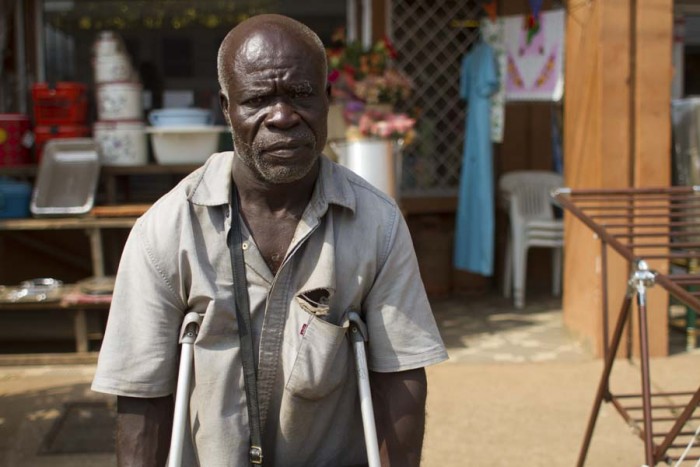
Moreover, when I was in training, I learned that health insurance is almost non-existent in Cameroon. Only one percent of all Cameroonians have health insurance coverage. The government provides almost no support for healthcare. Therefore, most pay out of pocket for their healthcare. The general population of Cameroon typically acquire funding for their healthcare through their salary, savings and loans. About 30% of the poorest Cameroonians and about 20% of the lower middle class Cameroonians have to sell their goods or animals to be able to afford healthcare.
As an American living in Cameroon, if I am in an accident and need medical attention, I will still have access to the highest quality healthcare. Peace Corps in Cameroon has three very own medical officers who only treat volunteers in Cameroon. If the healthcare facilities in Cameroon cannot provide me the attention that would ensure that I can reach the maximum potential to get better, Peace Corps would medevac me to the nearest highest quality healthcare facility which could be South Africa, Morocco or United States. However, unfortunately, almost all Cameroonians do not have access to this kind of healthcare system that I currently have. I have this high quality access simply because I have the financial support. It’s an injustice. Access to the highest quality of healthcare should be a basic human right. Moreover, when people are properly treated, it can be a huge cost saving to the society.
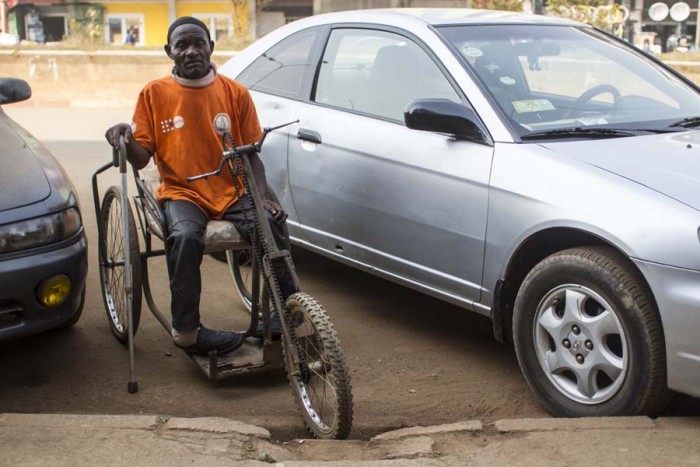
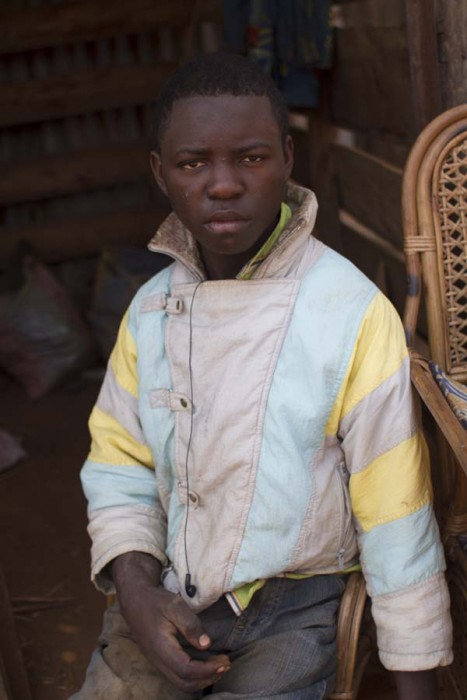
The latest interview results also show that access to water is a huge problem for people with disability. Three who do not have direct access have to pay someone to get water for them. When I think about this, if they didn’t have to pay to get assistant for water, would they have had more money to improve their quality of health? Four cannot shop for food due to their disability. One sits outside and waits for vendors to walk by with food to buy. I met a blind man who has been blind since birth and never gone to school simply because his parents felt that he could not learn and it was not worth the investment.
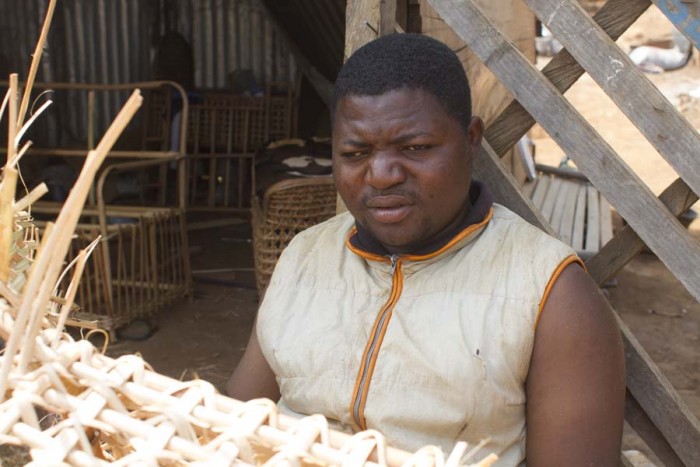
Yesterday, when I was reading one of my Peace Corps manual books, I came across this information that is in the Peace Corps Act:
“In recognition of the fact that there are over 400,000,000 disabled people in the world, 95 percent of whom are among the poorest of the poor, the Peace Corps shall be administered so as to give particular attention to programs, projects, and activities which tend to integrate disabled people into the national economies of developing countries, thus improving their status and assisting the total development effort.”
When I read this passage, I asked: Why is the number of disabled people so much higher among the poor? I will find out more throughout my service.
December 22nd, 2014 by Rachel | Tags: Disability, Health, Peace Corps | No Comments »
In order to identify which issue needs the most attention and understand how to solve problems in a community, all Peace Corps Volunteers are typically required to do an assignment called Community Needs Assessment during the first three months at their post. There are various ways to do Community Needs Assessment. One could go door-to-door and conduct informal interviews by sitting down and having coffee or tea with the community members or just simply do a survey at the door. Another could attend meetings hosted by organizations or common interest groups and conduct interviews there. Doing the assignment also helps us get to know people in the community, improve our foreign language skills, and have a new perspective of the community.
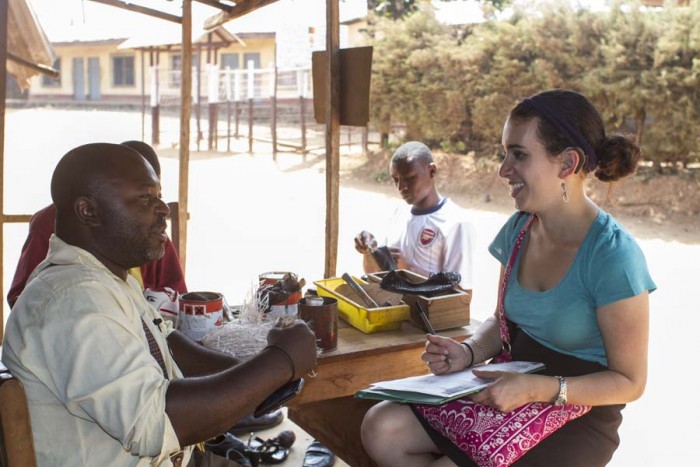
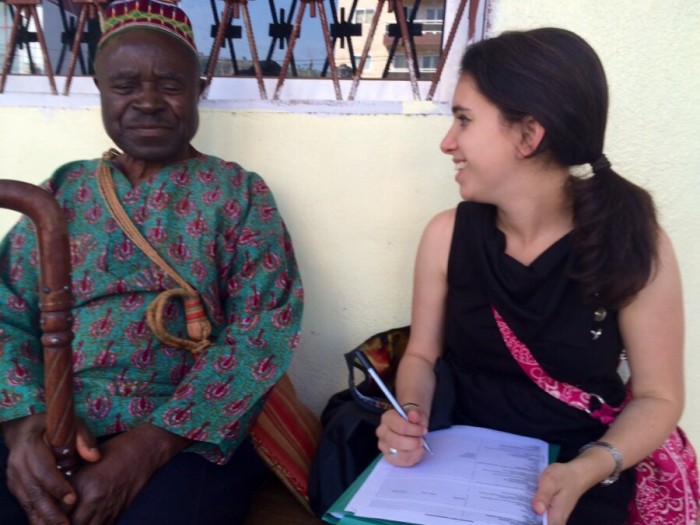
Me interviewing a gentleman with a mobility disability due to polio.
In the past two days, I have interviewed 16 people with disability and will be continuing to interview many more in the next month. I am using various methods to help me identify what are the biggest issues relating to health in the disability community in Bamenda. I created a survey that helps me acquire the basic profile of people and find out if people with disability are able to access healthcare facilities, acquire resources to help improve their quality of life as persons with disability, access water and food and get education. I conduct the survey by interviewing each individual one-on-one in their home or at their workplace. While my survey has mostly multiple choice answers, I take notes. Because my Pidgin English is still not proficient, I have one person from my community such as my counterpart or work person from the organization with whom I work accompany me so that if the person who I interview struggles to understand what I say, the person who accompanies me can translate what I say. In fact, I interviewed one individual whose native language was French and did not know English very well and therefore, I spoke in French. The person who accompanies me also helps me locate people with disability. Besides conducting surveys and interview, I have also been acquiring research studies from a professor at University of Toronto who focuses her research on people with disability in Northwest and also a PhD student at London School of Hygiene & Tropical Medicine who just completed her thesis on people with disability in Northwest. Their studies have been helpful giving me a background of what issues exactly exist in Bamenda. However, as I conduct interviews, I have been finding some very surprising information that makes me realize that people with disability is one of the most vulnerable population when facing health-related issues and also that some of the disabilities could have been easily prevented or treated.
Three people who have mobility impairment became disabled from Quinimax injection. This result really struck a chord because during my training, a Peace Corps Medical Officer told us that if we are ever in a hospital, we must ensure that we do not get these two drugs, Quinimax and Chloramphenicol, by injection. When I learned that these three people became disabled from the injection, I immediately wondered if healthcare providers in Cameroon are well aware of the problem and that they should no longer give these two injections.
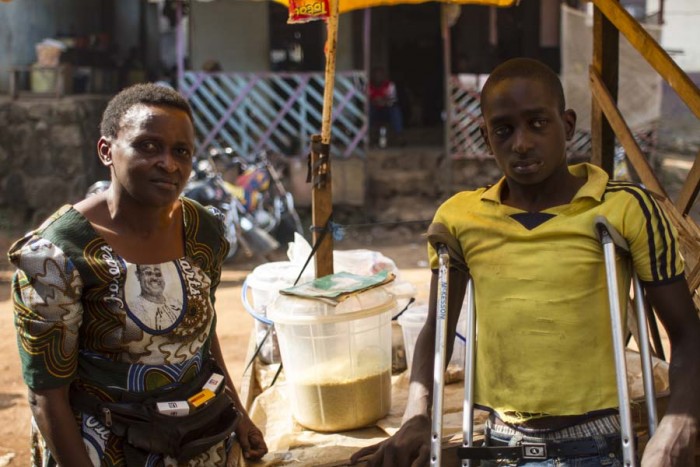
Most who have visually impairment and/or mobility impairment and do not have direct access to water in their home cannot fetch water themselves from a pump, well or river/stream/lake. They have to pay someone or find a neighbor to get water for them. Many also cannot shop for food and cook due to their disability. Some pay someone to buy food and cook for them or have a family member do all the food responsibilities.
One individual who I interviewed has club feet. It was upsetting to see an adult with club feet because it is an issue that can be easily treated shortly after the child is born. I met one blind man who became suddenly became blind later in life and said that he believes that his blindness was caused by spirituality. Some visually impaired people do not have a white can and use a walking stick instead to navigate. One said he does not have a white cane because getting access to it is difficult. He applied to get one through an association and has not yet received it.
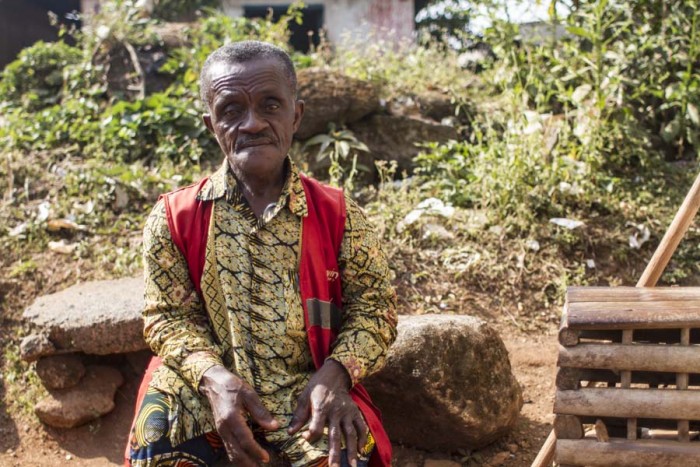
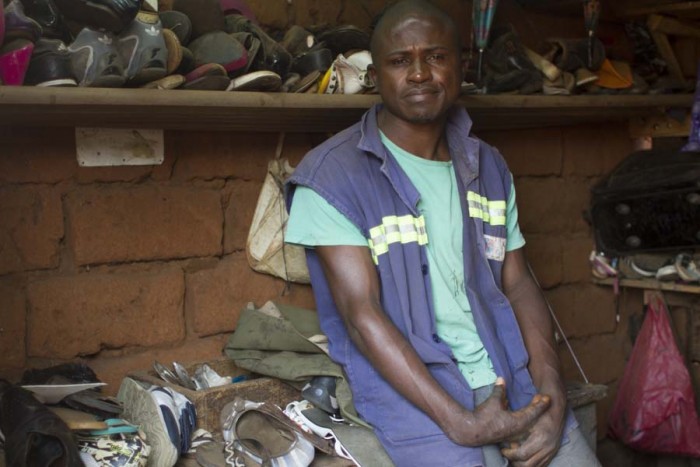
So far, my interviews have been confirming that acquiring education as a person with disability is a huge obstacle. Many dropped out in high school due to financial reasons. One needed money to have operations. Another had her father pass away and therefore, no longer had someone in the family to provide financial support. I met a young man who has mobility disability and is visually impaired and he has never attended school simply because his family felt he could not learn and it was not worth the investment. I noticed that the man did not wear hearing aids and his sister had to repeat what I said to him by talking right into his ear.
Also, as expected, many do not have access to rehabilitation services or a healthcare facility due to lack of money and awareness.
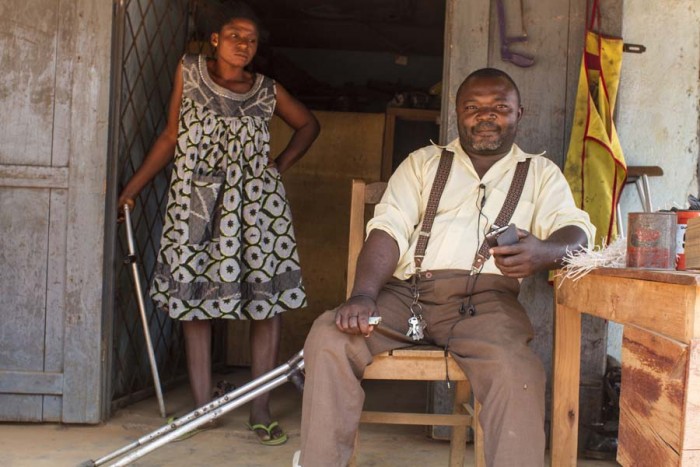
These results are just a sample of issues that exist. I will continue to update everyone on my findings and once I have collected enough data, I will inform which area of issue I will focus on working. The choice will be made based on which issue is the most prevalent and also can be most solvable.
December 22nd, 2014 by Rachel | Tags: Cochlear Implant, Disability, Hearing Loss, Peace Corps | 1 Comment »
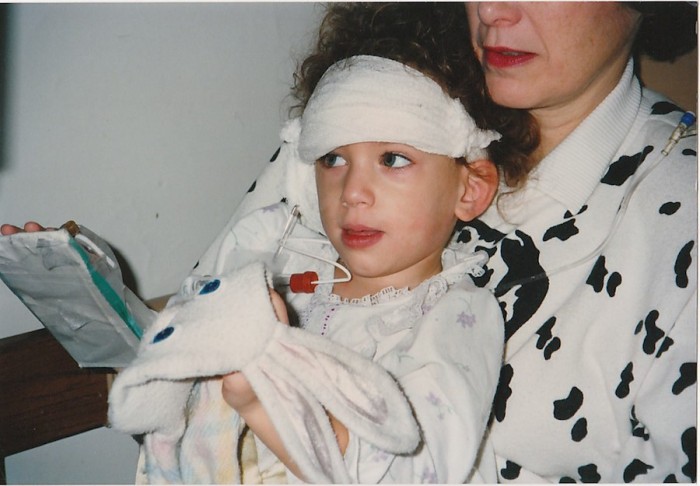
Me 25 years ago when I just had my first cochlear implant surgery.
If one asked my parents 25 years ago yesterday where I would be today as a young adult, they would have not been able to answer. December 21st, 1989 was the day when I first received a cochlear implant as part of a clinical trial at New York University as it was not yet approved by the FDA for children. My parents so wanted me to be able to hear so that I could learn listening and spoken language to be able communicate with ease with most people around the world. When my parents agreed to provide me a cochlear implant, they were told by professionals that I would be able to hear environmental sounds at the most. My parents felt the procedure was still worth it because they thought hearing emergency sounds such as sirens were still very important for safety. At that time, less than 200 children in the United States have received a cochlear implant, and this technology has been implanted in children by a very few number of hospitals for only three years. No one knew what the future would hold for me at all because all the other deaf children with cochlear implants at the time were just starting their hearing journey too. Moreover, my parents were told by professionals that I would never be able to speak English and that I would hate my parents when I become an adult for their choice to teach me to speak and hear with cochlear implants.
Now today, I am living in Cameroon where I speak both English and French and am currently learning Pidgin English which is very different from grammar English. I have been able to use my voice to speak on the radio a few times in Bamenda to share my stories about my American life as a person with disability. I so cannot imagine going a day without hearing as I’m constantly interacting with people through hearing and speaking to discuss cultural differences and learn about what issues the locals are facing in Cameroon so that I can hopefully help improve their lives. I can never thank my parents enough for the decision they made because I am able to achieve what I desire to do in my life. Today when parents get cochlear implants for deaf children, they know that their children’s future will be very bright because there are now hundreds of adults who grew up with cochlear implants and are leading fulfilling lives, which did not exist 25 years ago. In other words, we now have proof that cochlear implants is a positive life-changing technology, something that my parents never had when they first put me in the operating room in 1989. I truly cannot believe that I have been hearing with a cochlear implant for a quarter century already, and I still love every minute of the technology!
Me interviewing a blind man to better understand the needs of the disability community in Bamenda.
Now I’m really hoping that this history can be repeated very shortly by getting a treatment out and participating in a clinical trial to save and restore the vision I have lost so far due to Usher Syndrome. If you’re interested in helping out to save my vision, please check out my family’s foundation.
December 20th, 2014 by Rachel | Tags: Peace Corps | No Comments »
Yesterday marked exactly one month since I swore in as a Peace Corps Volunteer. I’m not going to lie. I have faced a lot of difficulties and frustrations during my first month at post. It was a time when I finally for the first time realized and understood the challenges and frustrations that Peace Corps Volunteers expressed during their service. All throughout my training, I kept saying to myself, “Where are the frustrations people talk about? Where are the tears moment? Where are the angry and yelling fits moments?” I joined in Peace Corps knowing that I was going to have lots of slump moments. My training was a very smooth sailing ride except for the time when I got sick.
Once I arrived at the post, I felt like I was suddenly having to make a very steep climb on a mountain. I was saying to myself for the first time in service, “What the hell am I doing here?” There were moments when I was wishing to be transported back into the first world/western world just for a few hours. I did have a couple meltdowns where I just cried in front of my counterpart and in my bed. I was overwhelmed by the new environment, missing being surrounded by other volunteers from my group, missing certain food especially cheese, and tired of being sick. I had one thing after another. Shortly after fighting off typhoid fever and salmonella, I came down with a sore throat, fever and cough and then a cold and then intermittent stomach pains and a very bad headache and nausea.
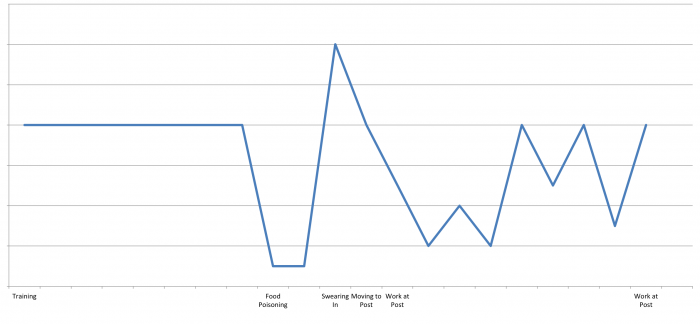
As someone who lived the majority of my life in big cities and always loved living in the cities, I found myself to be very surprised by how overwhelmed I felt about Bamenda which is not a very large city and how much I missed living in a village, specifically Mengong. I’m sure it was because I could never find a map of the city, and I had to memorize all the routes very quickly. It was also likely because I didn’t know where to begin in finding all the essential items I needed for my apartment such as stove, gas and mattress.
I had moments where I got super angry and said to myself, “Wow! This is so not Rachel!” For instance, when I walk through an open market, some Cameroonians will grab my arm to get my attention and try to sell their items to me. For the first few days, I just ignored them and walked passed them. After a couple days, I screamed and said, “Leave me alone!” In Cameroonian culture, grabbing people’s arms is not seen as a physical abuse, which is opposite of how Americans would view the situation. Cameroonians love to touch people and see it as an affection.
When I had my low point moments, besides eating an usually high amount of cookies sent by my family and watching Frozen a few times, I pulled up a couple Tumblr blogs created by Peace Corps Volunteers that have nothing but animated gifs and quotes that tell exactly how the service goes for most volunteers. As I scrolled through the blog posts, I laughed and said, “OMG! I had that moment!” “OMG! This is me!” “OMG! I went through that.” It was so good to confirm that my experiences were normal and the blogs brought a smile to my face. Talking to other volunteers by phone and Facebook helped greatly.
On top of all, I just spent this past week in Yaounde due to needing to see a Peace Corps Medical Officer and take a lab test to make sure I still had no bacteria floating in my body. I was totally dreading about leaving my post and having my work interrupted. However, spending time in Yaounde where I did almost nothing but rest and talk to other Peace Corps Volunteers who have been in Cameroon longer than I have been truly recharged my battery. It made me realize how much I needed to decompress and the moments to talk to other volunteers and how helpful the conversations were. Their stories about their arrivals at post were so similar to mine. One told me about the moments she spent hours crying in her bed. Another told me about how unreasonably angry she got at a vendor for selling out koke. Another told me about how she had days where she just wanted to stay in bed, curl up and do nothing for the day. All the ones who have been in Cameroon for more than a year have consistently told me that the first year at the post is the hardest. We also talked about maladies, and I met a few who experienced spending several nights in the hospital due typhoid fever too and getting other maladies. I left Yaounde feeling very refreshed and saying, “I’m going to get through the next several months. I’m going to push through the frustrations and continue to be the best volunteer I can be.” I still would not trade my new job for my old job. Facing challenges is truly more exhilarating than sitting at a desk all day and being on the computer.
My lab test results came out negative, and I’m now feeling very healthy. Please keep your fingers crossed that I will stay well for awhile so that I can focus on my work. In spite of many negative moments, I’ve had many positive moments. I have finished creating a Community Needs Assessment survey and started interviewing people. I attended a conference. I talked on a couple radio shows. In fact, when I was in Yaounde and met a Peace Corps Volunteer who is posted in the Northwest too and she learned my name, she said, “Are you the one who has talked on the radio?”
“About disability.”
“Yes. I heard you speaking on the radio.”
Wow. So cool.
December 19th, 2014 by Rachel | Tags: Peace Corps | No Comments »
Because I’m one of those people who get mosquito bites very easily, I have been determined since arriving in Cameroon to try to get as little to no mosquito bites. Malaria is something that I definitely do not want to have during my service as I often hear how it will make one person very miserable for several days.
For my family and friends outside of Cameroon who are not familiar with malaria, I’ll share some info to help you become better educated. Malaria is a parasitic disease that causes flu-like symptoms such as fever, vomiting, headaches and chills. The disease is commonly found in tropical and sub-tropical regions. It’s transmitted through mosquito bites. Mosquitos acquire malaria when biting people who already have malaria. Once a mosquito has bitten a person with malaria and then goes and bites a healthy person, that person gets malaria. Mosquitos that carry malaria bite people during only at night time. For most Cameroonians, because they’ve been exposed to malaria many times, they view malaria like as if it’s a flu – most are just sick for a few days. However, for pregnant women, children under five years old, people with HIV/AIDS and foreigners, they are in the highest risk for becoming seriously ill with malaria. If pregnant women become sick with malaria, they could face miscarriage. Children under five and foreigners are in a higher risk to face seizures, coma and/or death when becoming ill with malaria. They are in the high risk pool because their immune system has had very little to no exposure to malaria and not been well built to fight against it. This is why I, as a foreigner living in Cameroon, have to take every caution to prevent mosquito bites and from becoming very ill. I have to take a malaria prophylaxis everyday, use a bug spray when I’m out at night and sleep with a mosquito net. Malaria prophylaxis does not prevent us from getting malaria. It only makes us less sicker.
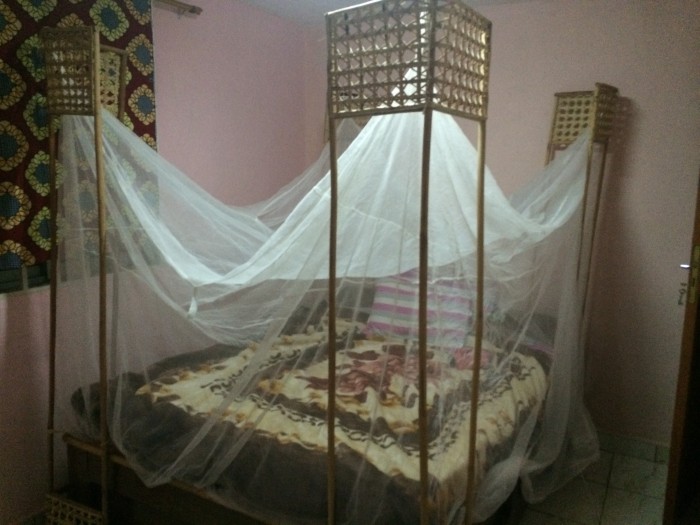
When I first arrived at my apartment at my post, I noticed that hanging the mosquito net with hooks in the ceiling would not be possible. The ceiling is made of concrete, which meant that drilling screws in would be extremely difficult. So, when I spoke to a post mate about the issue, she said that another volunteer advised her to get posts made of bamboos. After finding out from my counterpart where to find a place where I could get posts made of bamboos, I went to a lovely little bamboo shop that is next to Prescafe, a cafe on Commercial Avenue owned by a woman from Switzerland, in Bamenda. I met two lovely Cameroonian gentlemen at the shop and explained to them what I exactly needed. They said no problem and had it done within few days.
Once it was done, they gave me a set of cut up bamboos and nails and directions on how to put it together. They couldn’t just hand me the post all put together because it would not fit through the doors and narrow hallway of my apartment. So, I put it together by myself in my apartment, and it was a nightmare. It was like building an Ikea furniture, meaning that the directions were unclear, and keeping all the parts attached was difficult. Once I finally just almost got it put together, it collapsed. Once it collapsed, I thought in my head of a new design idea that would be transportable through the doors and narrow hallway and not require me to put the bamboos together. I pulled out a note pad and drew the new design. I took all the bamboos back to the shop and showed the two Cameroonian gentlemen my new proposed design.
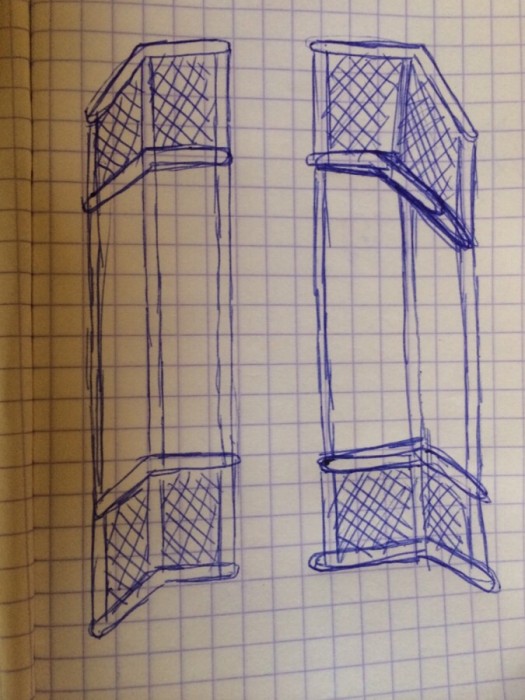
They agreed to work with my new proposed design and finished making my bamboo stands within a week. It came out beautiful. It was very easy to transport to my apartment and set up. All I had to do was put each stand at each corner of my bed and then attach the strings from the net to each of the stand. I have been able to sleep like a princess since getting this new mosquito net holder set up.