January 25th, 2015 by Rachel | Tags: Food, Peace Corps | No Comments »
Maggi is to Cameroonians. Parmesan cheese is to Americans. This is how I explain to my Cameroonian friends about the importance of Parmesan cheese. I never realized that the parmesan cheese is the most prized food until when I made my first pasta dish at my post, a few days after moving to Bamenda. When I first ate my pasta which was made with olive oil and stir fry vegetables, I detested it. It didn’t take me long to realize it was because it lacked parmesan cheese. Like many Americans, back home in the United States, I put parmesan cheese in every pasta dish I ate. It made the pasta taste absolutely delicious. Parmesan cheese is also frequently found in chicken, bread, pizza, and stir fry vegetables. Parmesan cheese is truly one of the most important food in my home culture.
When I arrived in Bamenda, I thought I shouldn’t have too much trouble finding parmesan cheese because Bamenda sells many items imported from the United States and Europe, especially since the city is nicknamed “Bamerica.” Nope! I couldn’t find it anywhere. In fact, cheese is very difficult to find in the whole country of Cameroon. If I do find cheese, it’s very expensive. I asked many Cameroonian friends if I could find it anywhere in the city because I was really desperate. Yes. I was THAT desperate. My Cameroonian friends couldn’t understand. This food is just not part of their culture and cuisine. They didn’t grow up with it. However, I quickly remembered one food that is the most prized food in Cameroon. Maggi. Maggi is a bouillon cube that can be broken apart and sprinkled into food. Cameroonians put in almost every one of their food, especially pasta. It does really make the pasta taste extra delicious. They also often put in omelets and stir fry vegetables. So, once I used Maggi as an analogy to explain the importance of parmesan cheese, they finally understood perfectly well about my desperation for parmesan cheese.
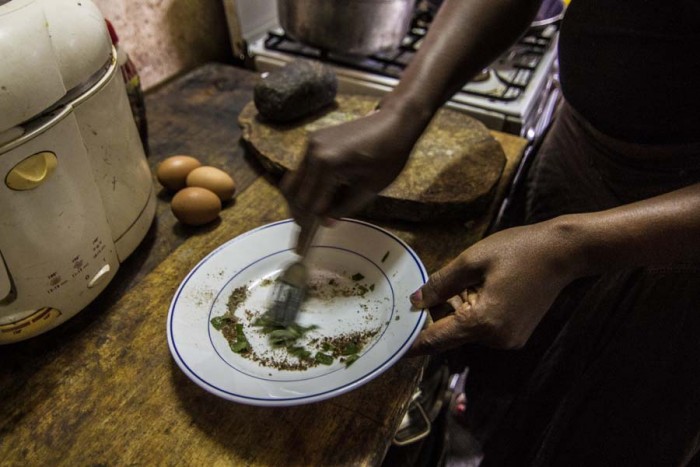
My host mother in Mengong breaks apart and sprinkles Maggie onto a plate to make an omelet.
A couple weeks ago, my most wonderful family sent me two big containers of parmesan cheese in care packages. My pasta dishes now no longer taste gross.
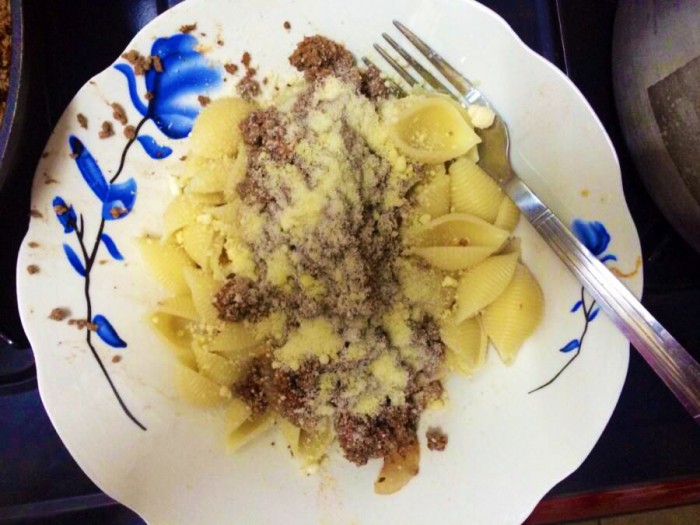
Spaghetti Bolognaise with Parmesan Cheese
January 19th, 2015 by Rachel | Tags: Culture Exchange, Peace Corps, Photo Essay, Photography | No Comments »
This is a long overdue blog post. This photo essay features an upper-middle class, modern host family with whom I lived in Mengong, a rural village just outside of Ebolowa, during training. The photos give the Americans and other foreigners an insight into the life of a group of Cameroonians in a home. While most Cameroonians do household chores similarly, my host family certainly does not represent the entire population of the country. Note the gender equality in the pictures as the males are also very involved in household chores such as cooking, getting water and ironing clothes. In a modern and highly educated family, like my host family, where there are traditionally less than six children, males are usually more involved in household work.
My host father is both a high school math teacher and assistant principal of the high school located right in the village. My host mother owns a boutique and sells household items such as packaged food, office supplies, and toiletries. There are four children living with them. Two of them are their biological children. The other two children are a niece and nephew of my host parents’. In Cameroon, it’s very common for children to live with their aunt, uncles and cousins instead of their parents due to various reasons including work, illnesses, and finances. My host parents also has a third biological son who I never met as he is currently living in Doula for university.
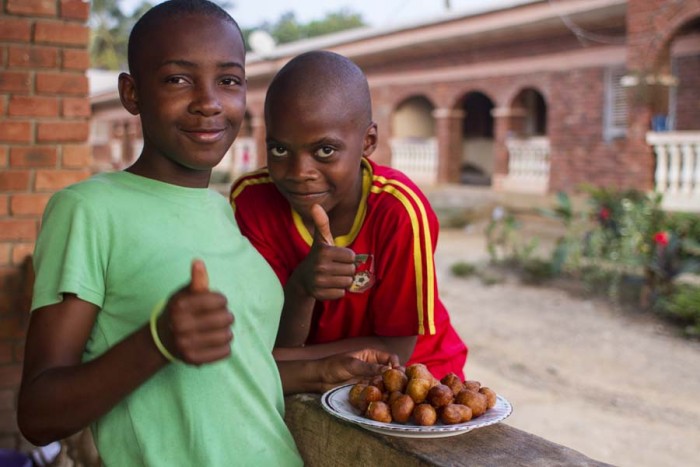
My host siblings enjoying beignets, one of Cameroon’s very popular food.
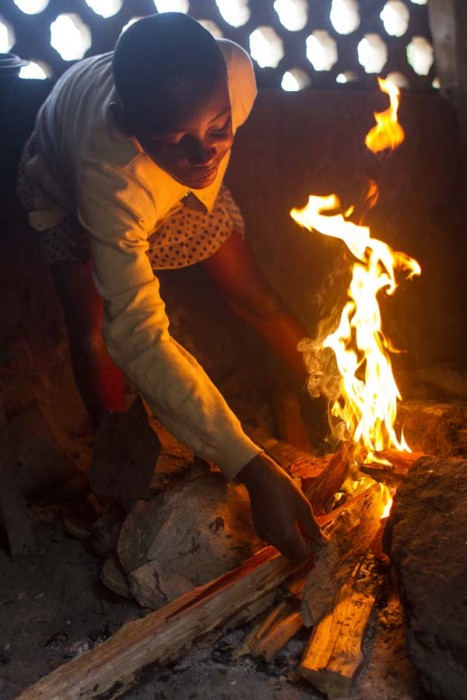
My host sister starts up a fire to prepare a meal. Cameroonians cook many of their meals over a fire outside.
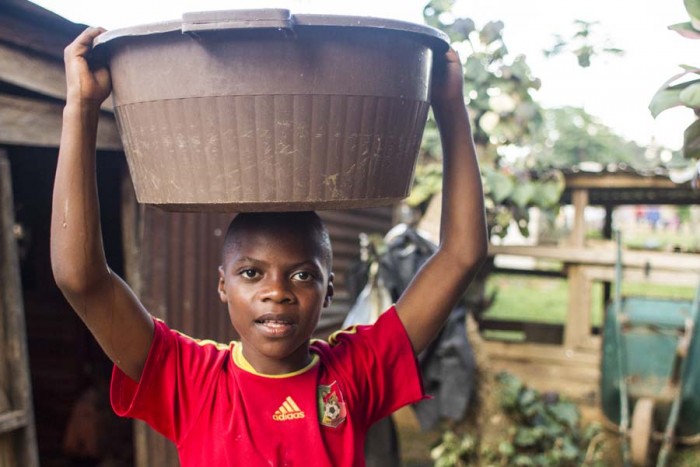
My host brother carries a big bucket of water which he fetches from a pump.

My host father grinds the beans to make Koke, a traditional Cameroonian dish.
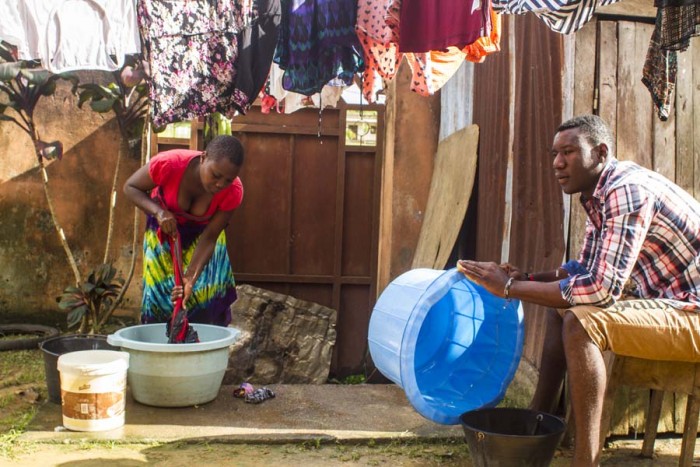
My host siblings are doing laundry which is traditionally done by hand as washing machines are almost non-existent in the country.
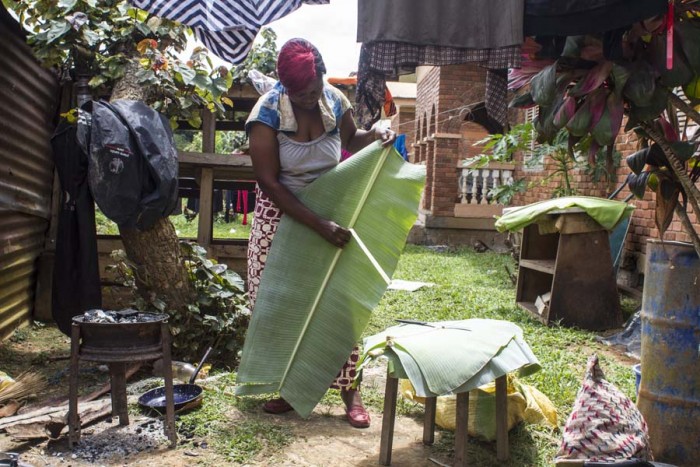
My host mother prepares the leaves for cooking.
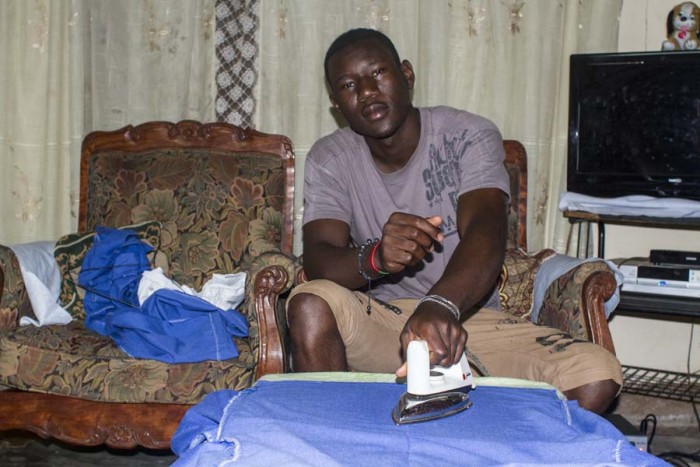
My host brother irons family’s clothes.
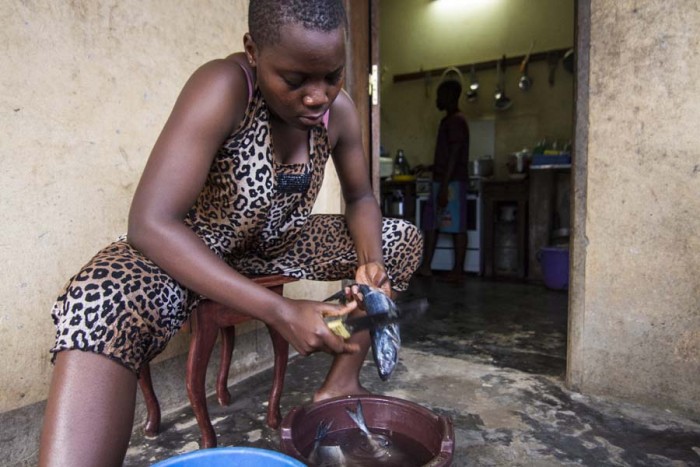
My host sister prepares the fish for a meal.
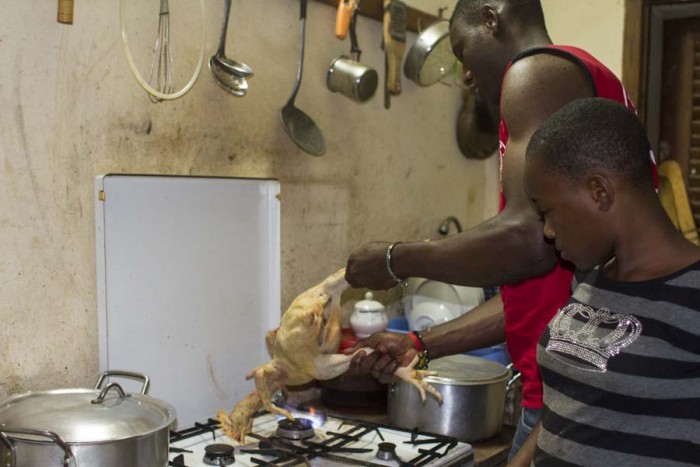
My host siblings prepare a chicken that they just killed for a meal.
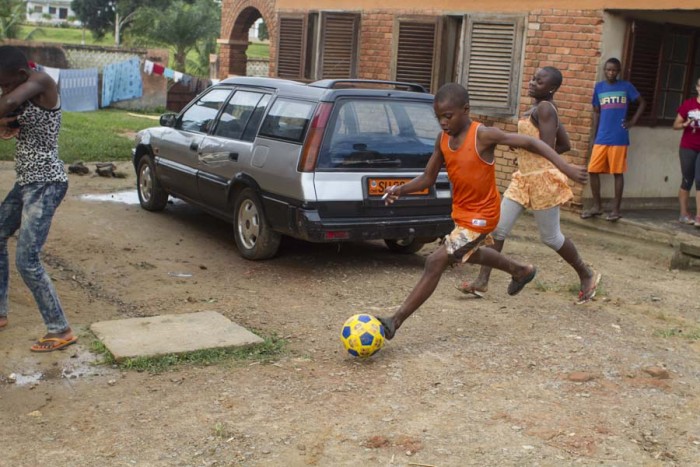
My host brother plays soccer with his neighbors.
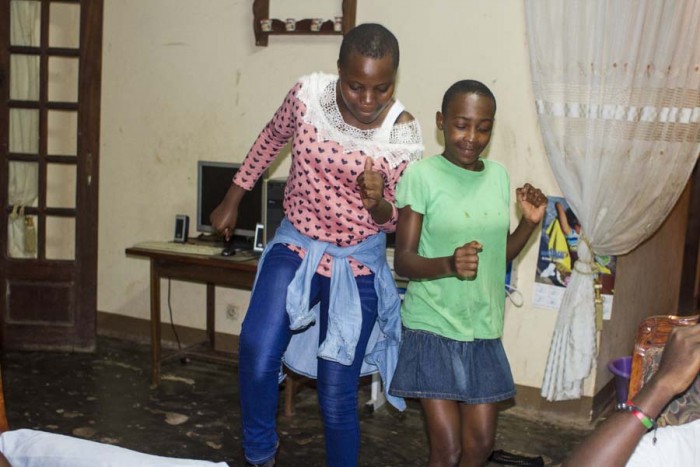
My host sisters enjoy dancing at home.
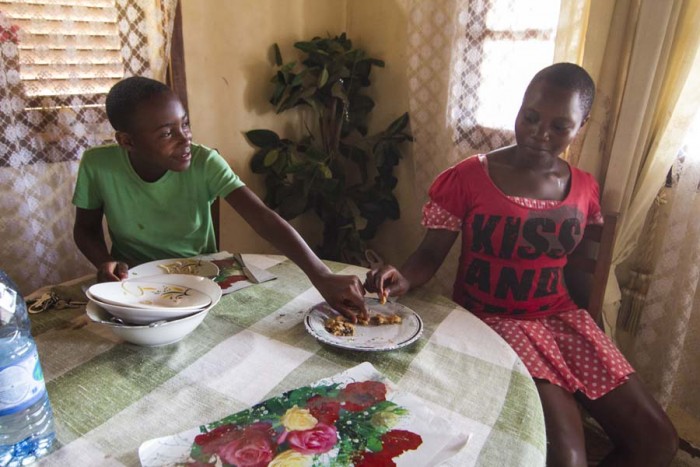
My host sisters enjoy some cookies after a meal.
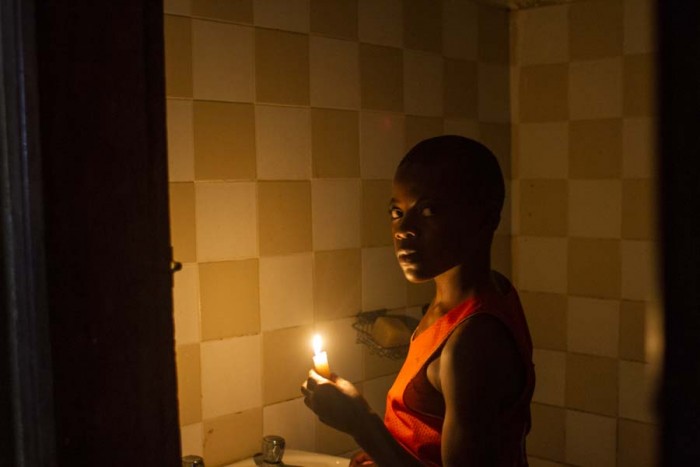
My host brother uses a candle while the power has gone out for a period of time.
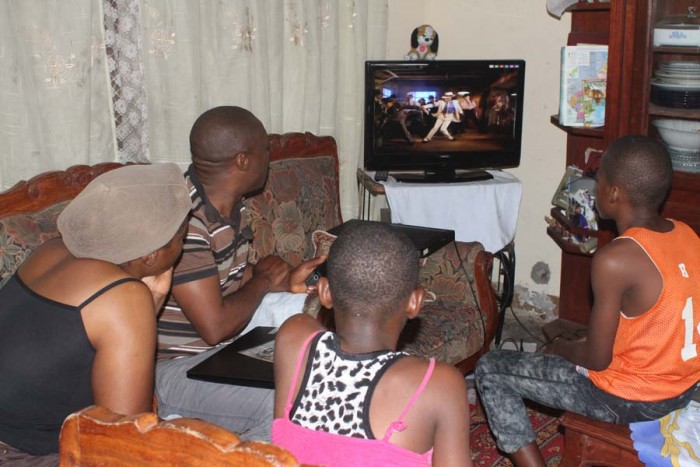
My host family enjoys watching Michael Jackson.
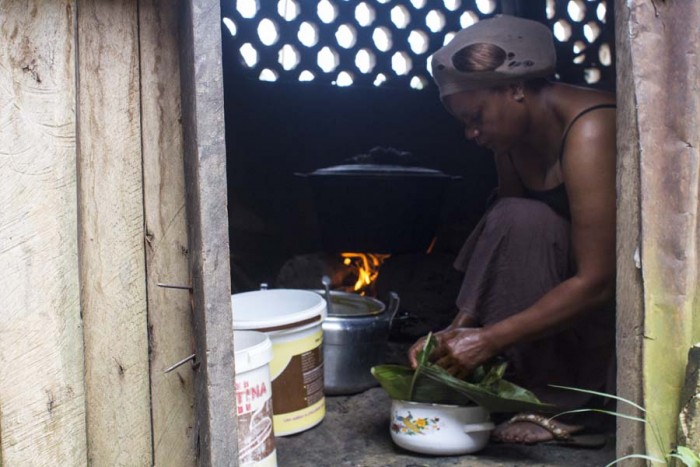
My host mother prepares Koke, a traditional Cameroonian dish.
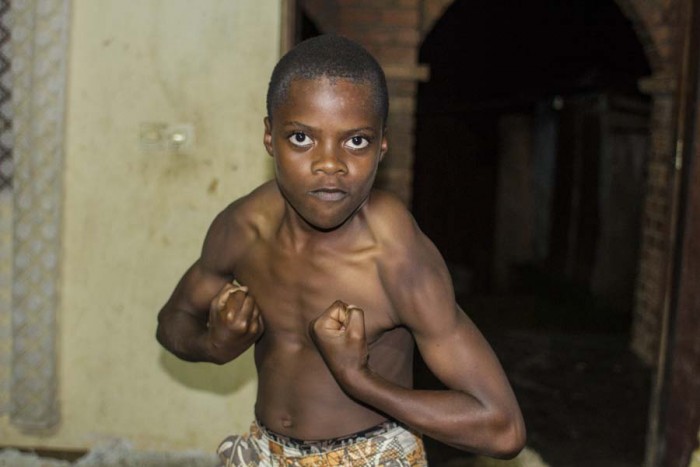
My host brother is only 11 years old and already has big muscles from carrying water on daily basis.
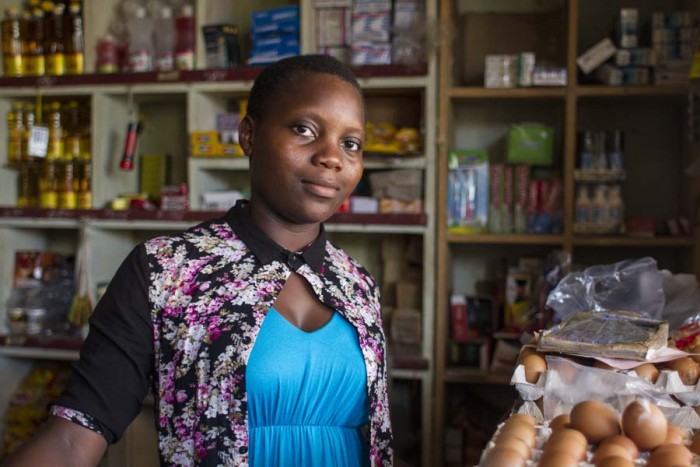
My host sister helps her mother run her boutique.
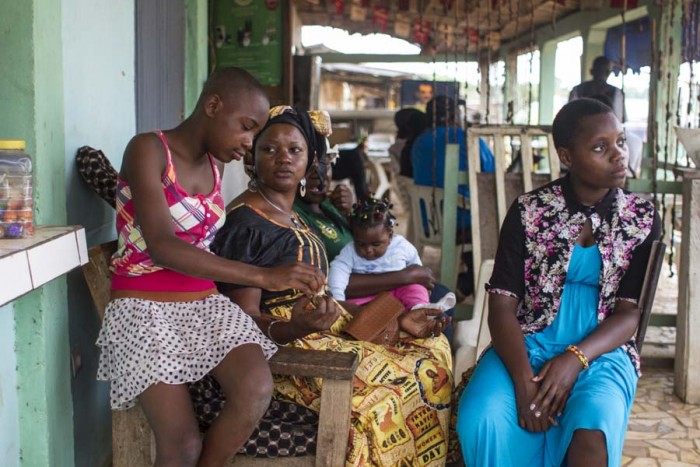
My host mother and sisters hang out at their boutique.
January 15th, 2015 by Rachel | Tags: Disability, Peace Corps | No Comments »
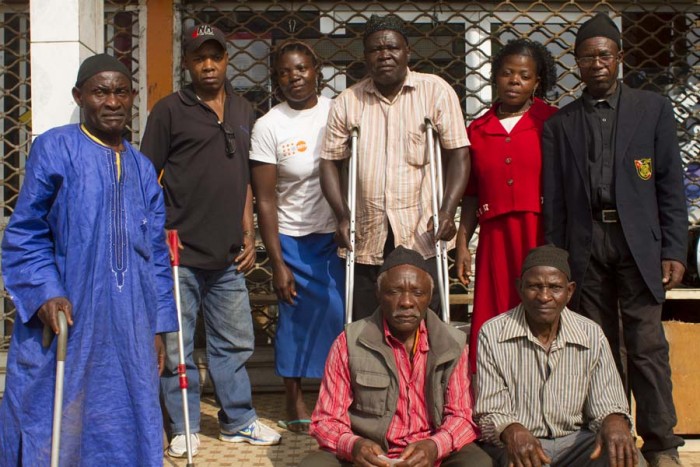
A group of people with disability met on a Sunday afternoon to discuss current disability issues.
I have so far interviewed over 70 persons with disability for my Community Needs Assessment throughout the Mezam division which basically means Bamenda and villages surrounding Bamenda. I have not only met with people with disability in their homes and workplaces around the town, but also I have met people with disability at a rehabilitation center, school for the blind, club meetings, and a school for people with special needs. While I continue to hear about many disabilities being caused by accidents and quinniamax injection, many being unable to get water and shop for food due to disability, and many not finishing school, I have noticed another pressing issue. Yesterday, I visited a school for people with special needs where I met a number of people of variety ages who are mentally challenged. When I asked the staff members what was the cause of their disability for each person, and for most persons with disability, they responded that the “child was born that way,” I asked them if any of them had a specific name for their condition such autism. They said “No.” I asked them if they have heard of autism, and they looked confused, and said, “No.” I asked my work supervisor, Samuel, who was there with me if he has heard the term, “autism” and not only did he say yes, but also explained almost correctly what it was.
From my interviews so far, for most people with disability who acquired the condition from birth or not related to accident or injury, they do not know the exact name of their condition. In the United States, for most people, when we are diagnosed with a medical condition, we hear a fancy name for our condition such as macular degeneration, muscular dystrophy, arthritis, or Usher Syndrome, which is what I have. Some including myself even know the exact genetic mutation that caused their medical condition as genetic testing is available in the United States and is covered by a number of medical insurance companies. My work supervisor commented to me after I asked him about the knowledge of autism in Cameroon, “Many do not know the name of the cause of their disability.” I then asked my work supervisor if he knew the exact cause of his blindness, and he did. To be honest, I don’t remember the name because the word was so fancy. However, for most blind people whom I’ve met, they do not know the cause. As I mentioned in a previous post, one said that he believed that his blindness was caused by “spirituality.”
Knowing the exact name and cause of disability is incredibly important as it helps ensure that they receive the most appropriate course of treatments or rehabilitation.
While speaking on the topic of power of knowledge in disability, I met a father of a three year old girl who was born with club feet but is now cured at a rehabilitation center called St. Josephs Children and Adult Home last week. I asked him how he knew that there was a treatment available for his daughter’s medical condition because I have unfortunately met more people with club feet who have never been treated. He told me that a sister (nun) at a church told him about the treatment. He said that if she had not told him about the treatment, his daughter would not have been treated. He never knew that it was possible.
Then I met 28 year old gentleman at a school for the blind that is also located at St. Josephs Children and Adult Home who became blind two years ago from glaucoma and was learning braille at the school. He already has a Bachelor’s degree in microbiology and is hoping to find a job that can accommodate his newly diagnosed medical condition. Because so many have never heard of medical rehabilitation according to my survey results so far, I asked him how he learned about the school for the blind and the services that they could offer to him which included learning how to read braille and using the white cane, he told me that heard an advertisement on the radio for the school.
Today, a met a mother of a three old son with Down Syndrome. She shared with me about how she didn’t accept her son at first, but after going on the internet and meeting other parents of children with Down Syndrome and autism through Facebook groups, she now fully embraces her son. She told me that the internet has made all the difference in helping her realize that her son can still lead a fulfilling life and providing her information on what she can do to ensure that her son can reach his fullest potential. She also added that she has subscribed to newsletters from Down Syndrome-related organizations so that she could learn as much as she could about what she can do for her son. She told me that she is going to have her son attend a mainstream school starting this September because she believes that he should still have the right to access education. She said that when the time comes when school is not working out for him, she will figure out how to ensure that he can still get education. When I told the mother about how I was surprised that staff members at a school for children with special needs are not familiar with the term “autism,” she told me that is unfortunately a normal encounter in Cameroon, and this is why internet has been so important to her. It’s important to note that I asked the mother what is her education background. She not only finished high school but also has a college diploma.
These stories further confirm the power of education and awareness that can change people’s lives. This means that I should look into how my work partners and I can help improve in spreading the knowledge of disability and its services in Cameroon. To be fair, the United States still has room for improvement too. For example, only five percent of all people who are qualified for cochlear implants, the technology I use to hear, are using the technology today in the United States. The number one reason for the low percentage is lack of awareness.
January 12th, 2015 by Rachel | Tags: Health, Peace Corps | No Comments »
In training, I listened to a presentation about Peace Corps Volunteers getting malaria. Cameroon unfortunately has the highest number of Peace Corps Volunteers getting malaria. About 50 volunteers out of about 170 volunteers have become ill with it each year in the past few years. According to the results of surveys completed by Peace Corps Volunteers, about two-third of Peace Corps Volunteers who had malaria believed that they got the mosquito bite with malaria while traveling. This means that just about all of them didn’t sleep with a mosquito net while traveling.
Because I have already traveled in Cameroon and spent nights in places outside of my host family’s home and own home, I can totally understand the situation. I have been to places such as hotels where there were no mosquito nets and/or it was impossible to hang up the net due to no place to attach the hooks. Plus, the mosquito net that Peace Corps provided us is incredibly heavy and unpractical to carry because it can take up the entire space in a regular size school backpack. Even though I am very determined to ensure that I would not get malaria, I knew that there was no way I could carry the mosquito net around the country. Not to mention, it’s incredibly difficult to take down and set up.
As a travel savvy person who often shops for cool gadgets that make my traveling life easier, I knew that there had to be a mosquito net that is made for traveling. A mosquito net made for traveling means that it’s compact and easy to set up without needing any support from the ceiling or walls. I had imagined that I could find a mosquito net that looks like a camping tent. Therefore, I googled, “Mosquito Net Travel” and after clicking on many links, I finally found one that was just the right fit for me. It was called Two-Person Skeeter Defeater and found on a website called Long Road Traveling Supplies. I sent the link to my family in the US, asked them to order it for me and send it to me in a care package.
I just finally received the traveling mosquito net today. I was amazed by how small and compact the bag was for the mosquito net and wires to support the net. It fits very nicely in my 36L backpack that I use for traveling in Cameroon, leaving lots of room for my other items. I was able to assemble the entire net within five minutes and no difficulties. In fact, I found that assembling this mosquito net was much easier than setting up the mosquito net provided by Peace Corps. The mosquito net can fit on a full size bed and fit two people inside it. This mosquito net is also great for when if I have to sleep on a floor in a sleeping bag which I anticipate that I will have to do at least a few times in the future when traveling to other volunteers’ homes. The mosquito net does stand up by itself really nicely on the floor.
I would totally recommend and encourage other Peace Corps Volunteers and even travelers who are going to countries where malaria exists to purchase the net. I wouldn’t allow malaria to win!
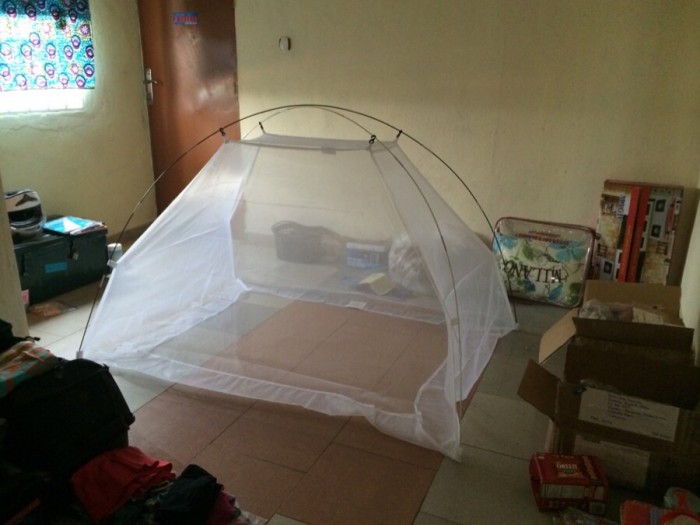
The mosquito net all set up.
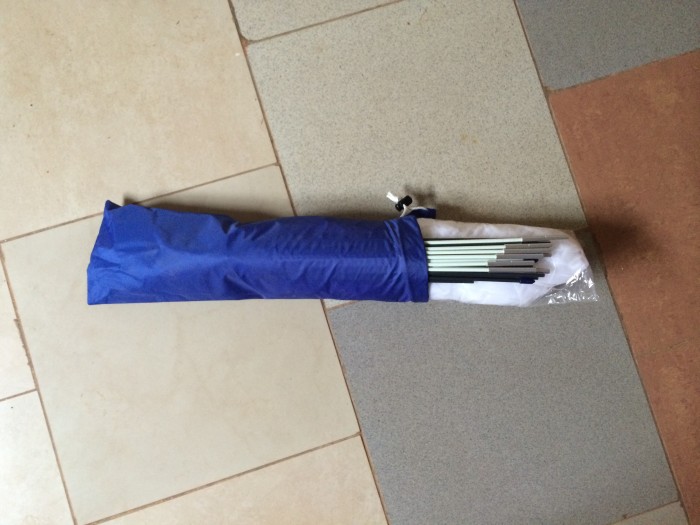
The mosquito net and wires fit in a very small compact bag.
*DISCLAIMER* I am not affiliated with Long Road Traveling Supplies, and they did not ask me to write the review.
January 11th, 2015 by Rachel | Tags: Peace Corps | No Comments »
“Surround yourself with only people who are going to lift you higher.” – Oprah Winfrey
Today marks exactly four months since I stepped on Cameroon for the very first time. It’s really hard to write my feelings down because I cannot believe that I’ve been away from the United States for four months already. It doesn’t seem so long ago when the plane took off from New York City. However, I do truly feel that I have been in Cameroon for a long time because so much have happened in the past four months.
In the short span of time, I have learned that while Cameroon can truly be a very rough place to live because the culture and environment are so different from my own homeland, I am truly a confident person who can navigate and live independently anywhere in the world. In spite of setbacks and challenges that I already faced in such a short time, I have become so much more comfortable in this country. I feel so comfortable that I can now call Cameroon my home for two years. I now know very well how to shop for food and all the necessities, including negotiating, find all the places where I need to go without getting lost, catch a public transportation and travel confidently alone in the country and also ride motorcycles without fear. Most importantly, I now consider many of the Cameroonians some of my greatest friends. They have been the most integral people during my service because they have been helping me in accomplishing every step in integrating into the culture and community and guarding my well-being. These people include my host family in Mengong, my counterpart, Ruth, my work supervisor, Samuel, his wife, Nicoline, and Hilda, all the people who welcomed me to the country with open arms and showed me the wonderful hospitality that the Cameroonians can offer. They have not only assisted me in navigating the country, introduced me to wonderful people in the communities and helped me in getting my work started, they have also kept an eye on my health by calling me and making sure that I’m eating good and safe food. Ruth has even come by my apartment a couple times during when I was sick with fever and sore throat a month ago. When Hilda asked me a week ago, “What accomplishments would you like to see at the end of your service?” I immediately realized fully how lucky I am to have such a wonderful group of people in Cameroon who truly want to help me succeed.
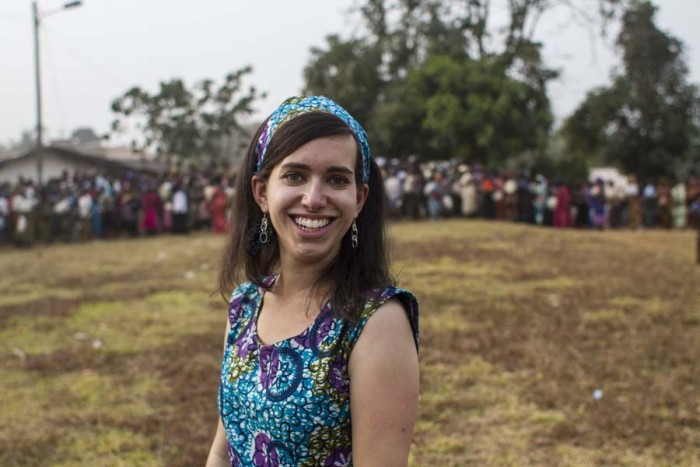
Me at a cultural festival