March 25th, 2015 by Rachel | Tags: Peace Corps, Proposals, Second Goal, Third Goal | No Comments »

In a little village, on my fourth day in Cameroon, a young man came up to me and said, “Do you have a husband?”
“No,” I said.
“Can I have your phone number?”
“I don’t know my phone number, “ I lied.
About an hour later, as I walked around the little village, my host brother’s secondary school English teacher approached me and said, “Do you have a husband?”
“No,” I said.
“Want to marry me?” he said.
“No. I prefer to be single.” I said.
“But you need a husband! I’d make a good one! I speak English. I’m his English teacher,” he pointed to my host brother.
Then another hour later, a young man came running up to me and was about to open his mouth to likely say, “You have a husband?” One of my host sisters put her arm around me and pulled me away from the young man before I had a chance to hear what he had to say.
In one day, I have received three marriage proposals.
It was only the beginning of my ongoing journey in receiving marriage proposals and being told by Cameroonian men that I must find a husband before I head back to the United States.
On my second day in Cameroon, a Peace Corps Volunteer said that it’s up to us on how we want to handle marriage proposals. Every volunteer handles the situation differently. Some choose to wear a ring and create an imaginary husband to avoid providing an explanation. Others choose to be open by telling that she is single and explaining why she choose not to be married. Because one of Peace Corps’ three goals is to teach the host country nationals about the American Culture, I decided to be open with people about why I am not married and many Americans marry later in life.
Marriage proposals eventually died down during training in Mengong as everyone in the village likely finally acknowledged that I was going to say “No.”
But that was short lived. Once I moved to Bamenda, a city that is much larger than Mengong, the conversations reappeared.
One day, a man on a street came to me and said, “Are you married?”
“No,” I said.
“Want to marry me?”
“No.”
Due to the large size of the city where I’m just a blur, marriage proposals and Cameroonians’ quest to find me a husband only continued to pop up frequently even long after I’ve officially become a girlfriend of a lovely gentleman who also happens to be a Peace Corps Volunteer.
About a week after I arrived in Bamenda, when I met with a city official, he asked me, “Do you have a husband?”
“No,” I said.
“You should have one!”
“I prefer to be single. I’m here for work.” This response was my way of trying to keep the conversation brief.
“No. You must have a husband! We will find you a husband.”
“No. I’m here for work.”
“You will have a husband before you leave Cameroon. We will find you one here.”
Then on another day, at a post office, a man who was assisting me in giving me a care package from the US, asked me, “How long are you in Cameroon for?”
“Two more years,” I said.
“You’ll then go back to America?””
“Yeah.”
“Why?”
“My family is there.”
“Who is the family that is there for you?”
“My parents, grandparents and brother and sister.”
“Not your husband?”
“No, I don’t have one at the moment.”
“Well, then we need to find you a husband!”
“I have a boyfriend.”
“Ah! Where is he?”
“In Cameroon too.”
“Ah! A Cameroonian man?”
“No, American.”
“When you’re in Cameroon, you’re supposed to find a Cameroonian man. Not an American man!”
“There are lots of American men living here.”
“No, when you’re in Cameroon, you find a Cameroonian husband…Well, you two can just stay in Cameroon.”
On the same day, as I was sitting my counterpart’s shop, a young man came in and said to me, “You married?”
“No, but I’m already taken,” I said.
“You’re engaged?!”
“No. I’m just in a relationship.”
“I want to meet you in the US.”
“I’m not going to be back for two years.”
“But I still want to meet you in the US.”
“Is it because of money?”
“No, I have family there and I just want to meet up to chat with you. So when will you get married?”
“I’m just in a relationship for now. In America, most people are in a relationship for at least a few years before getting married.”
This young man and I got into a deep conversation about the ethics of marriage and whether or not people should be married for religious or financial reasons and whether or not it’s ethical for couples to be in domestic relationship for many years.
In Cameroon, there is such a strong belief that marriage is an obligation and that if you’re an adult and not married, something is seriously wrong with you. They will question singles and those who are in a relationship why they are not married. Many Cameroonians like this young man believe that being in a domestic relationship is unethical and people who are not married legally do not have a good relationship. I countered his argument by explaining that marriage is just a document signed by the couples. I explained further by stating that what determines a good relationship, whether they are married or just in a domestic relationship is how the couple interact and communicate with each other and show love for each other. I threw in Angelina Jolie and Brad Pitt, celebrities who are very well known in Cameroon, as an example of having a successful domestic relationship for years before being legally married.
The young man then said that people should marry for religious reasons. I explained to him that the United States is a very culturally and religiously diverse country meaning that everyone comes from different walks of life. Not every Americans are religious and some don’t even belong to a religion. Therefore, many Americans do not marry for religious reasons but marry simply because they want to express their commitment or share certain benefits such as health insurances, mortgages, and bank accounts.
I also told him that even if people do marry in the United States, many do not get married until their late 20’s or 30’s. Many people choose to focus on their careers before starting a family.
The conversation ended when the young man’s phone rang and he said that he had to go.
While many Cameroonians view marriage as a religious obligation, in truth, many propose to me likely because they see it as an easy way to immigrate to the United States and falsely believe that they will become rich overnight. I have often had to explain to them that every Americans live differently. Most Americans are not rich. Many do not earn enough money to live comfortably. Many are struggling to meet their end needs. Some live on debt. Some require financial assistance from the government.
Yesterday, when I was at my counterpart’s shop, my counterpart pointed to a woman who is a shopkeeper across from her shop and said, “See that woman right there?”
“The one in red pants?”
“Yeah.”
“What about her?
“She asked me to tell you that she wants her son to marry you. I told her that you already have a boyfriend. But she said that her son can still marry you and I should still tell you. So, I told her that I would tell you.”
Receiving marriage proposals from strangers will always continue…most likely until when I end my service end of next year.
While ongoing conversations about marriage with Cameroonians may be exhausting, I always hope that some Cameroonians have become better educated about the American culture after my speaking with them.
March 11th, 2015 by Rachel | Tags: Peace Corps | 1 Comment »
“Though we travel the world over to find the beautiful, we must carry it with us, or we find it not.” – Ralph Waldo Emerson
When I first received my invitation to Cameroon, one of my first thoughts was, “Oh my god! I’m going to really be in the ‘Hard Corps!’ I’m going where electricity and water is really lacking. I’m going where it’s going to be hot and probably humid and there is no air condition.” Cameroon is after all located by the equator and on a continent where a large number of people are classified as “poor.” As I wanted to see what Cameroon looked like, I went on Google, typed in “Cameroon” in the search box and clicked on “image.” Most images showed very dreary looking landscapes. The skies were cloudy. The roads were muddy. “I have to walk in that mud?” I said to myself.
‘Hard Corps’ is a term coined by Peace Corps Volunteers that means volunteers are going where very little amenities exist. I was initially disappointed that I wasn’t going to Peru or Nepal or somewhere I could enjoy the beautiful well-known landscapes, especially mountains. I wasn’t going to a country normally called ‘Beach Corps’ such as Fiji, Jamaica, and Indonesia where beautiful beaches and resorts exist and I could enjoy a nice weekend gateway while working hard. I wasn’t going to Mongolia or Krgyzstan where I didn’t have to worry about heat. I wasn’t going to Ethiopia, Thailand or China where I could enjoy the world’s best food. I wasn’t going to Albania, Macedonia or Moldova where I was going to have a greater chance of getting electricity and direct water access. I thought I was for sure not going to experience “Posh Corps,” a term coined by Peace Corps Volunteers that means volunteers go where they can enjoy modern amenities and/or infrastructure.
I quickly reminded myself that I was viewing Cameroon and other countries through a lens called “stereotype view.” I knew that I was still going to find ways to fall in l’ve with Cameroon once I arrived there because I have fallen in l’ve with every country where I have visited in the world. I also reminded myself that I applied to join in the Peace Corps because I wanted to face challenges, and “Hard Corps” is what I should have always expected.
Since arriving in Cameroon six months ago, I quickly saw that I can still have a “Posh Corps” experience in Cameroon. I was first welcomed in Mengong by a wonderful host family with open arms who cooked some of the best food I have eaten in my lifetime which includes beignets, spaghetti omelette, marble cakes, fish with potatoes and beef with veggies. Cameroonian food are just as amazing as Thai and Chinese food. There are bakeries where I can find delicious chocolate croissants, vanilla cake with frosting, and donuts with cream. Pizzas are still found in the big cities. I never liked soy milk until I came to Cameroon and now, I’m addicted to the drink.
I have electricity at my post along with running water and internet. About 70% of volunteers in Cameroon have electricity. Many Cameroonian families have television where they can access channels from the US including Disney, CNN, Nickelodeon and National Geographic. Cell phone signal is widely accessible throughout the country.
There are mountains in Cameroon just like Peru and Nepal. Northwest, the region where I’m living looks like it came straight out of a fairy tale. There are waterfalls, lakes and rivers everywhere we go. Adamawa, a region in north of Cameroon, looks like an African version of Tuscany. I’ve seen far more rainbows in the country than I would in a year in the US. The temperature is cool year round in the Northwest. Even when I was in Mengong, Ngaoundere and Yaounde, I found that they were hardly hot at all. While there are indeed muddy roads, there are also paved roads. While rain do come and go, we have many sunny days. Cameroon has two of some of the best beaches in Africa, Kribi and Limbe. Many volunteers go there for a short getaway.
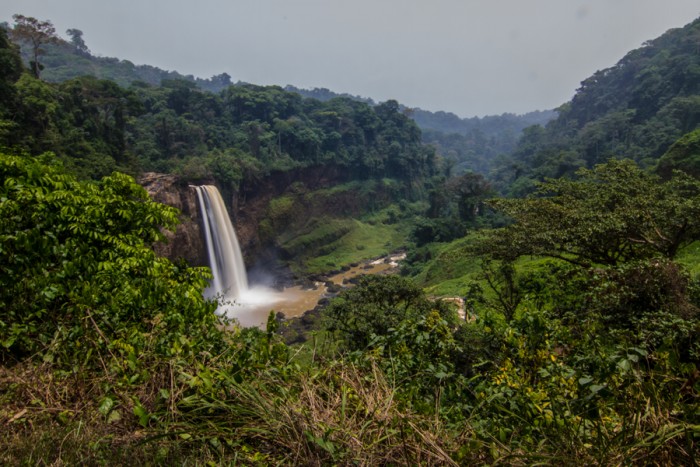
Ekom Waterfall, located in the Littorial Region
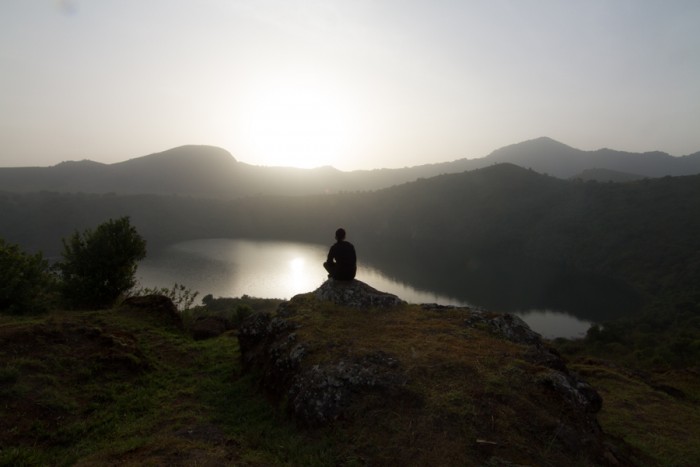
Me looking out at the Twin Crater Lakes, located in the Southwest Region
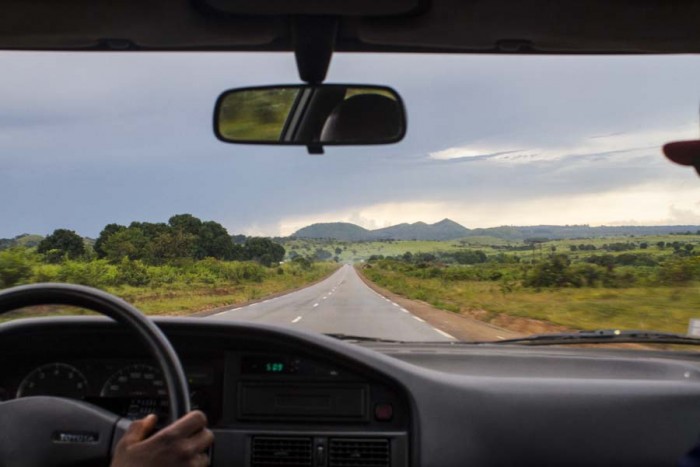
Adamawa
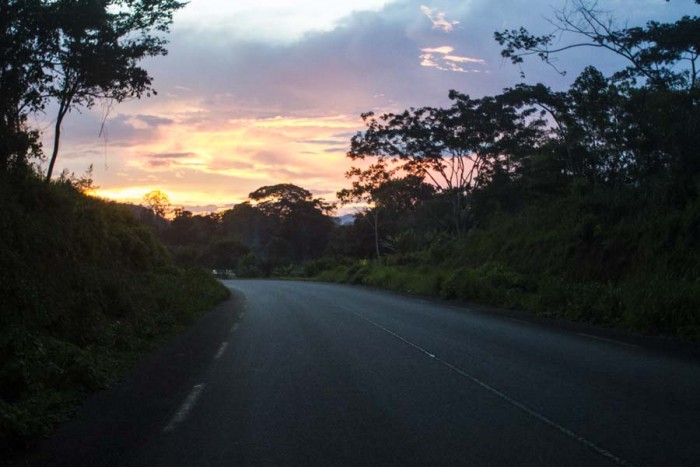
Ebolowa, located in the South Region
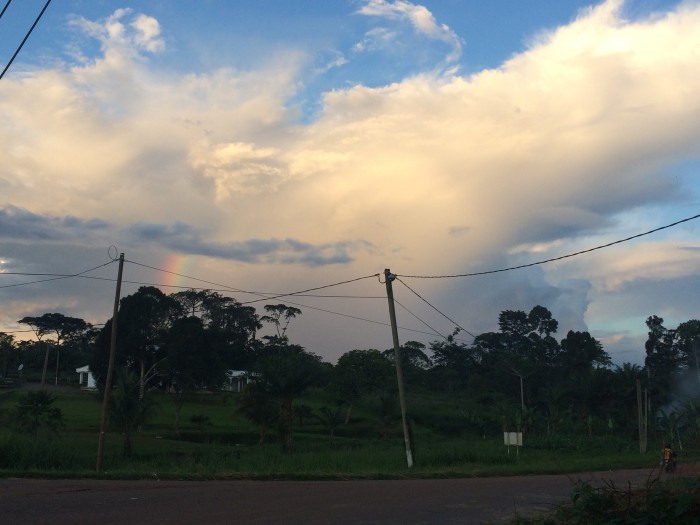
Rainbow sighting in Mengong
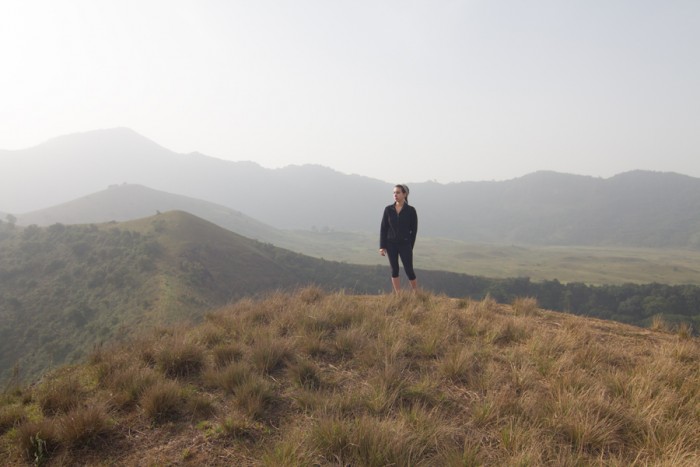
Me enjoying the beautiful scenery of Twin Crater Lakes
Most importantly, I have the best job and couldn’t have asked for a better assignment. I work with people who are truly motivated to make an impact. More importantly, I work in an area that I’m most passionate about and that is close to my heart – people with disabilities.
I now believe that no matter which country we are assigned, we can still experience great luxuries. We should go to any place in the world with an open mind. “Posh Corps” is all about how we make the best of the Peace Corps experience and search for positive characteristics of the country. Every country in the world have its share of problems and its share of beauties and luxuries. Also, we should not allow stereotypes sway our impression of the country, and we should realize that the media is only looking through a tube. By this means, just because the media talks about how there is lack of water and/or electricity in many homes in a country, it does not mean that running water and electricity is completely absent in that country. Moreover, even if we are in a situation where there is no electricity and running water, we can fully realize that we are incredible human beings who can adapt to changes and challenges.
March 11th, 2015 by Rachel | Tags: Peace Corps | No Comments »
Today marks exactly six months since I first landed in Cameroon. I have now officially been away from the US soil and my family for the longest time ever. The Peace Corps journey continues to bring in many challenges but also wonderful joys to my life. I’m constantly reminded that choosing to quit my job in working at the desk all day and move across the ocean to do more meaningful work is the best decision I could make in my life. I thought now would be a good time for me to write several reflections on what happened in the past three months since first arriving at my post. Because I realize that many readers here are not on Facebook, I am going to include some news that were shared on Facebook.
I recently completed a ten day in-service training with other Peace Corps Volunteers from my pre-service training group. It was such an invaluable time as I was able to have so many questions answered. Prior to coming to the training, I was really confused and unsure about how to organize and prioritize my projects as I was so overwhelmed by so many problems that I have found in my research. The Peace Corps staff members and volunteers have really helped me tremendously figure out how to plan my work well for the next 21 months.
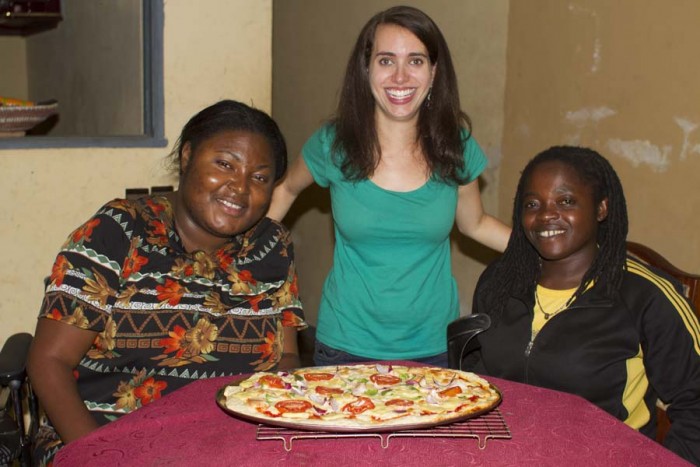
To complete Peace Corps’ second goal which is to teach the host country nationals about the American Culture, I taught my Cameroonian friends including Ruth and Hilda how to make pizza and chocolate chip cookies.
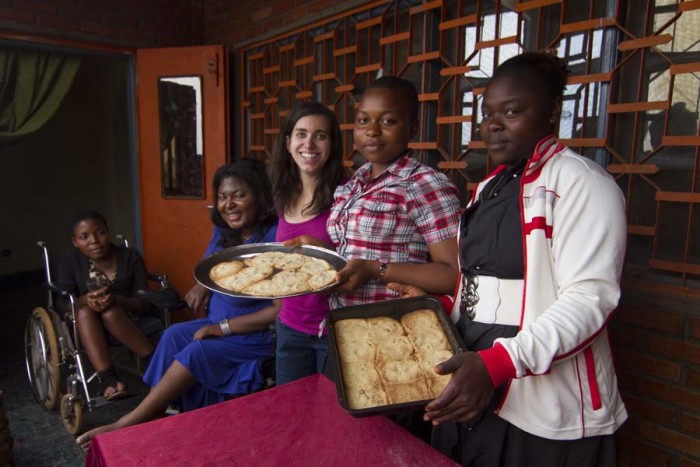
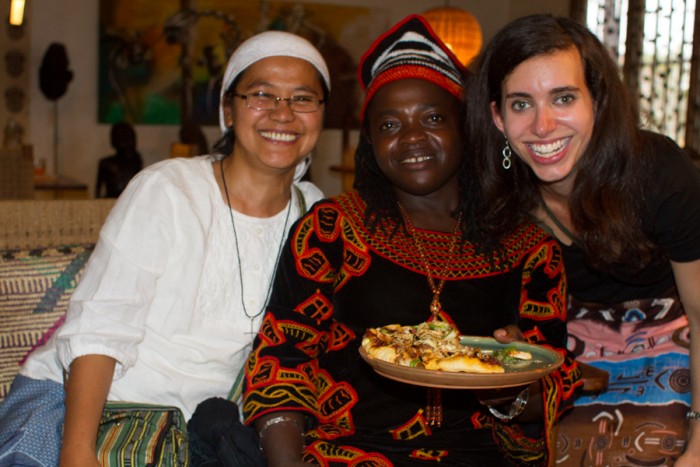
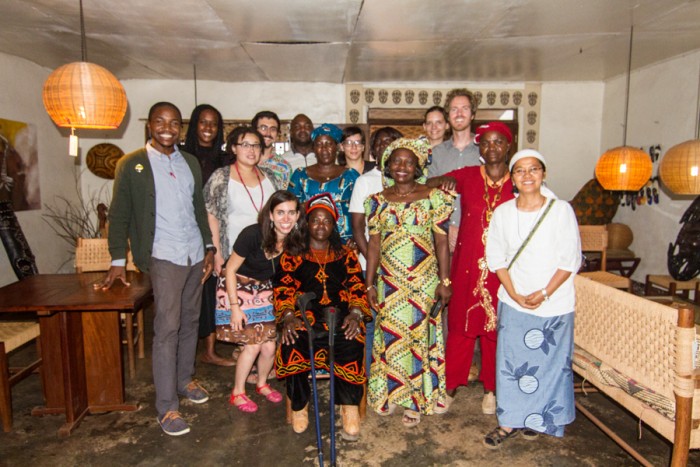
Also, during in-service training, a group of us, volunteers, took our counterparts out for pizza for dinner one night as part of Peace Corps’ second goal to share our love for an American food.
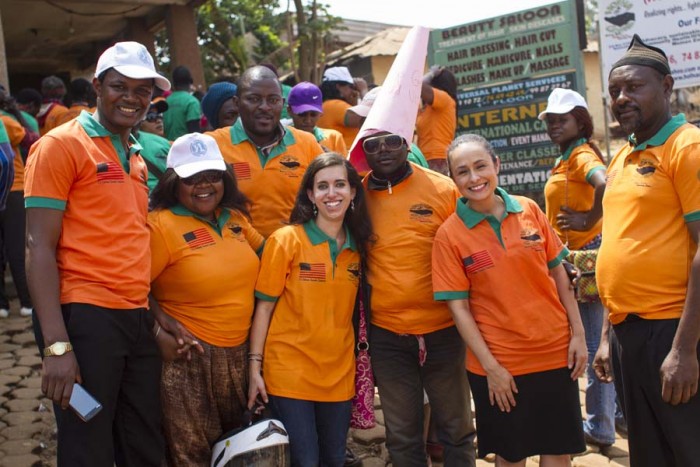
I was invited to join a march with the US Embassy to fight against gender based violence last January. It was a wonderful opportunity to meet the Cultural Affairs Officer, Merlyn Shultz, and share my Peace Corps experience with her.
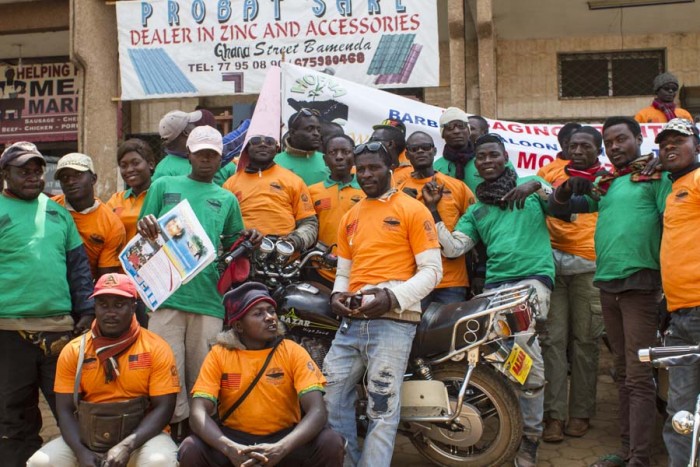
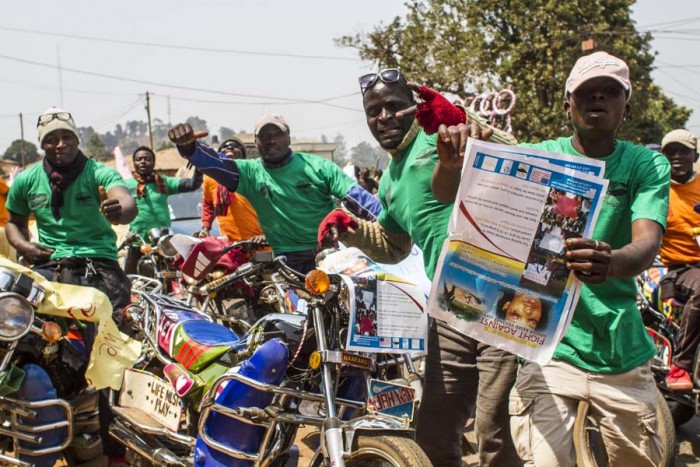
I have been on the radio with Hilda almost every Friday discussing various issues in the disability community including water access, relationships, poverty, self-esteem and club feet. The radio reaches out to the entire population of Northwest region. Two Peace Corps Volunteers have come to me to tell me that they heard me on the radio. Speaking on the radio is such a powerful way to education issues with the communities.

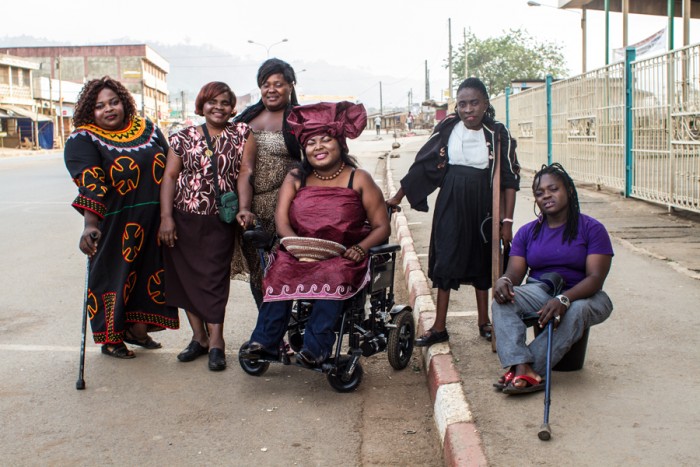
A group of Cameroonian women with disabilities came together to raise money to hold a photo exhibit featuring my photographs of women with disabilities at the Congress Hall in Bamenda in honor of International Women’s Day. Because the exhibit went well and the women truly enjoyed collaborating together on the project, they have decided that they want to continue to work with me in photographing women with disability and exhibiting them in Cameroon.
March 9th, 2015 by Rachel | Tags: Peace Corps, Photo Essay, Photography, Women | No Comments »
While many women and I have shared our voice about women issues at home in the United States, I believe that our voice hasn’t been as well heard as it should be. I should say that I didn’t realize that we have not been so vocal about women issues until coming to Cameroon, especially seeing the march on International Women’s Day which occurs on March 8th. On International Women’s Day in the United States, the only thing I did to recognize the day was to post “Happy International Women’s Day” on social media. I actually also attended a panel last year on International Women’s Day where two out of three people were men and they discussed women issues in developing countries. I don’t recall the United States doing marches or something festive in the city to recognize the day. However, Cameroon is a whole different world on International Women’s Day. When I asked my work partners for permission to go on vacation around this time, they told me that I can’t be away for International Women’s Day and that I needed to be at the post to see the big march on the main shopping street of Bamenda. After having been presented at my post on International Women’s Day, I now understand why my work partners were so adamant about not wanting me to miss the day at my post, and I appreciate them for it.
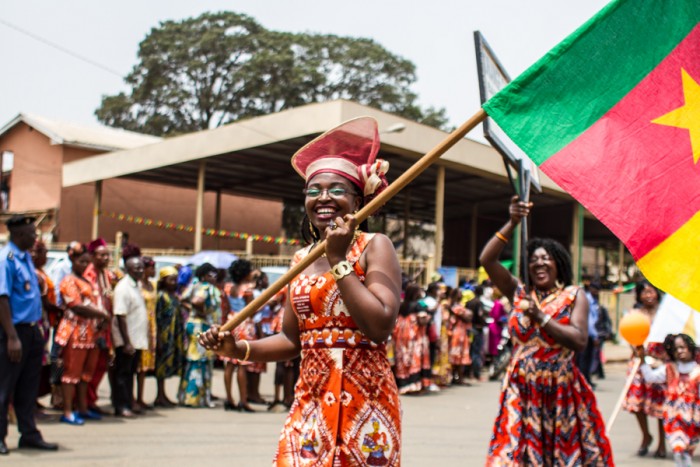
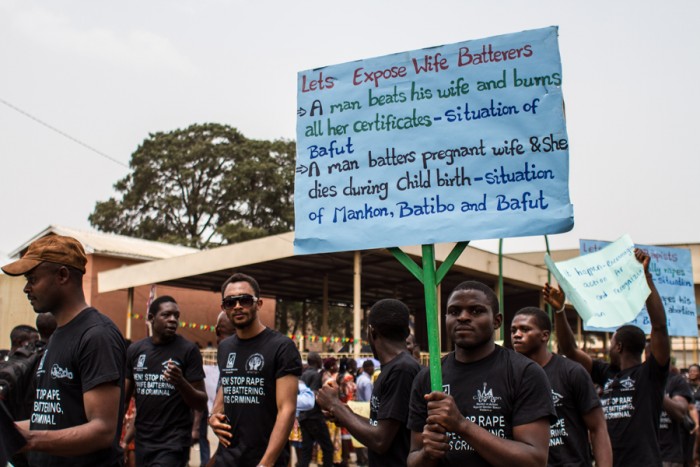
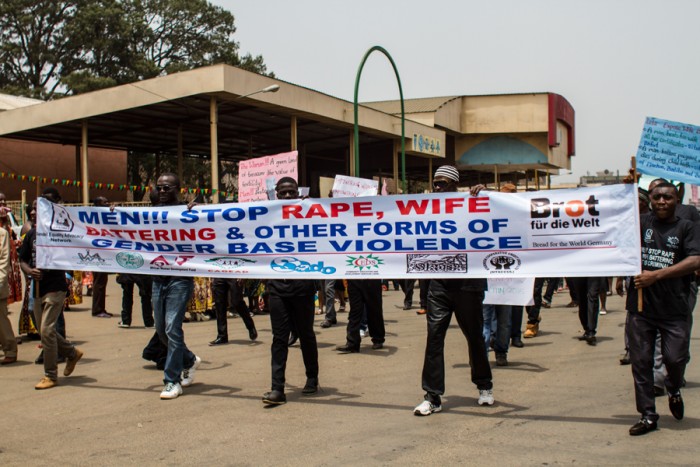
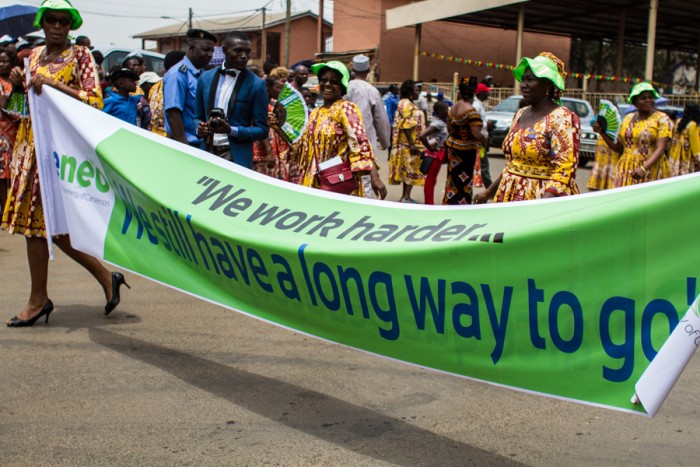
I went to the march in the town center as a spectator. Some of the very first people to walk down Commercial Avenue, the main street of the city, were women with disability including Ruth, my counterpart, and Hilda, a work partner. They all wore the same pagne, the special pagne made specifically for International Women’s Day. Then as the march went on, I saw more women wearing the same pagne. It’s important to note that this pagne is found in shops everywhere in Cameroon. Women not only have to pay for the pagne, but also for a tailor to have an outfit made. As I watched women march while wearing the same pagne, I thought, “I can’t imagine the tailors. They had to have been so busy in the past few weeks.” However, I thought seeing women wearing the same fabric but in different outfit styles was truly empowering. The pagne really unified the women together to share their voice about challenges that women face on daily basis. Then I saw many signs expressing many issues that women face such as sexual assaults, physical abuse, and acquiring education. Some signs were so powerful. I especially loved one sign that said, “We work harder…we still have a long way to go.” I was also especially delighted to see signs advocating against rape and physical abuse as they’re not uncommon in Cameroon. Men were also spotted in the march to advocate for women’s rights too.
Watching the march was a very powerful and moving experience. After an hour, I said, “Wow! This march just goes on forever!” There was no sign of it ending soon. I finally left after about two and a half hours when the march was still not yet over. I was exhausted as I had just come back from a quick vacation. I was truly in awe by the number of women who realize the importance of sharing their voice with the public and that we still have work to do in improving women’s rights. During the march, I kept questioning about United States doing anything big on International Women’s Day. I don’t recall any marches happening. While many women do have many rights in my home country, they still face many battles too. For example, one in five women in college experience attempted or actual sexual assaults. Many women struggle to get health insurance coverage for contraceptions. Average payment for women is still lower than the average payment for men.
I want to note that the march is done in many cities throughout Cameroon. It’s a day that is taken so seriously in Cameroon but not so seriously in the United States.
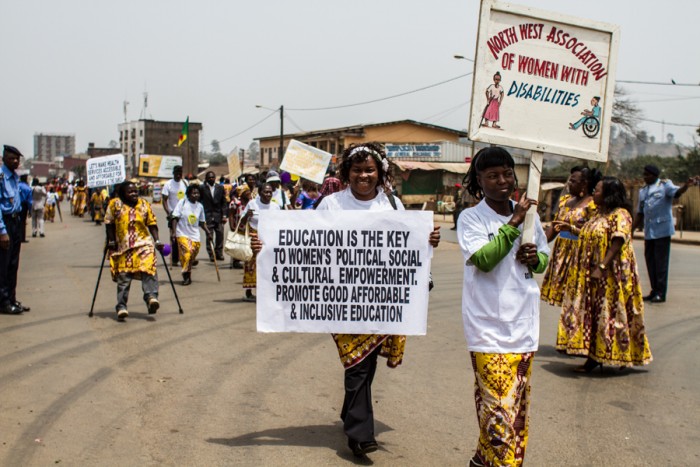
Women with disabilities took part in the march.
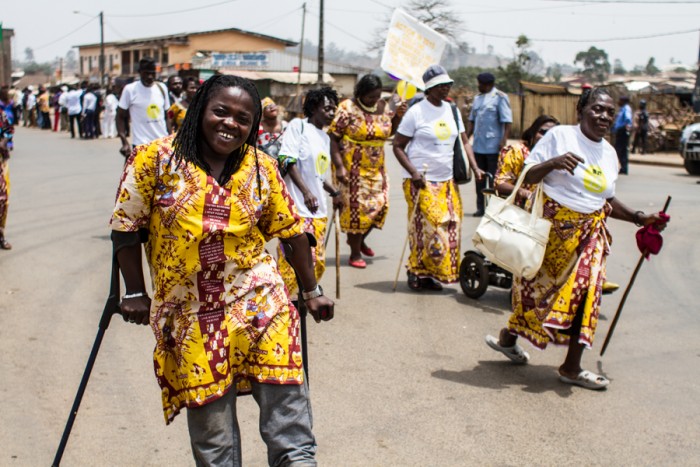
My counterpart, Ruth, was part of the march.
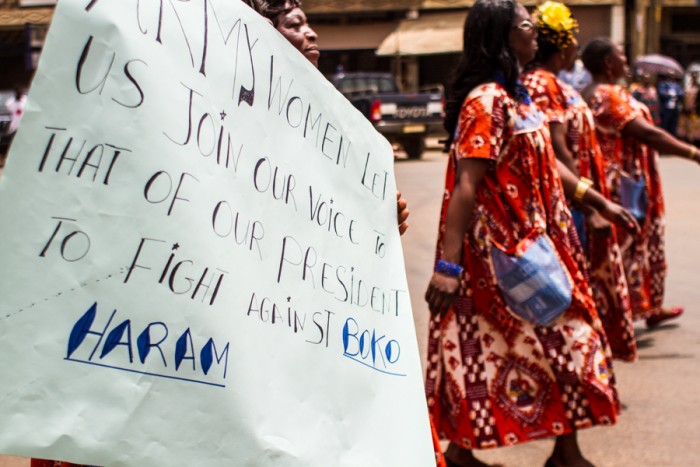
Political advocacy was part of the march.
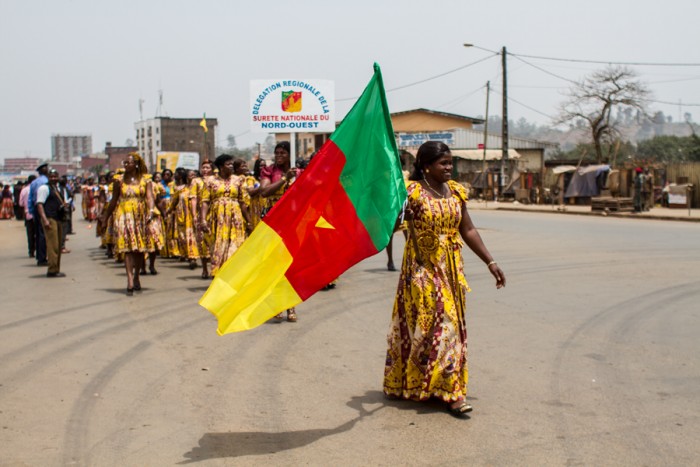
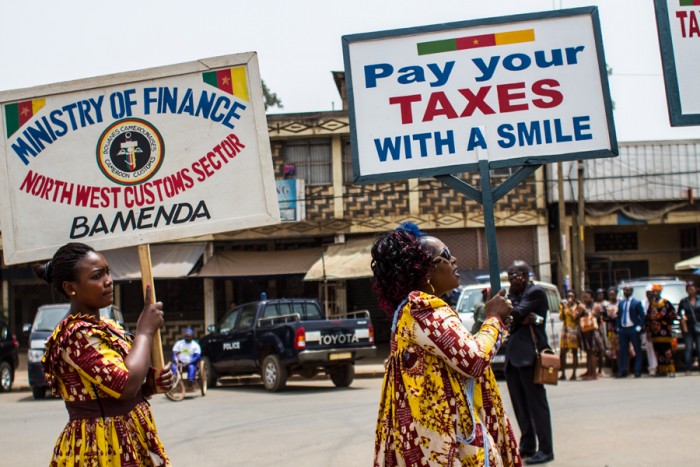
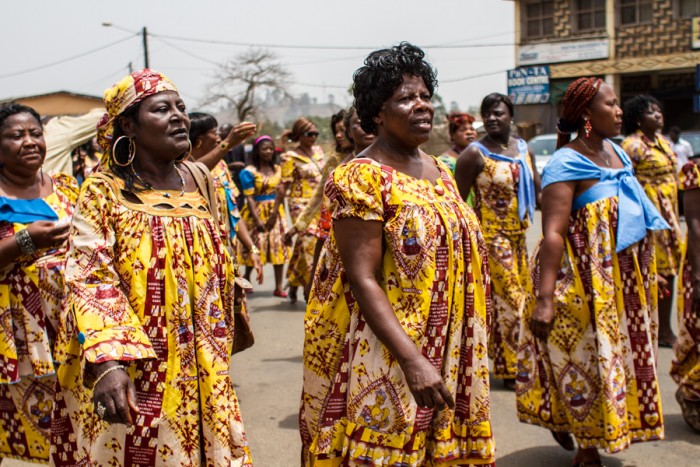
Many women wore the same pagne. There is a pagne made specially for International Women’s Day.
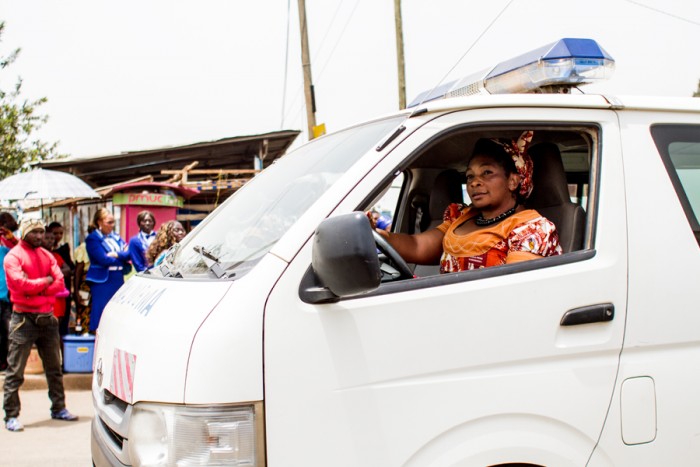
A woman drove an ambulance
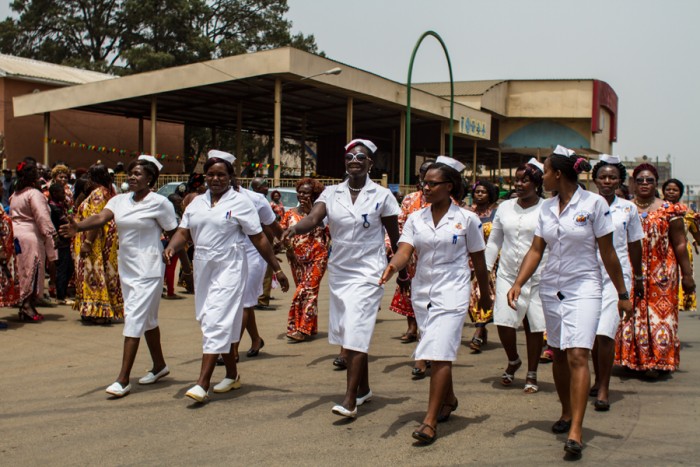
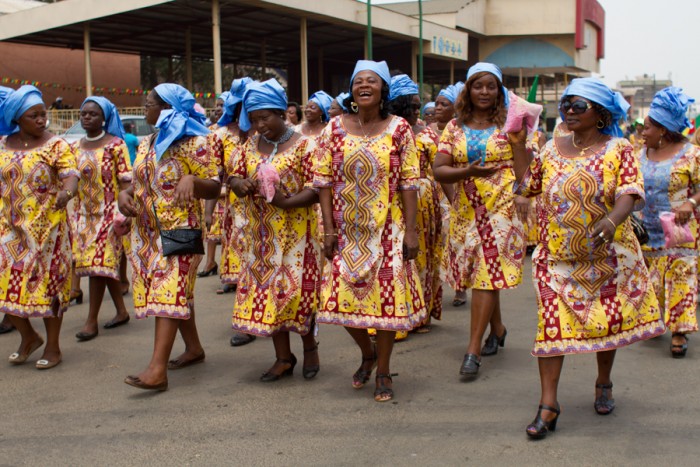
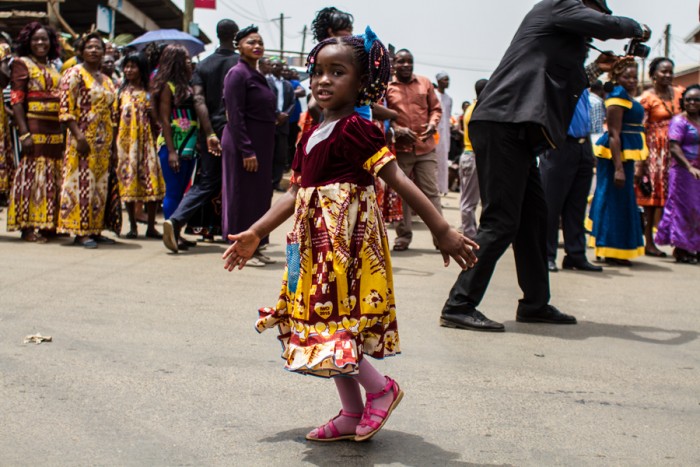
Little girls took part in the march and also wore the same International Women’s Day pagne as other women.
February 21st, 2015 by Rachel | Tags: Peace Corps | No Comments »
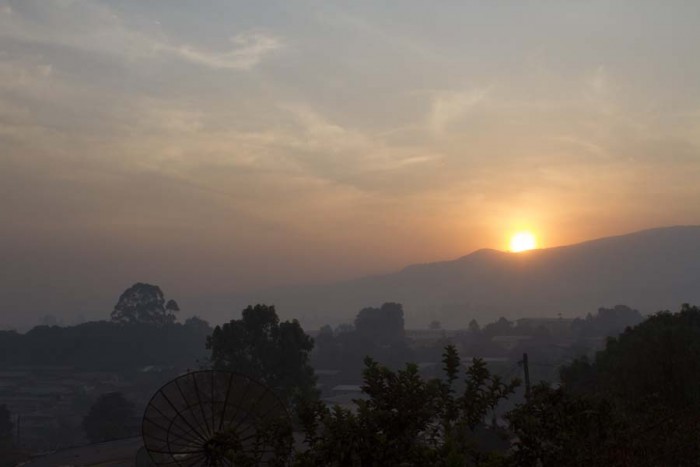
When I woke up on my first morning in Bamenda and I saw the sun rising behind the mountains from the window of my apartment, I saw that I was going to be living in a very beautiful and scenic place for two years. Once I got past the culture shock and became more familiar and comfortable with the city within the first two weeks, I uncovered many more treasures that helped me fully realize that my new home is truly a special place.
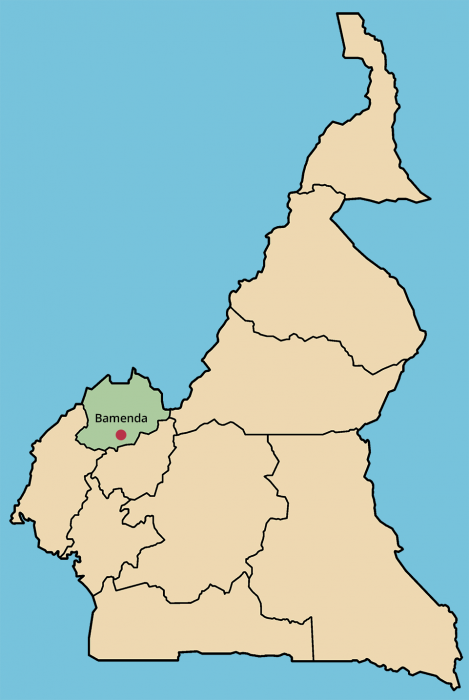
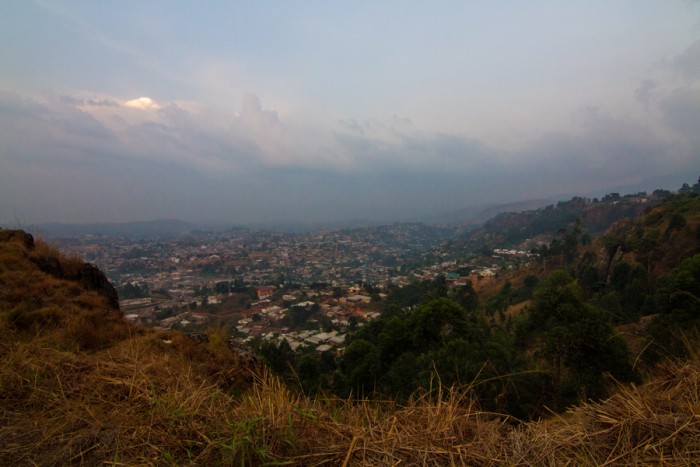
Bamenda is nestled in the mountains in the southern part of Northwest region. Everywhere we walk in the city, we can see mountains in front of us. If we take a short drive to Upstation or Tubah, districts located on the border of Bamenda, we feel like we have been totally removed from the city and can feel like we’re living in a remote countryside. The countryside is so scenic that it screams, “Come take a hike here!” Mountains are covered in lush green grass along with some trees.
Because Bamenda is located in one of the two Anglophone regions, most people speak primarily Pidgin English and also grammar English. I will still often encounter people speaking French to me. In fact, people still call my name in the French way. They say “Rye-chelle” instead of “Ray-chel.”
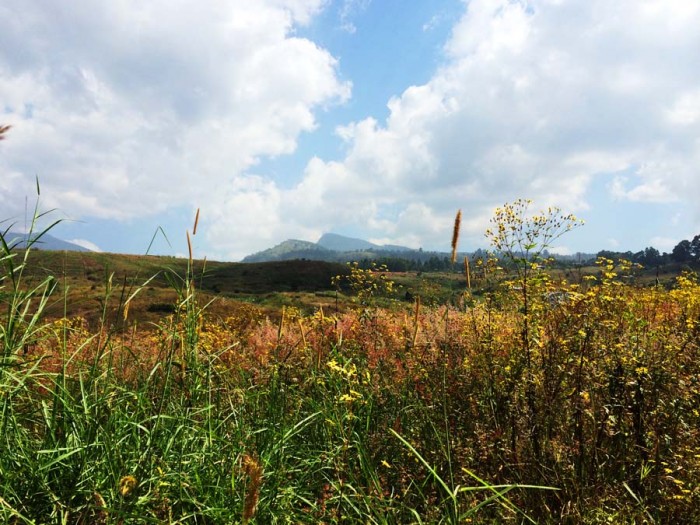
Because of the high elevation, the climate is cool year round. Right now, it is dry season, which runs from October until March. Dry season tends to be hotter, but the temperature here has been in the 70’s degree Fahrenheit during the day and in the 60’s degree at night. There has not been a day when I say, “I wish I have air condition.” During rainy season, which is from March until October it can be so chilly that people may need to wear sweaters. I’ve been told that once the rainy season starts, we can see waterfalls coming down from the mountains from the city.
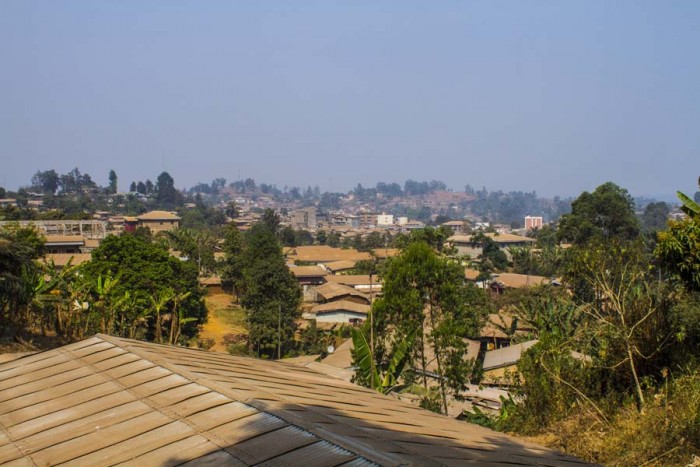
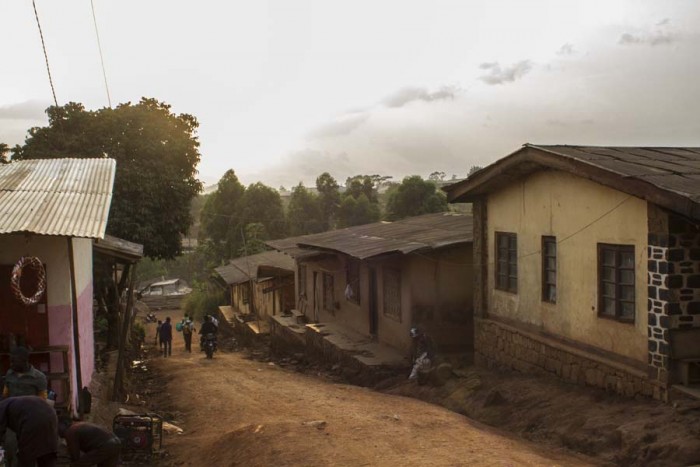
While Bamenda may have only just over 500,000 people living there, the city is just as bustling as New York City as the roads are constantly congested with cars and moto bikes and sidewalks and open markets are packed like sardines. Bamenda is a vibrant community of very ambitious people who strive to work hard and make good money. Business competition is clearly intense as shop owners often to try to grab people’s attention by calling out and making offers on their products and being wiling to negotiate for a good price.
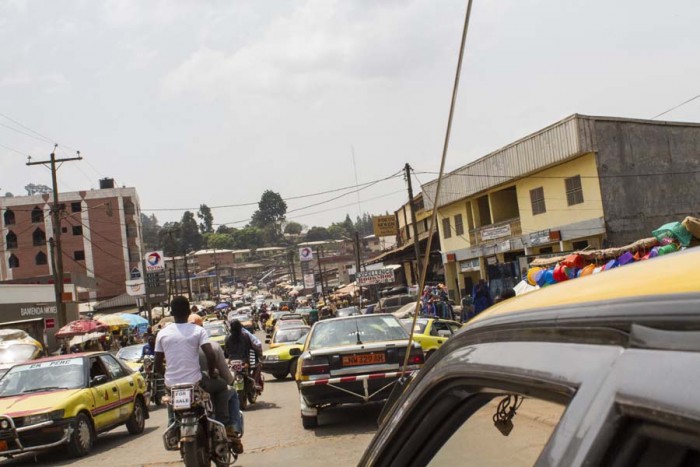
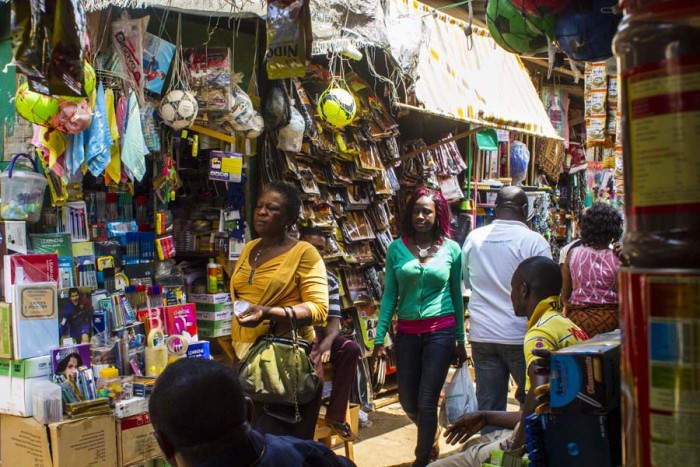
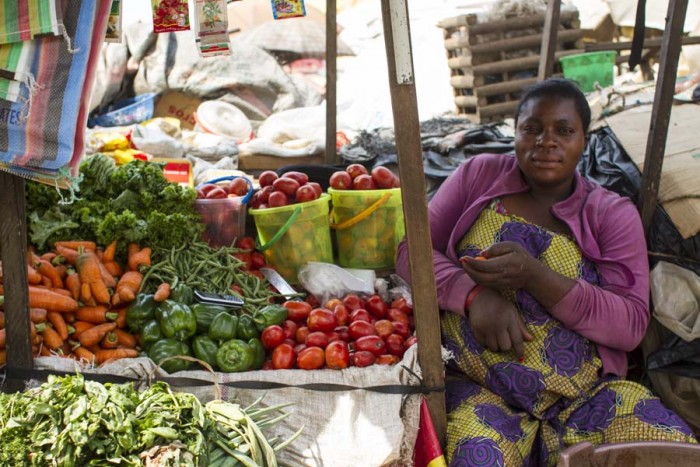
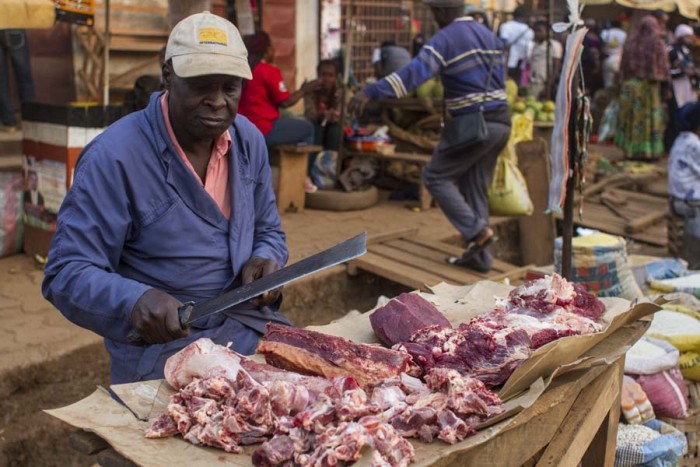
The city offers a wide variety of food from local farms. There are open air markets everywhere I go. Fresh tomatoes, green beans, carrots, onions, avocados, pineapples, oranges and garlic are found everywhere. Fresh beef and chicken are also found. There are also supermarkets which sells food cans, cookies, cereals and milk powder. There are also boulangeries which makes one feel like being in Paris. It offers wide variety of fresh breads, cakes and beignets. They also sell cheese, which can be expensive, but worth spending once in awhile.
Bamenda also offers a number of wonderful restaurants that satisfies American’s palette. One of them is called Prescafe, located by the main city market on Commercial Avenue, and is owned by a woman from Switzerland. When walking into the place, I immediately feel like I am in a western world because of the interior design and menu. The food offerings include salads, pastas, soups, sandwiches and pizzas. The menu differs each day. Prescafe also has a handicraft shop where we can find beautiful jewelry, potteries and other house decors. Helping Hands, a restaurant located on Ghana Street that is owned by an American and donates profits to an orphanage, offers wonderful fresh sandwiches that reminds me of eating at a deli in the United States. Another delicious western style restaurant is Biberon which is located on Foncha Street near Peace Corps office. It offers hamburgers, spaghetti with tomato or cream sauce, pizza, and a variety of meat dishes. Then there is also Ritz Kay located on Bali Street which is loved by many Peace Corps Volunteers as it offers incredible fine-dining style food such as finely sliced steak and pork chops with cream sauce. This restaurant also sells beautiful paintings by a local artist.
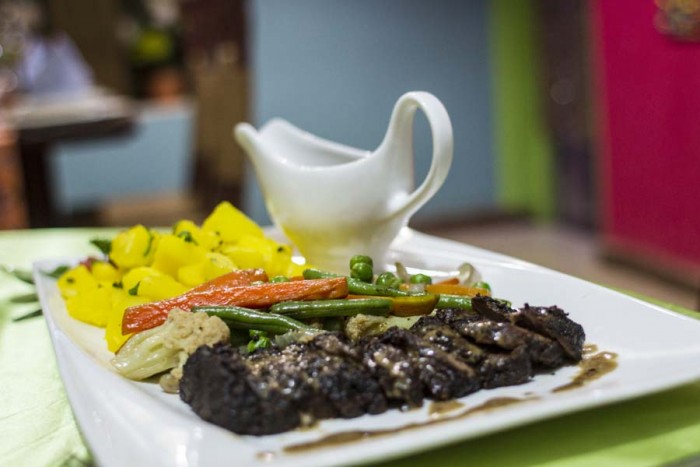
Sliced steak with vegetables and potatoes from Ritz Kay
Like many places around the world, Bamenda is rich in history and has a museum at the Mankon Palace, located just on the outskirts of the city. This museum has a large room filled with ancient artifacts including armors, helmets and bows and arrows used to fight in wars, jewelry and clothes. They also have posters with a tremendous amount of information explaining the history of the city.