June 2nd, 2015 by Rachel | Tags: Peace Corps, Third Goal | No Comments »
My work has never left behind since I departed Cameroon three weeks ago. The spirit of Peace Corps has been following me everywhere in America.

A view of New York City from the airplane
“What are food like in Cameroon?” said my dad.
“What kind of work are you exactly doing in Cameroon?” said my grandmother.
“Has it been hot in Cameroon?” said my aunt.
“Have you seen any gorillas?” said a 14 year-old neighbor.
“Do you have electricity?” asked the dentist’s assistant.
Since I landed in the United States, I have been asked so many questions about my life in Cameroon. I have been undeniably and unconsciously working with Peace Corp’s third goal which is to educate the Americans about the host country, everyday and everywhere I was going. Thus, I have still been working as a Peace Corps Volunteer everyday even though I have not been in my designated Peace Corps country.
Americans have been showing me how so little they know about Cameroon by asking so many questions. It’s a country where so few Americans think about visiting, especially when there is no direct flight from the United States to the country. Their curiosity has allowed me provide them with invaluable education and give them new insights about Africa. Those who thought electricity is almost absent in Africa and it’s hot there now know that there are many people like myself living with electricity and cool temperatures exist. They were surprised to learn that where I live is so cool year round that I never felt a moment where I longed for an air condition and also the fact that I live in the mountains.
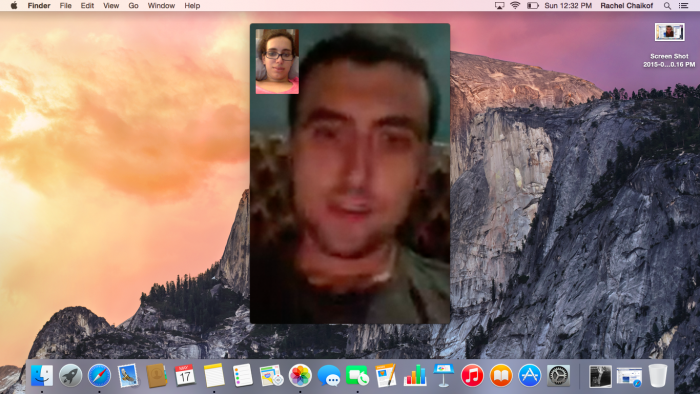
Thanks to the power of internet, I have been able to remain connected with people in Cameroon on daily basis to continue to work on both Peace Corps’ first goal which is to promote peace and friendship and second goal, which is to teach the host country nationals about my country. Ruth, my counterpart, I have talked almost everyday on Facebook to keep each other updated on our work and my medical progress. I helped Ruth work on her proposal for an upcoming project. I’ve been in touch with other work partners and Peace Corps Volunteers through Facebook – they all have been checking in on Facebook on regular basis and leaving comments under my status updates about my recovery and life in America and sending messages. I’ve also been FaceTiming everyday with Alex who has been keeping me updated on the life of Peace Corps Volunteers in Cameroon. Then I also worked on my Volunteer Reporting Form (VRF), a lengthy document that I’m required to do every few months to monitor and evaluate my projects, and submitted it by e-mail to my program managers. Imagine 20 years ago, the days when Peace Corps Volunteer had to travel to a big city just to be able to use a pay phone and the internet barely existed in most countries! I have been really taking internet for granted.
On another note, my recovery has been going very well and my dental work is just about done. All three of my teeth has been successfully repaired. I should be back in Cameroon very soon.
May 20th, 2015 by Rachel | Tags: Peace Corps | 1 Comment »
I don’t wanna be someone who walks away so easily
I’m here to stay and make the difference that I can make
Our differences they do a lot to teach us how to use
The tools and gifts we got, yeah, we got a lot at stake
And in the end, you’re still my friend at least we did intend

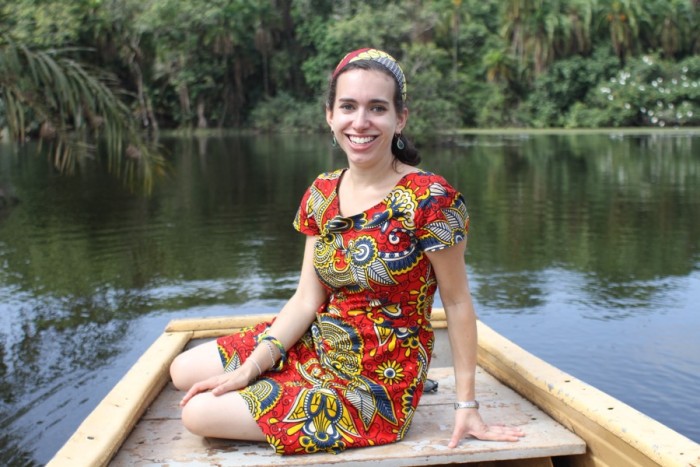
Just over a week ago, on a beautiful sunny Saturday morning in Adamawa, a charming region in the northern part of Cameroon, Alex, and I were rowing a boat on a lake and listening to Over the Rainbow and Edelweiss and other music from our iPhones while hundreds of gorgeous white birds flew around us. That Saturday night, I had to take off by train to head back to my post in Bamenda.
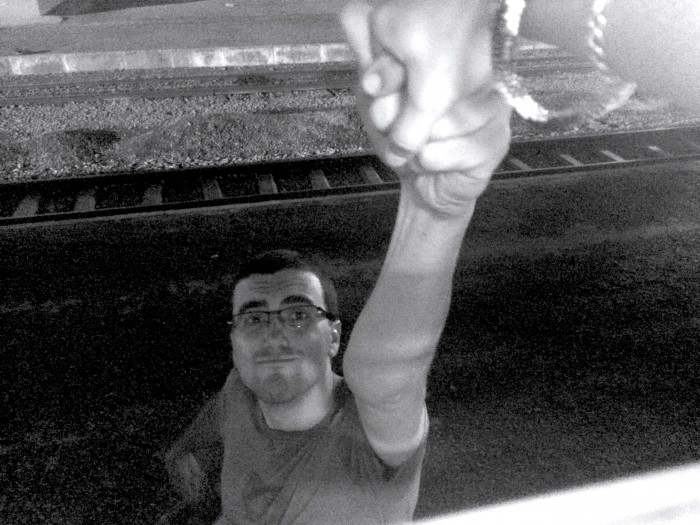
Saying good-bye to Alex on the train
I was in Ngaoundere, the capital of Adamawa, for a week to attend an outstanding training on working with people living with HIV/AIDS. I met a number of people living with HIV/AIDS who taught me that they can still live a beautiful life and living with HIV is not a death sentence. I had my HIV/AIDS plan all written out and was ready to get started on implementing it as soon as I return to post.
The following morning, I got off the train in Yaounde and was planning to spend one night there at the Peace Corps Headquarter before heading back to my post as the train ride was 15 hours long and I wanted to rest a little before getting on a seven-hour bus ride. That Sunday early evening before dark, I was assaulted.
I was medevac’ed to the United States on Tuesday night to get my mouth repaired. As soon as the plane landed in Boston, my native hometown, my mother greeted me at the airport and took me right away to the dentist who specializes in trauma.
My teeth damage turned out to be not as bad as I thought. I didn’t look at my mouth until right after I saw the dentist. I still have some parts of all three of my teeth which means no implants needed but I’ll need crowns or bondings and one root canal. I also had a CT scan the following day to check to make sure I had no other damages. I only have a very tiny fracture on my nose that will heal on its own.
I saw the dentist again yesterday for the first time since right after I came home last week. The dentist wanted to wait until then because the swelling in my mouth needed to go down. The swelling has really gone down a lot. The stitches have been removed from my mouth which has healed nicely. I will get one root canal and possibly one bonding or crown done this week. The dentist said she believes that she can get my teeth work done within two weeks, which will be great because I do want to get back to Cameroon as soon as possible.
I really do want to go back to Cameroon.
People have been telling me it is inspiring that I want to go back to Cameroon after having faced a traumatic experience. There’s nothing inspiring about being so determined to get back to work. I have very serious reasons to not want to give up the work and life I love.
Poverty is rampant in Cameroon. According to a number of research studies, poverty is one of the main causes of violence. Choosing not to go back to Cameroon means that I am choosing not to continue to contribute to reducing poverty. If I don’t help reduce poverty, then I am not helping prevent another person from facing the same attack I faced.
My Cameroonian work partners have been working so hard to make me happy and safe at my post because the last thing they want is to lose me. The last thing I want to do to them is let them down. They care about my work and their work. They are the most motivated people with whom I have ever worked. They so badly want to see improvements in the lives of people with disability. I have already been seeing positive results. Just by simply speaking up through my own voice, a water specialist already started working on making water sites more accessible to persons with disability. I saw some improvements on the post-tests at my first malaria workshop. People have come to me to tell me that they heard me on my weekly radio talks. I have exciting work coming up. I will be starting a support group for persons with disability living with HIV. My counterpart, Ruth, is being awarded a big grant from Mobility International USA and USAID, to help women with disability become more empowered to advocate for their rights and she asked me to partner with her on this big project. I need to continue to host malaria workshops and start the HIV/AIDS workshops. Why should I trash all of this incredible upcoming opportunities?
At last, I can’t leave behind the love of my life.
May 12th, 2015 by Rachel | Tags: Peace Corps | 1 Comment »
I really hate to share this unfortunate news but it’s important for the regular readers to know.
Two days ago, early evening, before dark, I was assaulted in front of Dovv Supermarket in a very posh, wealthy area of Yaounde. As I was standing on the side of the road with two Peace Corps Volunteers and waiting for a taxi, a passenger on a moto bike swooped by and grabbed my purse that was sitting cross way around my shoulder and pulled me really hard to the ground. I landed flat on the ground and lost my three top front teeth and cut my lips to the point I needed stitches. I got scraps all over my body. I will be medavac’ed to Boston tonight to get my mouth fixed. Fortunately the robber did not succeed in stealing my purse.
I want to thank the two Peace Corps Volunteers, Tyler and Lona, who have been big heroes for making quick actions to call the PCMO (Peace Corps Medical Officer), who arrived at the Peace Corps Headquarter within 10 minutes, and staying with me throughout the entire ordeal and helping me out. I have to especially thank the PCMO Angela for coming out so quickly on a Sunday evening, taking the best care of me, bringing me to a hospital and calling a medical officer from the US Embassy to come assist us. I also thank Alex, another Peace Corps Volunteer, who informed my family and kept them updated.
I promise I’ll be back in Cameroon as soon as I can to continue my work. There is no other place I want to be other than Cameroon. There is still so much work in the disability community that needs to be done and I so want to get back to it as soon as possible.
April 30th, 2015 by Rachel | Tags: Disability, Health, Malaria, Peace Corps | No Comments »
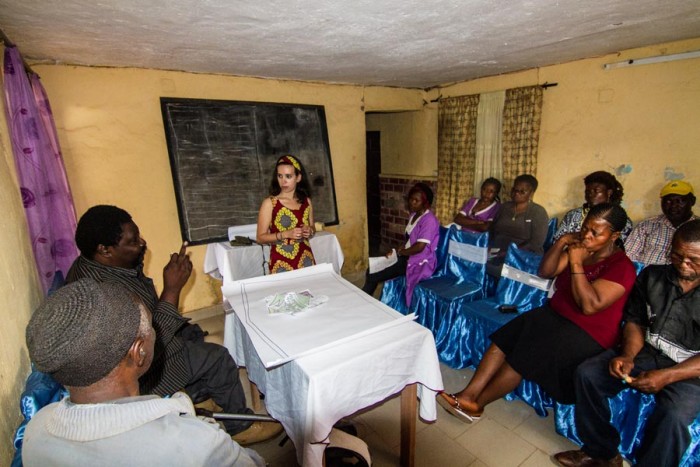
On Sunday, April 26, I held the very first malaria workshop for persons with disability. I collaborated with Richard, the president of Helping Each Other, a disability related association based in Bamenda. Eleven people attended the workshop, which is a very good number considering how many persons with disability are unable to attend due to transportation barriers.
Before the workshop began, I gave a multiple choice pre-test that included six questions. Then I started the workshop with a game called “Anopheles Says.” This game worked exactly like Simons Says. The difference was that I said “Anopheles,” the name of the mosquito that transmits malaria instead of “Simon.” The purpose of the game was to not only to kick off the workshop in a fun way, but also teach the attendees the importance of listening. After the game was over, I told them that the point of the game was to let them know that they need to listen carefully to the information I would be sharing. Then I taught them what is malaria, how is malaria transmitted, how to prevent it, what are the symptoms and why is malaria an important issue in the disability community. I also taught them the importance of taking what they learned and teaching them in their community of persons with disability and advocating for better health services and support from the government. Then we did an activity where I presented a poster of an outline of a house that I drew and cut outs of items such as a bed with a mosquito net, a bed without a mosquito net, water, dirt, uncut grass, trimmed grass, window with a screen and window without a screen. I asked the participants to show me what a home would look like that would make you vulnerable to malaria and also a home that would help you prevent from becoming ill with malaria. Then I gave a post-test.
According to the results of pre-test and post-test, I saw a modest improvement in the knowledge of malaria. While only seven out of eleven answered correctly on the pre-test, on the post-test, ten answered correctly on the question, “What is malaria.” The one person who did not answer correctly did circle that malaria is a parasite transmuted by mosquitos that causes illnesses but also circled that it is spread through handshaking.
When I asked to circle all the choices that would allow them to prevent getting malaria, nine responded sleeping under the mosquito net, eight responded keeping the home clean, four responded using the bug spray, six responded removing any excess water around outside the home, four responded taking a malaria prophylaxis, and one responded visiting a witchcraft doctor. This means that the attendees did not have the most well-rounded knowledge of the best methods to prevent malaria. On the post-test, six circled all the correct ways to prevent malaria. The rest circled only some of them and interestingly, two actually circled visiting a witchcraft doctor.
For the third question on the pre-test and post-test, “What are the symptoms of malaria?” I included ten different symptoms:
Headache
Fever
Fatigue
Muscular Pain
Back Pain
Chills
Sweating
Dry Cough
Nausea
Vomiting
I asked the participants to circle all that applies. On the pre-test, not one person circled all of the symptoms, as all of the listed symptoms are part of the malaria illness. However, on the post-test, six participants circled all of the symptoms. What is interesting however is that on the pre-test, nine participants did circle fever as one of the symptoms. In Cameroon, when people have fever, it is often assumed that they have malaria.
For the fourth question, “Are persons with disability just as or more vulnerable to malaria than persons without disability?”, while eight participants said, “Yes,” on the post-test, ten participants said, “Yes.”
For the fifth question on the pre-test, six responded that they use a mosquito net while sleeping at night. Those who said no said it was because they didn’t have a mosquito net and/or they had no money for it. One wrote in that it was only because he feels claustrophobic when sleeping with the mosquito net. On the post-test, I asked if they would now consider using the mosquito net and ten said, “Yes.” The only person who said, “No” is the same person who said that he will not use the mosquito net because he feels too claustrophobic under the net.
On the pre-test, for the last question, “Do you have access to malaria medication?” all except for one person has no access to medications. The reason is because they have no money to purchase the medicine. On the post-test, I asked, “After attending the workshop, will you now get medication for malaria?”, seven responded that they will get medication if they do become ill with malaria but many of them also circled that they still have no money for it.
At the end of the workshop, the participants expressed how much they enjoyed it. One woman stood up and said that if she had known that the workshop would be well-done, she would have brought a group of female widows with whom she works to the workshop. When I told them that I would like to do an HIV/AIDS workshop for them in June or July, they asked if it was possible to do it sooner and told me what they would like to learn more about relating to HIV/AIDS. I will be conducting three more malaria workshops during the month of May and June to reach out to more persons with disability. Stay tuned for additional reports from the upcoming workshops.
April 24th, 2015 by Rachel | Tags: Disability, Peace Corps | No Comments »
When Cameroon does a massive mosquito net distribution, they give children under 5 years old and pregnant women the priority to have mosquito nets. This is because children under 5 years old have not yet built their immunity against malaria and pregnant women face the risk of miscarriage when being ill with malaria. Moreover, the government provides free consultation for malaria to children under 5 years old. I strongly believe that persons with disability should be counted as the most vulnerable population along with children under 5 years old and pregnant women when it becomes to preventing malaria and being ill with it.
Malaria is a parasite transmitted by mosquitos that causes illnesses. Symptoms include headache, fever, fatigue, muscular pain, chills, sweating, nausea and vomiting. In severe cases, malaria can cause mini-stroke, abnormal behavior, coma and death.
Malaria is caused by the parasite Plasmodium. Each female anopheles, a type of mosquito, has a vector that carries the parasite. When a female anopheles carrying the parasite Plasmodium bites a person, the person becomes ill with malaria. Then when a female anopheles without the parasite Plasmodium bites a person who is ill with malaria, this female anopheles then gets the parasite Plasmodium. Then this female anopheles with the parasite Plasmodium can go bite another healthy person who would then become sick with malaria. The cycle repeats. Female anopheles bite only during the night time, typically around between 8 PM and 6 AM in the morning. This is why sleeping under the mosquito net is important.
When if a person with disability become ill with malaria, most are unable to go to a health clinic. We have to keep in mind that 95% of persons with disability are the poorest of the poor. This means that because they are facing severe financial hardship, they are unable to afford to see a doctor to find out if they have malaria and purchase a medication to treat malaria. Moreover, they do not have the financial means to pay for transportation to a health clinic. Even if they did have some money to go to a health clinic, many are unable to get a transportation because many taxi and bike drivers deny them access as they are too impatient to assist persons with disability in getting in the car or on the bike. Even if they don’t deny them access, many will charge a higher price.
So, when persons with disability do not consult a doctor and get a medication, they face the risk of becoming sicker and gaining a permanent damage to their body which means an additional disability. They could even face the risk of dying.
I want to implore the government and also organizations to give an extra attention to persons with disability along with children under 5 and pregnant women as they do truly face greater challenges and risks when they become ill with malaria.